 Semiahmoo Siding
 Window Installation Built for Blaine's Coastal Conditions
Blaine sits close enough to the water at Semiahmoo and Drayton Harbor that the same weather pattern shapes almost every window on almost every home here: salt-tinged marine air that works on hardware and seals, wind-driven rain that gets pushed sideways and even upward into openings instead of falling straight down, and a long, damp moss season that keeps shaded walls and sills wet for months at a time. Windows are one of the most failure-prone points on a home's exterior precisely because they're a hole in the wall assembly, and in this climate a poorly installed one doesn't just waste energy — it lets water into framing that stays damp far longer than it would in a drier part of the country.
This page covers window installation and replacement specifically for homes in and around Blaine — what local conditions demand from the job, what a correct install actually involves, how our process works, and why a crew that already works this area brings something a general handyman or out-of-town installer usually can't.
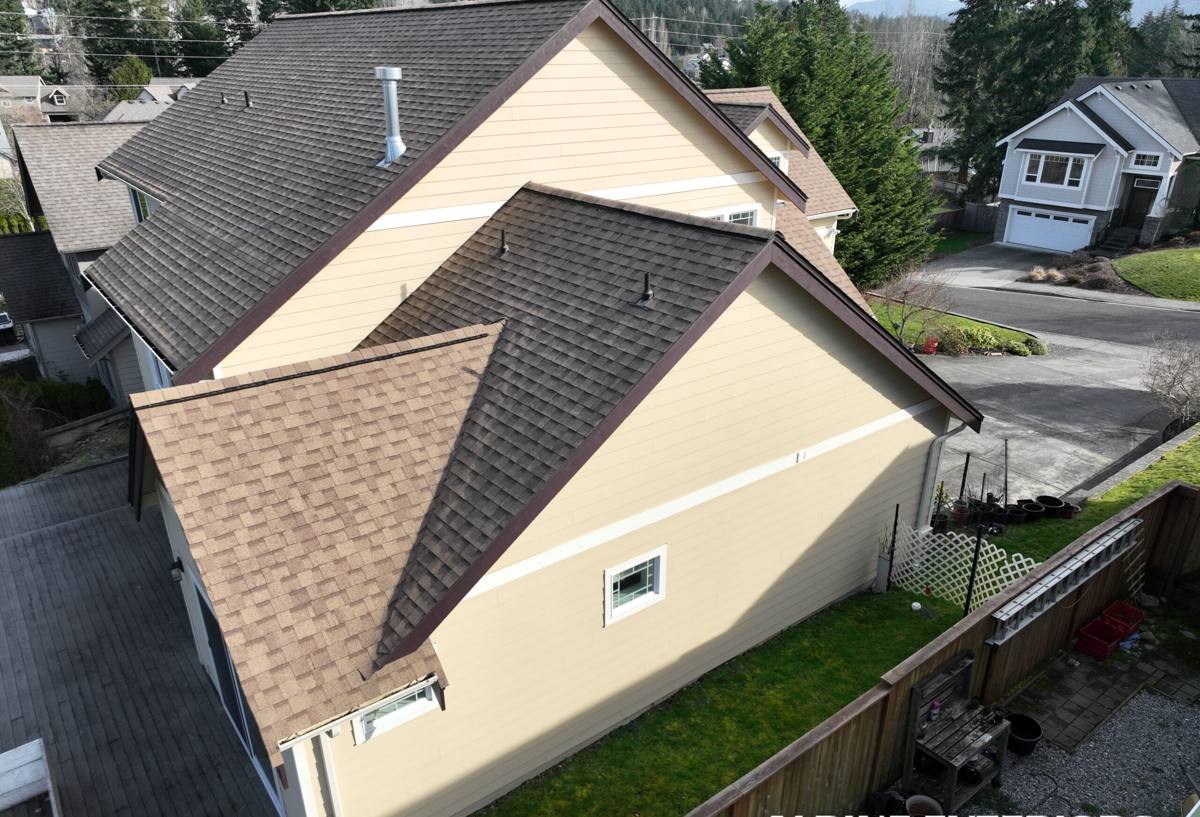
What Blaine's Climate Demands From a Window Installation
Salt Air and Hardware Corrosion
Proximity to Semiahmoo Bay and Drayton Harbor means salt-laden air moves through Blaine more consistently than it does further inland, and that air is hard on window hardware, fasteners, and lower-grade flashing metal over the years. We specify corrosion-resistant fasteners and flashing on every job here rather than defaulting to whatever comes standard, because the cost difference is small compared to what it costs to redo a corroded, leaking opening a few years down the road.
Driving Rain and Sill Drainage
Rain in this part of Whatcom County rarely falls straight down — wind off the water pushes it sideways and drives it up against window openings, especially on exposed elevations. That means the sill beneath every window needs a real slope and a clear path for water to drain back out, not just a bead of caulk holding the line. It's one of the details that separates an installation that stays dry for decades from one that starts showing stains inside a few winters in.
Moss, Shade, and Long-Term Moisture
Shaded walls and window sills that don't shed water quickly stay damp longer here than in a drier climate, which feeds moss and mildew growth and, over time, slow rot at the sill and lower corners of a window frame. Keeping planting beds and landscaping from crowding window sills, and making sure the installation itself sheds water instead of trapping it, both matter more in Blaine than they would somewhere with a shorter wet season.
Replacement Windows vs. New Construction: Which Applies to Your Home
Most of the window work we do in Blaine is replacement — swapping out existing windows in a home that's already built and sided. That's a different job from new-construction window installation, and it's worth understanding the distinction before you get quotes.
- Full-frame replacement: the existing window and its frame are removed down to the rough opening, exposing the framing so we can inspect for hidden water damage, correct any flashing problems we find, and install a new nail-fin or flush-fin window with a full flashing sequence. This is more work, but it's the only way to fix an opening that already has moisture or rot issues.
- Insert (pocket) replacement: a new window is fitted into the existing frame, which stays in place. It's faster and less disruptive to interior and exterior finishes, but it only makes sense when the existing frame and flashing are confirmed to be sound — installing an insert over a frame that's already compromised just seals the problem behind a new window.
We don't default to one approach across every job. Which one is right depends on the condition of the existing opening, which we check before recommending either option.
What a Correct Window Installation Actually Involves
A window installation is judged almost entirely on details that aren't visible once the job is finished. Getting them right is what determines whether an opening stays dry for the next twenty or thirty years.
- Removal and opening inspection. The old window comes out and we inspect the rough opening, sill, and surrounding framing for water damage, soft wood, or failed flashing before anything new goes in. This step is what tells us whether a full-frame or insert approach is appropriate, and it's also how hidden problems get caught before they're sealed behind a new window.
- Sill pan and drainage path. A sloped sill pan is installed so any water that gets past the window has somewhere to go — out, not into the wall cavity.
- Flashing integration. Flashing tape and materials are integrated with the existing weather-resistive barrier in the correct shingle-lap order — sill, then jambs, then head — so water sheds down and out at every layer rather than pooling behind the siding.
- Fastening and shimming. The window is set plumb, level, and square, shimmed correctly so the frame isn't racked, and fastened with corrosion-resistant hardware suited to this area's salt air.
- Insulation and air sealing. The gap between the window frame and the rough opening is insulated and sealed — overpacking with expanding foam can bow the frame, so this step takes a light hand, not just more material.
- Interior and exterior finish work. Trim, caulking, and any siding or J-channel disturbed during removal are finished and sealed to match the surrounding wall.
- Final check. Every completed opening is checked for square operation, smooth locking, and a properly sealed, weather-tight perimeter before we call the job done.
Signs Your Existing Windows Need Attention
- Fogging or a hazy film between the panes of a double-pane window — a sign the seal has failed and the insulating gas has escaped
- Drafts you can feel near the frame on a windy day, even with the window closed and locked
- Wood trim or sills that feel soft, spongy, or show staining, especially on elevations that face prevailing weather
- Windows that are difficult to open, close, or lock, or that no longer sit flush in the frame
- Visible moss or persistent green growth on the sill or surrounding trim
- Noticeably higher heating bills without another clear explanation
- Condensation forming on interior glass or trim during cold, damp stretches
Choosing Windows for a Blaine Home
Window brand matters less than most homeowners expect — reputable manufacturers all build solid products, and the bigger factor in how long a window lasts here is the quality of the installation around it. That said, a few product-level factors are worth weighing for this specific climate.
| Factor | Why it matters in Blaine |
|---|---|
| Frame material corrosion resistance | Salt-tinged air accelerates wear on lower-grade hardware and fasteners over time |
| Glazing and low-E coating | Affects comfort and energy cost through our wet, moderate winters and mild summers |
| Weatherstripping quality | Determines how well the window resists wind-driven rain over years of exposure, not just on day one |
| Warranty structure | Look for coverage that includes both the glass unit and the frame, and check what voids it |
| Local parts and service availability | Matters if a seal or hardware component ever needs replacing years down the road |
Cost Factors for Window Installation in Blaine
We won't quote pricing without seeing the home, but a few things reliably move the cost of a window job up or down, and knowing them ahead of time makes for a more useful conversation when you call.
- Full-frame replacement versus insert replacement — full-frame involves more labor but is often necessary if the opening shows any water damage
- Number of windows and how many distinct sizes or shapes are involved
- Condition of the existing rough opening and whether hidden rot or failed flashing needs to be repaired
- Window size, glazing package, and frame material
- Elevation and access — a second-story window facing the water may need more setup than a ground-floor opening
- Any matching trim, siding, or interior finish work needed to tie the new window into the surrounding wall
Why Hiring a Crew That Already Works Blaine Matters
A crew that regularly installs and replaces windows in Blaine has already seen how salt air corrodes underspecified hardware, how wind-driven rain finds the weak point in a poorly lapped sill, and which elevations near the water need extra attention because of exposure or shade. That's the kind of practical knowledge that shows up in small decisions throughout a job — decisions a crew unfamiliar with this specific stretch of coastline might never think to make. It also means working with someone who's still local and reachable if a warranty question or a sealing issue comes up years after the install, rather than a company that did one job in the area and moved on.
If your windows in Blaine are drafty, fogged, hard to operate, or you're planning ahead for a full-frame replacement, we're glad to take a look and walk you through your options. Use the form below to request a free, no-pressure estimate.