 Semiahmoo Siding
 James Hardie Siding, Installed by a Crew That Already Knows Blaine
Blaine sits right at the edge of the water, with Semiahmoo Bay and Drayton Harbor shaping the weather that hits local homes almost year-round. That's a different exposure profile than siding jobs a few miles inland see, and it changes what "correct installation" actually means here. We install James Hardie fiber cement siding exclusively — no vinyl, no LP SmartSide, no cedar, no primed spruce — and this page focuses on that one product, in this one area, because the details that matter on a Blaine job aren't generic.
A siding crew that regularly works this stretch of Whatcom County has already seen how salt air, wind-driven rain, and a long moss season behave on homes here, and that experience shows up in fastener choices, flashing details, and how a job gets sequenced. This page walks through what Blaine homes actually need from their siding, what a correct James Hardie job involves, and how our process works from first visit to final walkthrough.
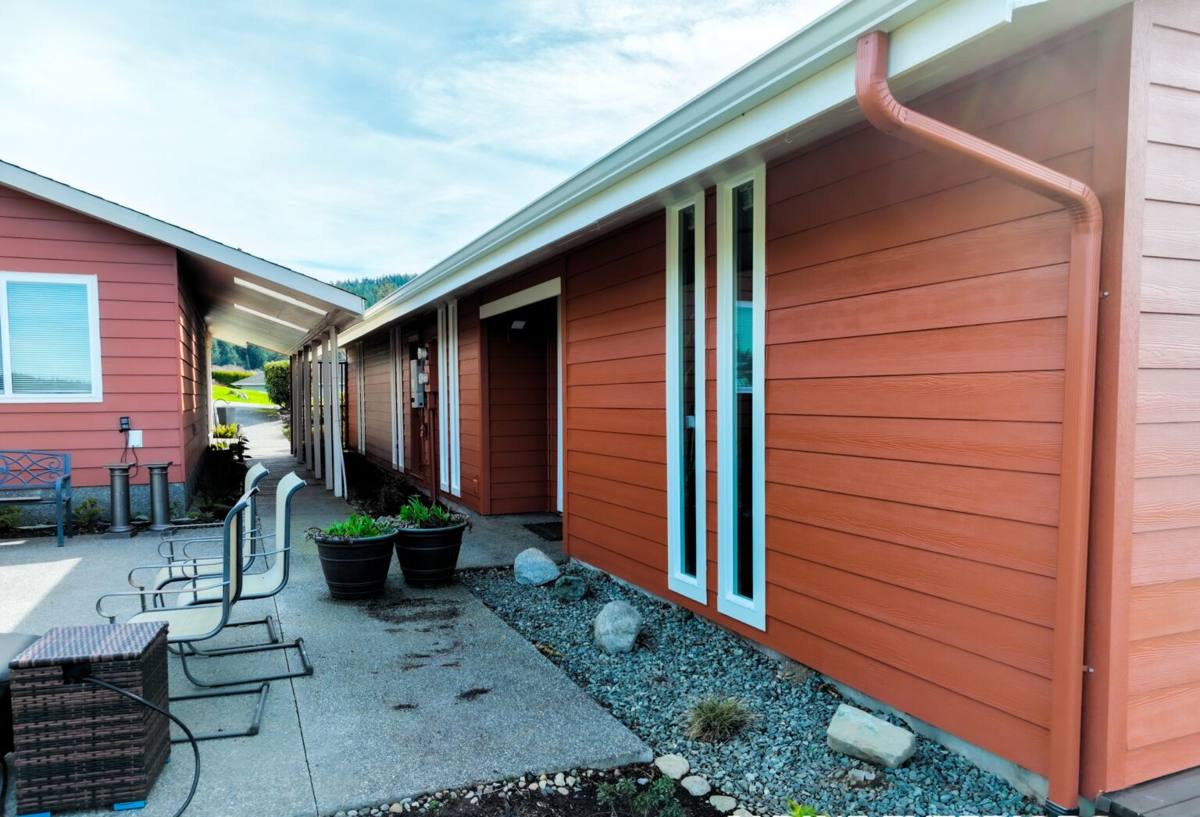
What Blaine's Climate Actually Does to Siding
Salt Air Off Semiahmoo Bay
Homes close to the water in Blaine pick up salt-laden air more consistently than properties set back inland. Salt speeds up corrosion in fasteners and metal trim, and it wears down lower-grade paints and finishes faster than a drier site would. That's one of the clearest reasons a factory-cured finish outperforms a field-applied one here — the finish is doing real work, not just adding curb appeal.
Driving Rain With Little to Break It
Wind off the water doesn't push rain straight down. It drives it sideways into wall assemblies, window trim, and butt joints with more force than a sheltered inland lot ever experiences. Siding that's installed with tight tolerances and correct lap details handles that fine. Siding installed loosely, with gaps at joints or fasteners driven at the wrong depth, starts letting water in exactly where that sideways pressure concentrates.
A Moss and Mildew Season That Runs Most of the Year
Mild temperatures and near-constant humidity give moss and mildew a long window to take hold across Whatcom County, and Blaine's proximity to the water doesn't shorten that season. Shaded, north-facing walls and anything with a porous or moisture-holding surface show it first. Siding that can't shed water efficiently ends up hosting growth that a denser, factory-finished material simply doesn't.
Why James Hardie Is the Right Fit for This Specific Exposure
We don't install James Hardie because it's the only product we know how to work with — we install it because we've made a professional call, after years of doing exterior work in this exact climate, that it's the one system worth standing behind fully.
- Non-combustible fiber cement core: It doesn't feed a fire the way wood-based siding can, which matters for safety and often for insurance underwriting too.
- Factory-applied ColorPlus finish: Baked on under controlled conditions rather than brushed on-site, it holds color and resists chalking and moisture intrusion far longer than field-applied paint in a wet, salty climate.
- HZ5 formulation: Engineered specifically for regions with heavy moisture exposure and freeze-thaw cycling — a fit for waterfront Whatcom County, unlike the HZ10 line built for hot, humid climates.
- Dimensional stability: Fiber cement doesn't swell, cup, or warp the way engineered wood siding can after repeated wetting cycles through a long wet season.
- A strong transferable warranty: Backed by the manufacturer as long as the installation follows Hardie's published spec — which is exactly why installation quality matters as much as the product itself.
We won't install LP SmartSide, vinyl siding, Cemplank, Allura, primed spruce, or cedar. Each has a place in the market, and plenty of homeowners elsewhere are satisfied with them. But on an exposed, waterfront property in Blaine, we'd rather commit to one system we fully understand than offer a cheaper alternative that quietly pushes maintenance risk onto the homeowner down the road.
What a Correct James Hardie Installation Involves
Fiber cement only performs the way it's engineered to when the installation matches Hardie's spec exactly. On a Blaine property, that means paying particular attention to the details that a driving-rain, salt-air climate stresses hardest.
The Fundamentals That Can't Be Skipped
- Correct fastener type, spacing, and depth — over-driven or under-driven nails are one of the most common causes of early siding failure
- Proper clearance from grade, roof lines, and decks so the bottom edge of the siding never sits in standing water or constant splash-back
- Rain-screen or drainage detailing behind the panels where the wall assembly calls for it, giving incidental moisture a way out
- Factory-mitered corners or properly caulked and primed field joints, since exposed cut edges are the most moisture-vulnerable point on any fiber cement job
- Flashing integration at every window, door, and penetration that accounts for wind-driven rain hitting the wall from an angle, not just straight down
A Hardie product installed loosely will still develop moisture problems in a climate like Blaine's. The material is only as good as the crew installing it, which is why we treat these details as the baseline on every job, not an upgrade.
HZ5 Versus Standard Product Lines
Hardie makes climate-specific formulations, and using the wrong one undercuts the whole point of choosing the brand. HZ5 is built for regions that see sustained moisture exposure and freeze-thaw cycling, which describes Blaine's marine climate well. Specifying the correct line is a small decision that has a real effect on how the siding performs over decades, not just years.
Comparing Siding Options for a Blaine Property
| Material | Moisture Behavior in This Climate | Maintenance Near the Water | Typical Longevity Here |
|---|---|---|---|
| James Hardie fiber cement (HZ5) | Dimensionally stable, resists swelling and warping | Low; factory finish resists fading, chalking, and moisture intrusion | 30+ years with correct installation |
| Vinyl siding | Can distort with heat and wind load over time | Low upfront, but seams and fasteners are exposure points | Variable; shorter on exposed waterfront lots |
| LP SmartSide / engineered wood | Wood-based core is moisture-sensitive at cut edges and joints | Moderate; edge sealing and caulk upkeep matter | Depends heavily on installation quality and upkeep |
| Cedar / primed wood | Absorbs and releases moisture readily | High; regular refinishing needed in wet, salty air | Shorter without consistent, ongoing maintenance |
Why Hiring a Crew That Already Works Blaine Matters
A crew that regularly works this part of Whatcom County already knows how salt air, open wind, and a long moss season behave on siding here, and that shows up in decisions a homeowner never sees directly: which fastener grade gets used, how much extra drainage detailing gets added behind the panels, how joints get sequenced to shed water instead of trap it. Those small calls are what separate a siding job that looks fine at handoff from one that actually holds up through a decade of Blaine winters.
It also means fewer surprises during the estimate. We're not guessing at how this property's exposure compares to a typical inland job — we've seen the pattern before, on homes with the same bay-facing walls and the same wind-driven rain problem.
A Simple Checklist Before Hiring for Siding Work in Blaine
- Ask what siding material they install and why, and whether they'll put a warranty behind it in writing
- Confirm current Washington contractor licensing and active liability insurance
- Ask specifically how they detail flashing at windows, doors, and joints for wind-driven rain off the water
- Ask which Hardie product line they'd specify for the property, and why
- Get a clear, written scope of work — including fastener spec and drainage detailing — before signing anything
Our Process for a Blaine Siding Project
We start with an on-site walkthrough of the existing siding, looking specifically at how it's handled moisture and salt exposure over time — where paint has failed, where moss has taken hold, where joints or trim show early wear. That assessment tells us as much about the right approach as the age of the siding does.
From there we put together a clear, written scope covering the product line, fastener and flashing details, and timeline, before any work begins. During the job, drainage detailing and corrosion-resistant fastening are standard practice on a property this close to the water, not optional add-ons. We walk the finished work with the homeowner before calling it done, and we're straightforward about what maintenance, if any, the new siding will actually need going forward.
If you're weighing new siding or a re-side for a home in Blaine or elsewhere around Semiahmoo, we're glad to walk the exterior with you and give an honest read on what it needs. Reach out below for a free, no-pressure estimate.