 Semiahmoo Siding
 Blaine Harbor Roofs Work Harder Than Most
A roof over Blaine Harbor doesn't have the same easy life as one twenty miles inland. Between the salt-laden air coming off Semiahmoo Bay, the wind-driven rain that comes sideways off the water instead of straight down, and a moss season that runs longer here than almost anywhere else in Washington, roofing materials and fasteners take on stress that a standard warranty and a standard install schedule weren't really designed around. We repair roofs in this specific stretch of Whatcom County regularly, and the failure patterns we see here are consistently different from what we find twenty minutes away from the water.
This page is about one job, in one area: roof repair for homes in and around Blaine Harbor. Not a full tear-off, not general siding work — the targeted fixes that keep a roof watertight and buy it years of extra service life without the cost of full replacement.
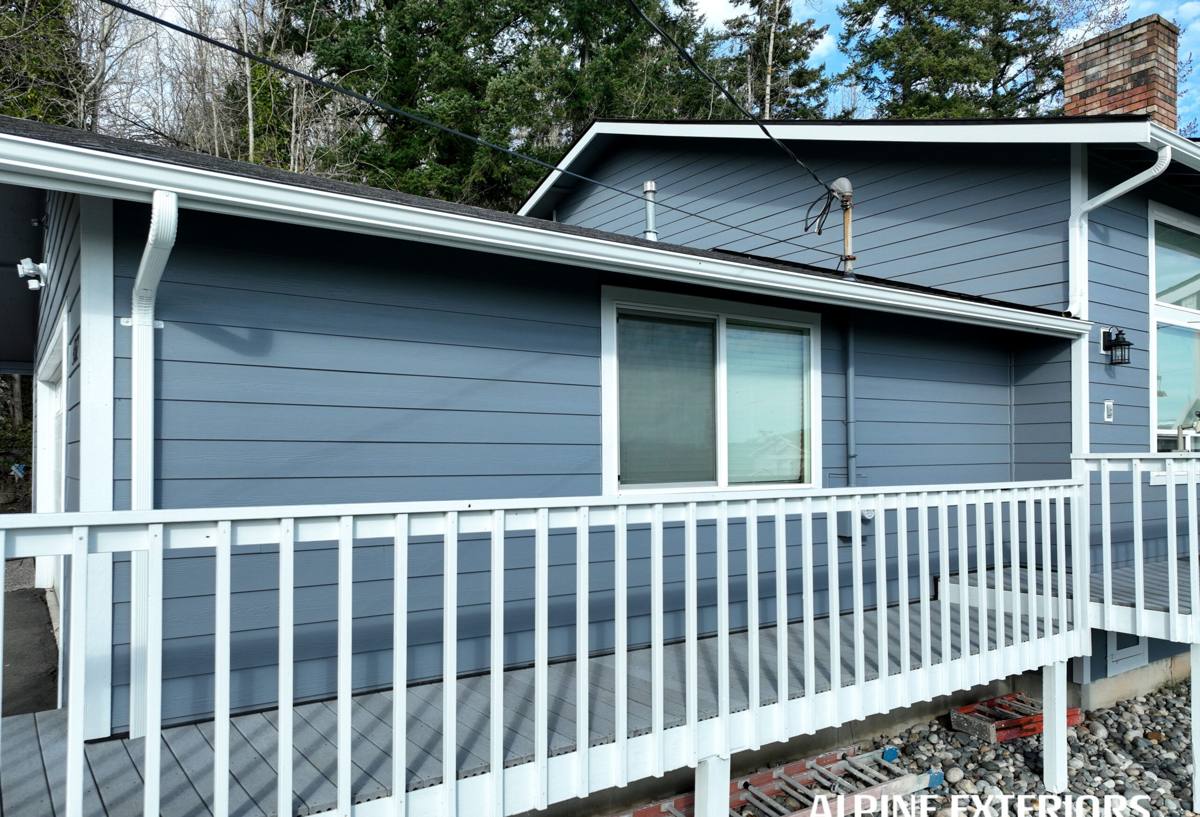
What the Marine Climate Actually Does to a Roof
Salt Air and Fasteners
Airborne salt accelerates corrosion on any exposed metal — nail heads, flashing seams, valley metal, gutter fasteners, and the metal components in mechanical vents. On a roof close to the water, corrosion shows up years before it would on an equivalent roof further inland. A repair that reuses corroded fasteners or unsealed metal is a repair that fails again within a season or two.
Driving Rain and Wind-Loading
Wind off the bay doesn't just add rain volume — it changes the direction water hits the roof. Rain that comes in at an angle can work under shingle tabs, ridge caps, and flashing laps that would stay perfectly dry in a straight downpour. Repairs that only address the visible gap, without accounting for wind-driven water finding a lateral path underneath, tend to leak again in the next storm from the same direction.
Moss and Organic Growth
Whatcom County's damp, shaded, mild-temperature stretch runs long, and Blaine Harbor's proximity to the water keeps humidity elevated even on days that aren't actively rainy. Moss and algae get a longer growing window here than in drier parts of the state. Left alone, moss lifts shingle edges, holds moisture against the roof deck, and works its way into nail penetrations — turning a cosmetic issue into a structural one over a couple of seasons.
The Roof Repair Calls We See Most in This Area
- Lifted or cracked shingle tabs along roof edges exposed to wind off the water
- Corroded or failing flashing around chimneys, skylights, and roof-to-wall transitions
- Moss-driven granule loss and soft spots near valleys and north-facing slopes
- Leaks that trace back to nail pops or fastener corrosion rather than a single obvious hole
- Gutter and downspout backups that push water under the roof edge during heavy rain
- Ridge cap seams that have opened up after repeated wind-rain cycles
What a Correct Repair Actually Involves
A roof repair that holds up in this environment takes more than sealing the spot where water is currently showing up inside the house. Water rarely enters directly above where it appears on a ceiling — it travels along the underlayment or deck before finding a gap to drip through. That means every repair we do starts with tracing the actual path, not just patching the symptom.
Diagnosis Before Patching
We inspect the roof surface, the flashing details, and (where accessible) the attic or roof deck from underneath to confirm where water is actually getting in. On a salt-air roof this also means checking fastener condition, not just shingle condition — a roof can look intact from the ground while the nails holding it down have already started to corrode.
Matching Materials, Not Improvising
Repairs use materials compatible with what's already on the roof — matching shingle profile and, where possible, color, and using flashing metal and fasteners rated for coastal exposure rather than standard-grade hardware that will corrode faster in this air. A mismatched patch is often more visible, and more prone to premature failure, than the original problem.
Sealing the Whole Detail, Not Just the Leak Point
Flashing, valleys, and penetrations get resealed and re-fastened as complete assemblies, not spot-caulked. Caulk alone is a short-term fix in a climate with this much wind-driven rain and UV/salt exposure cycling on the sealant year-round.
Repair or Replace? Honest Cost Factors
Not every damaged roof needs full replacement, and not every roof is worth repairing indefinitely. These are the factors that actually drive the decision, in plain terms.
| Factor | Favors Repair | Favors Replacement |
|---|---|---|
| Age of roof | Under roughly 12–15 years for asphalt | Near or past typical material lifespan |
| Extent of damage | Localized — one slope, one flashing detail | Spread across multiple slopes or repeat leak sites |
| Fastener/deck condition | Deck and nailing still sound | Widespread corrosion or soft/rotted decking |
| Moss/algae history | First significant growth, deck unaffected | Long-term growth with granule and deck damage |
| Underlayment condition | Intact, still providing a water barrier | Brittle, torn, or failing in multiple areas |
Broad ranges only — every roof is different, and the honest answer often depends on what we find once we're actually on it. That's why we quote after inspection, not before.
Our Process From Call to Cleanup
1. On-Site Inspection
We look at the roof, the flashing details, and the attic/deck where accessible, and explain what we find in plain language — including if we think a repair is the right call versus a larger project.
2. Written Scope and Estimate
You get a clear description of what will be done and why, with a straightforward cost — no vague line items.
3. The Repair Itself
Matched materials, corrosion-resistant fasteners appropriate for a coastal site, and full-detail flashing work rather than spot patches.
4. Cleanup and Walkthrough
Debris and old material hauled off, and a final look together so you know exactly what was done and what to keep an eye on going forward.
Roofing Materials That Hold Up Near the Water
Asphalt Shingles
Still the most common and most cost-effective option for repair work, provided the replacement shingles are algae-resistant rated and matched properly to the existing roof. Standard (non-algae-resistant) shingles will show streaking and growth noticeably faster this close to the water — we default to algae-resistant product for any patch or partial reroof in this area as a matter of practice, not because the standard product is defective, just because it's the wrong tool for this climate.
Metal Flashing and Components
We use corrosion-resistant metal for flashing, valleys, and vent components on coastal repairs. It costs more up front than standard galvanized product, but standard-grade metal is exactly what we see failing first on older Blaine Harbor roofs — the trade-off is worth it here.
Underlayment Choices
In wind-driven rain conditions, we lean toward a higher-grade synthetic or ice-and-water-shield underlayment at vulnerable areas — valleys, eaves, and around penetrations — rather than the minimum felt underlayment some builders use. It's a maintenance-and-moisture decision, not a brand preference: it simply behaves better under sustained lateral water exposure.
Maintenance Checklist for Blaine Harbor Homeowners
- Have moss and algae growth removed before it lifts shingle edges — don't wait for visible bald spots
- Keep gutters and downspouts clear year-round; clogged gutters push water back under roof edges
- Have flashing around chimneys, skylights, and roof-wall transitions checked every couple of years for corrosion, not just visible gaps
- Trim back overhanging branches that keep sections of roof shaded and damp
- After any major windstorm off the water, do a visual check (or have us check) for lifted or missing tabs
- Address small leaks immediately — in this climate, small leaks compound fast once moisture reaches the deck
Why a Crew That Already Works Blaine Harbor Matters
A contractor who mostly works inland, dry-side jobs will often treat a Blaine Harbor roof the same way they'd treat any other repair — standard fasteners, standard underlayment, patch-the-visible-leak approach. That's not dishonesty, it's just not the right playbook for a roof that sits in salt air and takes wind-driven rain from the water. Working this area regularly means we already know which flashing details fail first on harbor-facing homes, which fastener grade actually holds up, and how aggressive the moss season really gets here compared to the rest of Whatcom County. That local pattern-recognition is the difference between a repair that lasts and one you're calling us back for next winter.
If you've got a leak, missing shingles, or just want an honest read on what shape your roof is in, we're happy to take a look. Use the form below for a free, no-pressure estimate — we'll tell you straight whether it's a repair, and what that repair should actually involve.