 Semiahmoo Siding
 Why Blaine Decks Wear Out Faster Than the Manual Says
Decks in Blaine take a harder hit than the same deck would a few hours inland. You're sitting right at the edge of the Salish Sea, which means salt-laden air moving through fasteners, hardware, and end grain almost every day of the year. Add Whatcom County's long wet season — months of driving rain from fall through spring — and a shaded, north-facing deck that barely dries out between storms, and you get a maintenance schedule that doesn't match what's printed on a box of deck screws bought at a big-box store two hours south.
The result is predictable: fasteners corrode from the inside out, ledger boards trap moisture against the house, and moss gets a running start every autumn and doesn't let go until late spring. None of that means a deck is a lost cause. It means repairs have to be matched to this specific coastal, marine-influenced climate, not to a generic national spec sheet.
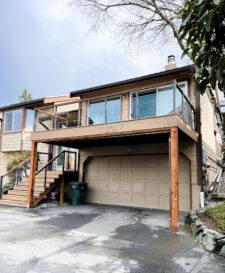
Signs a Blaine Deck Needs Repair — Not Just a Wash
A pressure wash and a coat of stain can hide a lot of problems for a season, but they don't fix structural issues. Here's what we actually check for before recommending anything:
- Soft or spongy spots underfoot, especially near the house or along stair stringers
- Rust streaks bleeding out from screw heads or joist hangers
- Gaps opening up where the ledger board meets the siding or foundation
- Green or black growth that comes back within weeks of cleaning
- Railings or posts that flex more than they used to
- Standing water that takes more than a day to dry after a normal rain
Any one of these on its own might be a minor fix. Two or three together, especially near the ledger board or support posts, usually points to something that's been developing under the surface for a while.
The Ledger Board Is the Highest-Stakes Spot
The ledger board — the piece that bolts your deck to the house — is where we find the most serious problems, and it's also the one homeowners are least likely to see without pulling a board or two. In a climate with this much sustained rain, a ledger that's missing proper flashing or has failed flashing will trap water against the house framing for months at a time. That's a structural safety issue, not a cosmetic one, and it's the first thing we check on any repair call.
What a Correct Deck Repair Actually Involves
A proper repair isn't just replacing whatever board looks bad. It starts with figuring out why that board failed, because if the underlying cause — trapped moisture, missing flashing, undersized fasteners, poor drainage — isn't addressed, the replacement board will fail the same way in a few years.
Our repair work generally covers:
- Removing and replacing rotted or split decking boards, joists, or stair components
- Correcting or installing proper ledger board flashing where it's missing or failed
- Swapping corroded fasteners and hardware for coastal-rated stainless or hot-dip galvanized alternatives
- Re-securing loose railings, posts, and stair stringers to current safety standards
- Improving drainage and airflow under the deck where moisture is pooling
- Treating and sealing exposed end grain and cut edges, which is where most rot actually starts
We also look at ventilation underneath the deck. A deck built tight to grade with poor airflow underneath will hold moisture against the joists long after the surface looks dry — that's a common cause of "surprise" rot in homes that otherwise look well maintained.
Repair or Replace? An Honest Look at the Decision
Not every deck problem calls for a full tear-off, and not every deck is worth patching. We'd rather tell you the truth up front than sell a bigger job than you need — or a repair that won't hold.
| Condition | Repair Usually Makes Sense | Replacement Is the Better Call |
|---|---|---|
| Framing / joists | Solid, dry, no soft spots | Widespread soft or spongy framing |
| Ledger board | Sound, flashing fixable | Rotted or pulling away from house |
| Decking boards | A handful of boards failing | Most boards cracked, cupped, or soft |
| Age of structure | Under ~15 years, built to code | Older, undersized, or unpermitted framing |
| Fasteners/hardware | Isolated corrosion | Corrosion throughout connections |
If your deck falls mostly in the left column, a targeted repair should get you several more good years out of it. If it's mostly on the right, we'll say so — spending repair money on a structure that's failing at the frame level rarely pencils out.
Materials That Actually Hold Up in This Climate
Not every product sold as "deck-safe" performs the same way a few blocks from salt water. For repairs in Blaine, we default to hardware and fasteners rated for coastal or marine exposure rather than standard interior-grade galvanized, because the difference in corrosion resistance shows up within a few winters, not decades.
| Component | Standard Grade | Coastal-Rated Choice | Why It Matters Here |
|---|---|---|---|
| Fasteners | Basic galvanized | Stainless steel or hot-dip galvanized | Resists salt-air corrosion at the head and shank |
| Joist hangers | Standard zinc coat | ZMAX or stainless | Constant damp exposure accelerates rust on standard coatings |
| Flashing | Aluminum | Stainless or coated flashing compatible with treated lumber | Prevents galvanic corrosion where flashing meets fasteners |
| Decking boards | Untreated softwood | Properly treated wood or composite, per homeowner preference | Longer service life against sustained moisture and moss |
There's a real cost trade-off here — coastal-rated hardware costs more up front. We'll walk you through it honestly: sometimes the standard-grade fix is fine for a repair that's not exposed to direct weather, and we won't upsell hardware you don't need. But for anything at the ledger, stair connections, or open-air fasteners, the coastal-rated option is worth the difference.
Our Repair Process, Step by Step
1. On-Site Inspection
We walk the whole structure, not just the spot you called about. That includes checking underneath the deck, at the ledger connection, and around any posts set in or near soil, since problems in one area often start elsewhere.
2. Straight Assessment
You get a plain explanation of what's failing, why, and what your real options are — repair, partial rebuild, or full replacement — along with a written estimate before any work starts.
3. Targeted Repair Work
We replace only what needs replacing, matching board profiles and fastener spacing so the repaired section performs — and looks — consistent with the rest of the structure.
4. Moisture and Drainage Fixes
Where the root cause is water management — missing flashing, poor slope, blocked airflow underneath — we correct that as part of the repair, not as a separate upsell.
5. Cleanup and Walkthrough
We clear debris and old hardware, and walk the finished repair with you so you know exactly what was done and what to watch for going forward.
Keeping a Repaired Deck Solid Through Moss Season
A good repair buys you years, but a Whatcom County deck still needs seasonal attention — moss and algae will move back in if the conditions are right. This is the maintenance rhythm we recommend to homeowners after a repair:
- Sweep debris and standing leaves off the deck surface regularly through fall
- Clean moss and algae off before it gets a foothold, rather than after it's established
- Check that gaps between boards stay clear so water drains instead of pooling
- Inspect fasteners and hardware for early rust once a year, ideally before winter
- Confirm the ledger flashing is still tight and hasn't been disturbed by settling or seasonal movement
- Keep vegetation trimmed back from the deck edge so airflow and sunlight can reach damp areas
None of this is complicated, but skipping it is exactly how a five-year repair turns into a two-year repair in this climate.
Why It Matters That We Already Work Blaine
Deck repair advice that's accurate for a dry inland climate can be flat-out wrong here. A crew that mostly works elsewhere in the region may default to standard-grade hardware, skip the ledger flashing check, or underestimate how fast moss re-establishes on a shaded, salt-exposed deck. Working regularly in Blaine and across Whatcom County means we're not guessing at what holds up — we're building and repairing to what this specific stretch of coastline actually does to a deck year over year, and adjusting the materials and details accordingly.
Get a Straight Answer on Your Deck
If your deck has soft spots, rust stains, a stubborn moss problem, or you're just not sure whether it needs a repair or a rebuild, we're happy to take a look and give you an honest read — no pressure, no inflated scope. Use the form below to request a free estimate and we'll get back to you with next steps.