 Semiahmoo Siding
 Why Decks Fail Faster in Birch Bay
Birch Bay sits right on the water, and that exposure changes how a deck ages compared to one built a few miles inland. Salt-laden air corrodes fasteners and hardware years before they'd normally wear out. Driving rain off the Strait pushes moisture sideways into ledger boards, joist hangers, and any gap in the decking where water can collect. And the long, damp moss season here — often stretching from fall through spring — keeps deck surfaces wet and shaded longer than most manufacturers ever tested for. None of this means a deck can't last. It means the deck has to be built and replaced with those specific conditions in mind, not with a generic approach that works fine in a drier part of Whatcom County.
We see the same failure patterns over and over on Birch Bay properties: rusted-out joist hangers hidden under decking that still looks okay on top, soft or delaminating framing where the ledger meets the house, and slick, moss-covered boards that are more of a fall hazard than a maintenance nuisance. A proper replacement addresses the structure first, the surface second — in that order.
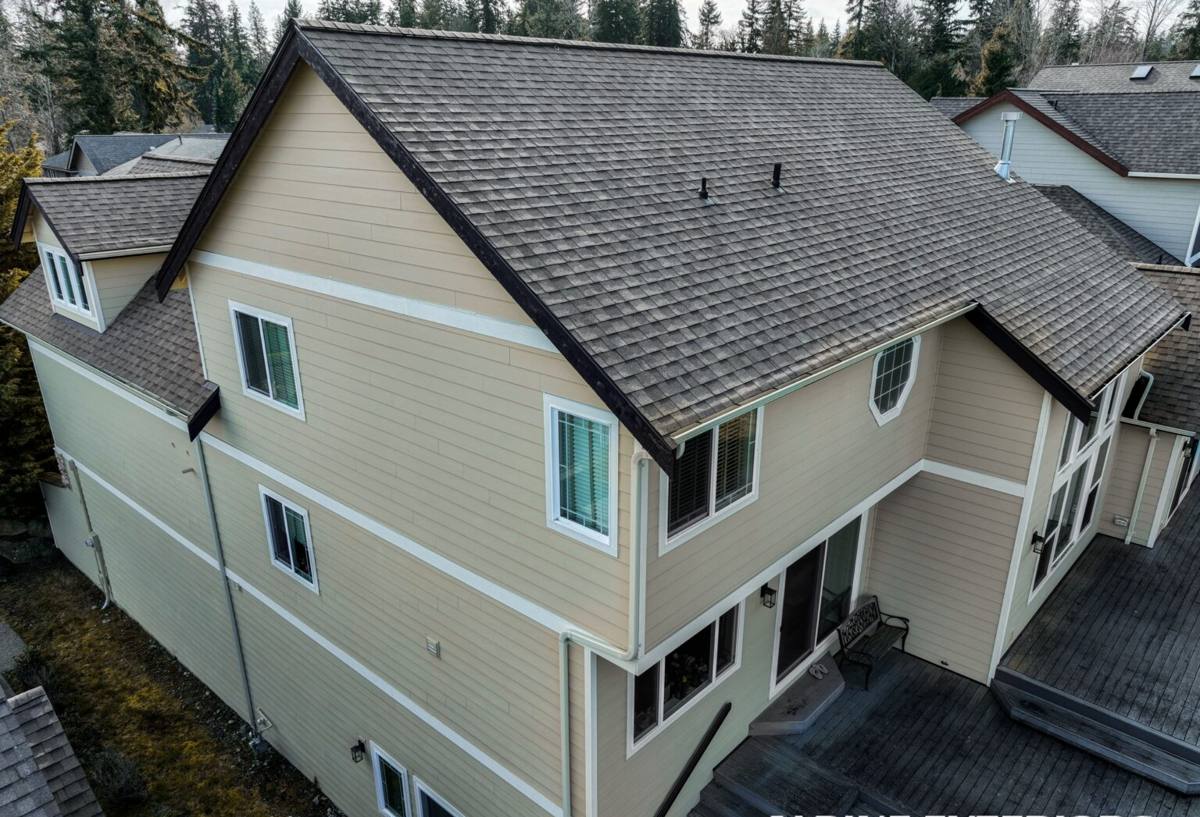
Signs It's Time to Replace, Not Repair
Not every tired-looking deck needs a full teardown. But in a salt-air, high-rainfall environment, a few warning signs usually mean repair is a temporary patch, not a real fix.
- Soft or spongy spots underfoot, especially near the house or stair landings
- Visible rust bleeding from fasteners, brackets, or joist hangers
- Gaps opening up between decking boards, or boards cupping and twisting
- A ledger board that's dark, swollen, or separating slightly from the house
- Persistent moss or algae that comes back within weeks of cleaning
- Railing posts that flex or feel loose when pushed
If you're only seeing surface wear — faded color, minor splintering, cosmetic moss on the top of boards — that can often be addressed without a full replacement. Structural issues below the decking are the ones that don't get better on their own, and they're also the ones a homeowner is least likely to see without someone pulling a few boards or getting underneath.
What a Correct Replacement Actually Involves
Structure Before Surface
A deck replacement done right starts underneath. That means checking the ledger board attachment and flashing where the deck meets the house — this is the single most common source of hidden rot in our climate, because it's the spot where wind-driven rain gets pushed against the structure over and over. Framing lumber needs to be rated for exterior/ground-contact use where it's close to soil or standing water, and joist hangers and structural connectors should be stainless steel or heavy hot-dip galvanized, not the lighter coated hardware that's fine in drier regions but corrodes fast this close to salt water.
Drainage and Airflow
Water needs somewhere to go. That means proper slope away from the house, gaps between boards sized correctly for the material, and enough clearance underneath the deck for air to move and framing to dry out between storms. A deck that traps moisture underneath — because it sits too low to the ground or has no ventilation — will grow moss and rot the structure no matter how good the decking material is on top.
Fasteners and Hardware
This is where a lot of decks near the water actually fail first, and it's the least visible part of the job. Standard coated deck screws and framing nails corrode faster in salt air than most homeowners expect. We use stainless steel or coated fasteners rated for coastal exposure, along with hidden fastening systems on composite and PVC boards where the manufacturer supports it — both for a cleaner look and because exposed screw heads are one of the first places rust shows up.
Choosing the Right Decking Material for This Climate
There's no single "best" decking material — there's a best fit for your budget, how much upkeep you want to do, and how close your property sits to the water. Here's how the common options actually perform under Birch Bay conditions.
| Material | Salt Air / Moisture Performance | Moss & Maintenance | Typical Lifespan |
|---|---|---|---|
| Pressure-treated wood | Good if fasteners and flashing are corrosion-resistant; wood itself absorbs and releases moisture seasonally | Needs regular cleaning and periodic sealing to resist moss and graying | 15–20 years with upkeep |
| Cedar | Naturally rot-resistant but still needs sealing near the water; softer surface | Moss-prone if not cleaned and re-sealed on schedule | 15–20 years with consistent care |
| Composite decking | Doesn't absorb water like wood; performs well long-term in damp climates | Low maintenance, but still needs periodic cleaning — moss can grow on any surface left wet and shaded | 25–30+ years, varies by brand |
| PVC/capped polymer | Fully water-resistant surface; best moisture performance of the group | Lowest maintenance; easiest to keep moss-free with occasional washing | 25–30+ years |
Cost generally scales in that same order — pressure-treated is the least expensive up front, PVC and premium composites cost more per square foot but ask less of you every year afterward. For a straight-up rental or a deck you're not planning to keep long-term, treated wood done correctly is a perfectly reasonable choice. For a primary residence where you don't want to be re-sealing a deck every couple of summers in this rain, composite or PVC usually pencils out better over the life of the deck.
How Our Deck Replacement Process Works
We walk the same steps on every Birch Bay deck replacement, because skipping any of them is how decks end up failing early in this climate.
- On-site assessment: We check the framing, ledger connection, footings, and any moss or moisture damage before quoting anything, so the estimate reflects what's actually there — not just what's visible from the top.
- Tear-off and structural evaluation: Once the old decking is off, we inspect joists, beams, and posts. Anything compromised gets replaced, not patched.
- Framing and flashing: New or reinforced framing goes in with corrosion-resistant hardware, and flashing at the house connection gets rebuilt to shed water properly.
- Decking installation: Boards go down with the fastening method appropriate to the material, proper spacing for drainage, and attention to how the deck will handle standing water and shade over the year.
- Railings and finishing: Guardrails, stairs, and any trim are installed to current code requirements and checked for solid attachment.
- Final walkthrough: We go over care and maintenance specific to the material you chose, so you know what upkeep to expect before the first moss season hits.
Permits and Whatcom County Requirements
Deck replacements in Birch Bay generally fall under Whatcom County building code, and most decks attached to a house — especially ones above a certain height or with guardrails — require a permit and inspection. Requirements can vary based on the deck's size, height above grade, and proximity to property lines, so this isn't something to guess at. Part of hiring a local crew is having someone who pulls permits correctly and builds to the inspected standard the first time, rather than leaving you to sort out a red tag after the fact.
Living With Your New Deck: Maintenance That Actually Matters Here
Even a low-maintenance material benefits from a little seasonal attention in a climate like this. The goal isn't constant upkeep — it's a handful of habits that keep moss and moisture from getting a foothold.
- Sweep leaves and debris off the deck regularly in fall, especially in shaded corners where moisture sits
- Rinse or lightly scrub the surface once or twice a year to knock back early moss and algae growth
- Keep gutters and downspouts clear so runoff isn't dumping extra water onto or near the deck
- Check railings and stair connections annually for looseness
- For wood decks, reapply sealant on the manufacturer's recommended schedule — don't wait until it's visibly gray and dry
- Trim back vegetation that's shading the deck and keeping it damp longer than it needs to be
Why a Local Semiahmoo-Area Crew Makes a Difference
A deck built by a crew that doesn't work this coastline regularly will often use the same materials and methods they'd use anywhere else — and that's exactly how you end up with a deck that looks fine for a few years and then fails hard around the fasteners and framing. Working Birch Bay and the broader Semiahmoo area regularly means we've seen which hardware actually holds up, which materials shed moss with the least effort, and where water tends to collect on homes exposed to wind off the water. That's not something you can fully account for from a manufacturer's spec sheet — it comes from building and repairing decks in this exact environment.
It also means we're not guessing at Whatcom County permitting requirements or driving in from out of the area for warranty callbacks. If something needs attention after the job is done, we're already working in the neighborhood.
If your current deck is showing rust, soft spots, or moss that won't quit, we're happy to take a look and give you a straight assessment of whether it needs full replacement or just targeted repair. Fill out the form below for a free, no-pressure estimate.