 Semiahmoo Siding
 Bellingham's Climate Is Hard on Windows
Bellingham sits on Bellingham Bay in Whatcom County, where salt-laden air off the water, long stretches of driving rain, and a moss season that can run half the year all work against your home's windows. It's a different kind of wear than you'd see in a drier, inland climate. Salt air speeds up corrosion on hardware and fasteners. Wind-driven rain finds its way into any gap in flashing or sealant, especially on walls that take the brunt of storms coming off the Sound. And the same damp, shaded conditions that grow moss on a roof or on siding will grow it on window sills and frames if water isn't shedding the way it's supposed to.
None of this means windows in Bellingham fail faster than anywhere else by default — it means they have less room for error. A window installed correctly, with the right materials and proper flashing, holds up fine here for decades. One installed with shortcuts, or one that's simply worn out, tends to show it here sooner than it would somewhere dry.
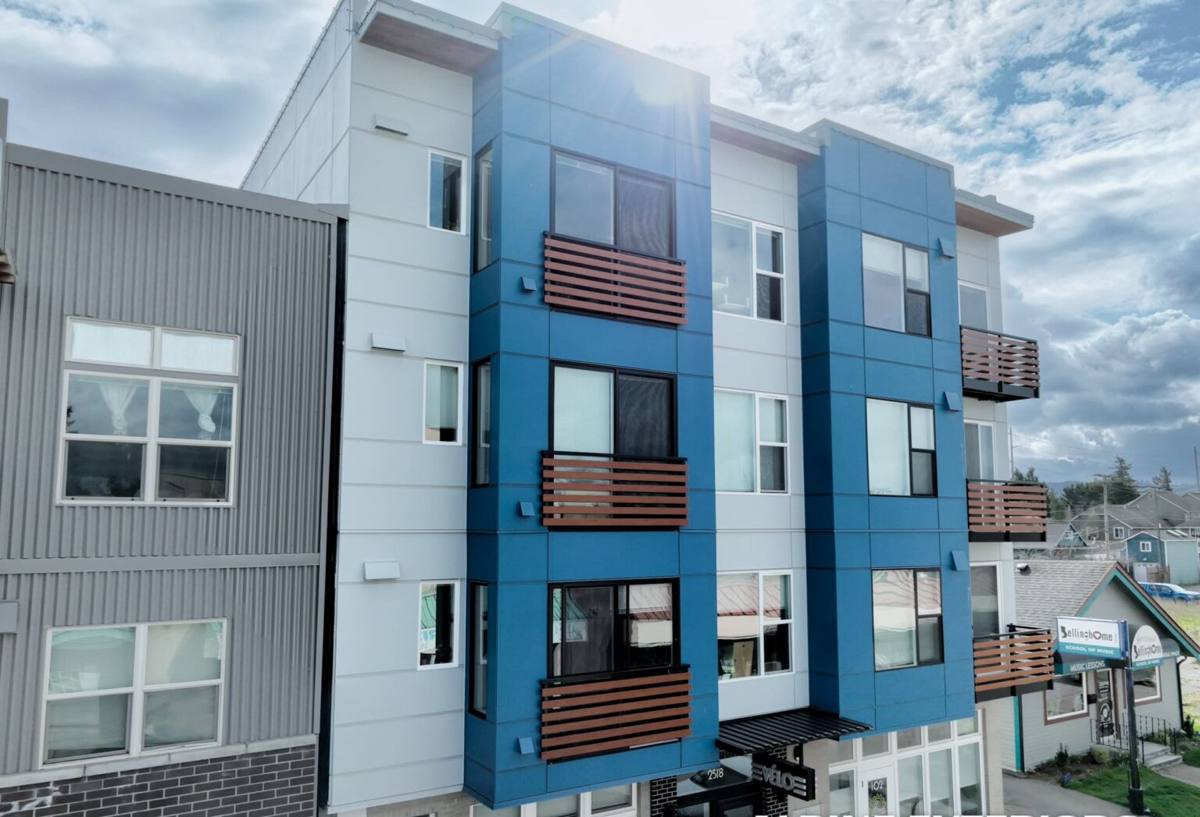
How to Tell Your Windows Are Losing the Battle
Most window failure in this area shows up gradually, and homeowners often live with it longer than they need to because the early signs look minor. Watch for:
- Fogging or a hazy film between the panes of a double-pane window — the seal has failed and the insulating gas has escaped
- Soft, discolored, or spongy wood at the sill or trim, usually meaning water has been getting behind the frame
- A draft near the frame even when the window is fully latched
- Windows that stick, won't stay open, or are hard to latch — often a sign the frame has swollen or shifted from moisture
- Dark streaking, mildew, or moss staining on the exterior trim below the window
- A jump in heating costs that doesn't match any other change in the house
Any one of these on its own might just need attention rather than full replacement. But two or three at once, or a frame material that's visibly degrading, usually means replacement is the more honest recommendation than another round of caulk and paint.
What a Correct Window Replacement Actually Involves
It's Not Just the Window
The window unit itself is only part of the job. In this climate, what happens around it matters just as much. A correct installation includes a sill pan that directs any water getting past the window back outside instead of into the wall cavity, flashing integrated with the home's weather-resistive barrier so water sheds down and over the siding rather than behind it, and sealant rated for sustained rain exposure rather than cosmetic caulk. The window also needs to be shimmed level and plumb, insulated around the frame without over-packing it, and trimmed cleanly inside and out.
Where Corners Get Cut
The most common shortcut is sealant used as a substitute for flashing instead of a backup to it. Caulk alone eventually cracks, shrinks, or pulls away, and once it does, there's nothing behind it to stop water. Another is fastening a new window into an opening that already has hidden rot — it looks fine on install day but is anchored into compromised wood. A proper replacement means opening the area enough to actually see what's there before anything new goes in.
Choosing Frame Materials for a Wet, Salt-Air Climate
There's no single best material for every home — the right call depends on budget, the style of the house, and how much upkeep you want to take on. Here's how the common options compare for a marine climate like this one:
| Material | Moisture Tolerance | Maintenance | Typical Cost Tier |
|---|---|---|---|
| Vinyl | Excellent — won't rot or corrode | Low; occasional cleaning | Lower |
| Fiberglass | Excellent; very stable through temperature swings | Low | Mid to upper |
| Wood-clad | Good if cladding and seals stay intact | Moderate; watch cladding seams and interior wood | Upper |
| Aluminum | Fair; prone to condensation and corrosion near salt air without a thermal break | Moderate | Varies |
For homes with heavy west-facing rain exposure or closer to the water, we generally steer homeowners toward vinyl or fiberglass — both resist moisture and salt air without the ongoing upkeep painted wood or bare aluminum demands. Wood-clad windows can still be a good fit where the interior wood look matters, but they ask more of you in maintenance, and any gap in the cladding gives moisture a place to start working on the wood underneath.
Glass Packages Worth Considering
Frame material gets most of the attention, but the glass package affects comfort and energy performance just as much, if not more. Double-pane glass with a low-E coating and argon gas fill is the standard for most replacement projects and performs well here. Triple-pane is worth considering on rooms facing a busy street or on north-facing walls where every bit of insulation counts, but it adds weight and cost and isn't necessary for every project. Low-E coatings help control heat loss in winter and reduce fading of interior floors and furniture from UV exposure.
One detail matters more here than in a drier climate: condensation resistance. High humidity and sizable day-to-night temperature swings can cause condensation on interior glass, and even on frames, if a window's insulating performance is marginal. A properly rated low-E, argon-filled unit with a warm-edge spacer handles this area's damp air far better than a builder-grade single-pane or an old aluminum-frame double-pane.
Our Window Replacement Process
The steps don't change much from house to house, but the care taken at each one is what separates a window that lasts from one that fails early:
- On-site assessment — checking each window from inside and out, looking for hidden rot or past water intrusion, and talking through what's driving the replacement
- Measurement and product selection, matched to the home's style, budget, and the specific exposure of that wall
- Careful removal — opening the area enough to inspect the framing, not just pulling the old unit and dropping in a new one
- Repair of any hidden damage found during removal, before anything new goes in
- Installation with a sill pan, integrated flashing, and sealant rated for sustained rain exposure
- Insulation, interior and exterior trim, and a final seal check
- Walkthrough and cleanup, with every window operating and latching the way it should
Why Hiring a Crew That Already Works This Area Matters
A window that performs well in a dry climate can still fail here if it's installed the same way. A crew that regularly works in Whatcom County knows which walls take the worst of the driving rain, how the local moss and moisture cycle affects trim and sills over time, and how window flashing needs to tie into the siding correctly — not as an afterthought once the window is already in. That matters even more when window replacement happens alongside siding work, where the two need to be sequenced and flashed together rather than treated as separate jobs that happen to share a wall.
Familiarity with the area also means fewer surprises: older homes in and around Bellingham often have framing, trim details, or prior repairs that a crew used to newer construction elsewhere might not expect. Recognizing that before the tear-out starts keeps the project on schedule and avoids costly mid-project changes.
What Affects the Cost of a Window Replacement
Costs vary widely based on the specifics of the job, but the main factors are consistent from house to house:
| Factor | Why It Matters |
|---|---|
| Frame material | Vinyl is typically the most budget-friendly; fiberglass and wood-clad cost more upfront |
| Glass package | Standard double-pane vs. triple-pane or upgraded low-E coatings changes the price per window |
| Full-frame vs. pocket replacement | Full-frame removes the old frame down to the rough opening and costs more, but it's often the right call when there's hidden rot or you want to correct flashing that was done wrong originally |
| Number and size of windows | Larger openings and whole-house projects have per-unit efficiencies but a higher total |
| Hidden repairs | Rot or water damage found during removal adds labor and material that couldn't be quoted sight unseen |
| Accessibility | Second-story windows, tight setbacks, or difficult staging add labor time |
We'll walk through which of these apply to your home during the estimate, and flag anything — like a soft sill or a suspect flashing detail — before it turns into a surprise mid-project.
Protecting the Investment After Installation
New windows still need a small amount of attention to get their full lifespan out of them in this climate:
- Check exterior caulk lines once a year for cracking or separation, especially after the first winter
- Keep weep holes clear so any water that does get into the frame track can drain back out
- Wipe down sills and frames periodically to keep moss and mildew from taking hold in shaded spots
- Keep gutters clear so overflow isn't splashing directly onto window trim below the roofline
- Avoid pointing a pressure washer directly at seals or weep holes — it can force water past them
- Have any soft or discolored trim looked at early, rather than waiting for it to spread
If you're weighing whether it's time to replace a window or two, or you're planning a full-house upgrade, we're happy to take a look and give you a straight answer — including telling you if a window still has good years left in it. Reach out for a free, no-pressure estimate using the form below.