 Semiahmoo Siding
 Building New in Bellingham? The Windows Matter More Than the Brand Name
When a home is being framed rather than remodeled, the window install isn't just "put glass in the hole." New-construction windows go in with a nailing flange, get integrated into the house wrap and flashing sequence before siding closes it all up, and become part of the wall's water management system for the next 30-plus years. Get that sequence wrong and you won't see it — not for a few years, until sheathing behind the siding starts showing rot from the inside out. In Bellingham, with Whatcom County's wet winters and coastal exposure off the Strait of Georgia, that mistake shows up faster than it would inland.
We install new-construction windows on framing crews and with builders working the Semiahmoo and Bellingham area, and we treat every opening the same way: as a moisture-management detail first, an energy detail second, and a look-nice detail third. All three matter, but only one of them causes structural damage if it's skipped.
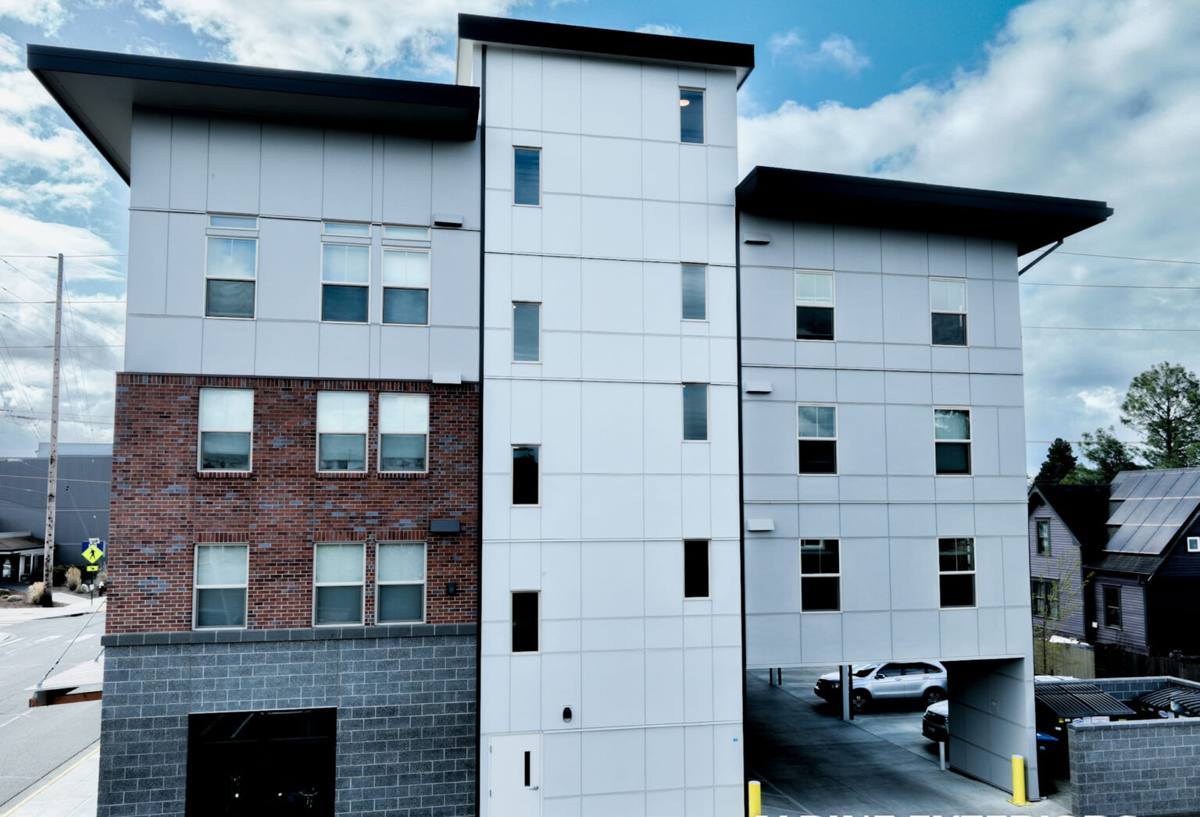
What Bellingham's Climate Actually Demands From a Window Install
Three things define the exposure here, and each one pushes on the window install in a different way:
- Salt air: proximity to Semiahmoo Bay and the Strait means airborne salt on window hardware, fasteners, and exposed metal. Cheap or mismatched fasteners corrode faster here than they would twenty miles inland.
- Driving rain: wind-driven rain off the water pushes water sideways into wall assemblies, not just straight down. A flashing detail that would be fine in a calm-air climate can leak here under a real winter storm.
- Long moss season: extended damp, low-light stretches mean anything that traps moisture — poor drainage planes, missing weep paths, caulk used as a substitute for flashing — grows moss, algae, and eventually rot instead of drying out between rains.
None of this means Bellingham needs exotic products. It means it needs correct, unglamorous execution: the right flashing order, the right sealant in the right spots (and not in the wrong ones), and hardware rated to hold up in a marine-influenced climate.
New-Construction vs. Replacement Windows: Why the Install Method Is Different
New-construction windows have a nailing flange around the perimeter that gets fastened directly to the sheathing before the weather-resistive barrier and siding go on. That flange is what lets us build a proper shingle-style flashing sequence — sill pan first, then the window, then jamb flashing, then head flashing lapped over the housewrap above the window — so water sheds downward and outward no matter which direction the wind is pushing it.
Replacement (pocket) windows go into an existing frame with no flange, relying on the original frame and exterior trim for weatherproofing. That's the right tool for a remodel where siding isn't coming off. On new construction, using a replacement-style install in a flanged opening — or skipping steps because "the siding will cover it" — is how framing crews create the leaks that don't show up until year three or four.
Why This Distinction Matters at the Bid Stage
If you're getting quotes for a new build or an addition, make sure whoever is pricing the window install is actually pricing a new-construction flashing sequence, not a quick pocket-style set. The material cost difference is small; the labor and sequencing difference is not.
Frame Materials: What Holds Up in a Coastal Whatcom County Climate
All major frame materials can perform well here if the product is decent and the install is correct. The differences that matter locally are moisture behavior, hardware corrosion resistance, and long-term maintenance — not just upfront price.
| Frame Material | Salt Air / Moisture Behavior | Maintenance | Typical Cost Range* | Best Fit |
|---|---|---|---|---|
| Vinyl | Won't rot or corrode; hardware quality varies by manufacturer | Low — occasional cleaning | $ | Budget-conscious new builds, rentals, additions |
| Fiberglass | Very stable dimensionally; handles wet/dry cycling well | Low | $$$ | Long-hold custom homes, high-exposure elevations |
| Aluminum-clad wood | Good if cladding seams and sill details are done right; wood interior needs protection from any interior moisture | Moderate | $$$ | Architectural detail, larger openings |
| Solid wood | Requires diligent finishing and upkeep in this climate | High | $$–$$$ | Historic-style or interior-focused projects, not our default recommendation for exposed coastal elevations |
*Relative scale, not a quote — actual pricing depends on size, glazing package, grille pattern, and quantity per project.
We don't push one brand or material on every job. We do steer clients away from finishes and hardware grades that aren't built for airborne salt and sustained damp — not because a product is "bad," but because the maintenance burden and warranty fine print on marine-grade exposure often aren't worth what's saved upfront.
The Flashing and Weatherproofing Details That Actually Matter
This is the part of a new-construction window install that's invisible once siding goes up — and the part that determines whether the wall stays dry for the next few decades. A correct sequence looks like this:
- Rough opening checked for square, level, and correct size before the window ever shows up on site.
- Self-adhered sill pan flashing installed with a slight back-dam and end dams, so any water that gets past the window sheds back outside the wall, not into the framing.
- Window set, shimmed level and plumb, and fastened per the manufacturer's schedule — not "however many screws fit."
- Jamb flashing over the nailing flange sides, then head flashing lapped over the top flange and tucked under the housewrap above — true shingle-lap order, every layer draining onto the one below it.
- Sealant used only where it's supposed to carry the water load (not as a substitute for proper flashing laps), with a gap left at the sill for drainage rather than a solid bead that traps water inside.
Skipping the back-dam, reversing a flashing lap, or caulking the sill solid are the three mistakes we see most often on framing crews that don't specialize in windows. Each one looks fine on install day and causes a slow leak that surfaces years later as stained drywall or soft sheathing.
Our New-Construction Window Process
1. Plan Review and Take-Off
We work from the architectural plans or the builder's window schedule to confirm sizes, egress requirements, U-factor and solar heat gain targets, and grille/style choices before anything is ordered.
2. Rough Opening Verification
Before install day, we check every opening against the ordered window sizes and flag framing issues while they're still cheap to fix.
3. Sill Pan and Flashing Install
Each opening gets sill pan flashing and a full shingle-lap sequence — the step described above — regardless of how small the window is.
4. Window Set and Fastening
Set level, plumb, and square within manufacturer tolerance, fastened per the flange schedule, with shims placed to avoid frame bow.
5. Final Weatherproofing Tie-In
Head and jamb flashing tied into the housewrap so the whole envelope drains as one system before siding closes it up.
6. Walkthrough
We walk the openings with the builder or homeowner, operate every unit, and confirm hardware and screens before we consider the job done.
What Drives Cost on a New-Construction Window Package
| Factor | Why It Moves the Price |
|---|---|
| Number and size of openings | More glass and larger units mean more material and labor per opening |
| Frame material | Vinyl runs lower upfront; fiberglass and clad-wood cost more but carry different maintenance profiles |
| Glazing package | Low-E coatings and gas fills matter more here for heat retention than for glare, given our cloud cover |
| Elevation exposure | Openings facing prevailing wind and rain off the water may warrant upgraded flashing details or corrosion-resistant hardware |
| Access and timing | Coordinating install between framing and siding on a tight builder schedule affects labor efficiency |
We're happy to walk through where your budget is best spent — usually that's flashing details and hardware quality before it's a fancier frame finish.
Why a Crew That Already Works Bellingham and Semiahmoo Matters
Window performance in this climate isn't theoretical for us — we're flashing openings against the same wind-driven rain and salt exposure on the next job we do. That matters in a few concrete ways: we know which elevations in this area take the worst weather and where extra flashing attention pays off, we're not learning Whatcom County's building department expectations on your project, and we're around after the job to answer a callback instead of having moved on to a different region entirely. New-construction window work also depends on timing with framing and siding crews — a local outfit that already coordinates with area builders keeps that sequence tight instead of leaving your rough openings exposed to the weather longer than they need to be.
Checklist: What to Ask Before You Sign a Window Contract
- Is this priced and installed as a true new-construction flange install, or a pocket/replacement-style set?
- Does the quote include sill pan flashing and a full shingle-lap sequence, or just "caulk and seal"?
- What frame material and hardware grade is specified, and is it rated for coastal/marine exposure?
- What U-factor and solar heat gain coefficient are the windows rated for, and do they fit our climate zone?
- Who is responsible for tying flashing into the housewrap — the window crew or the siding crew — and how is that handoff coordinated?
- What's the manufacturer's warranty on the glass, hardware, and frame finish, and what voids it?
- Will the crew walk the openings with you before siding closes them up?
After Move-In: Living With New-Construction Windows Through Moss Season
A correctly installed window needs very little from you. Rinse tracks and weep holes a couple times a year so debris and moss buildup don't block drainage, especially heading into the long wet stretch from fall through spring. Check that exterior caulk lines at trim edges (not the flashing itself) stay intact, and keep an eye out for any staining on interior sills after a hard, wind-driven storm — that's the one sign worth calling about early rather than waiting on.
If you're building new or adding on in the Bellingham or Semiahmoo area, we're glad to walk your plans, talk through window and flashing options for your specific exposure, and give you a straight, no-pressure estimate. Use the form below to get started.