 Semiahmoo Siding
 Metal Roofing Built for Bellingham's Weather
Bellingham sits close enough to the water that homes take on a steady diet of salt-laden air, wind-driven rain, and long stretches of shade that keep roofs damp for months at a time. A roof here doesn't just need to shed water — it needs to hold up under moisture that lingers, wind that pushes rain sideways under poorly flashed edges, and moss that gets a running start every fall and doesn't let go until late spring. Metal roofing, installed correctly, handles all of that better than most other roofing materials on the market. Installed poorly, it can trap moisture, corrode at the fasteners, and fail years before it should.
This page covers what we look for when we design and install a metal roof specifically for a Bellingham home — not a generic overview of metal roofing in general, but the details that matter in this part of Whatcom County.
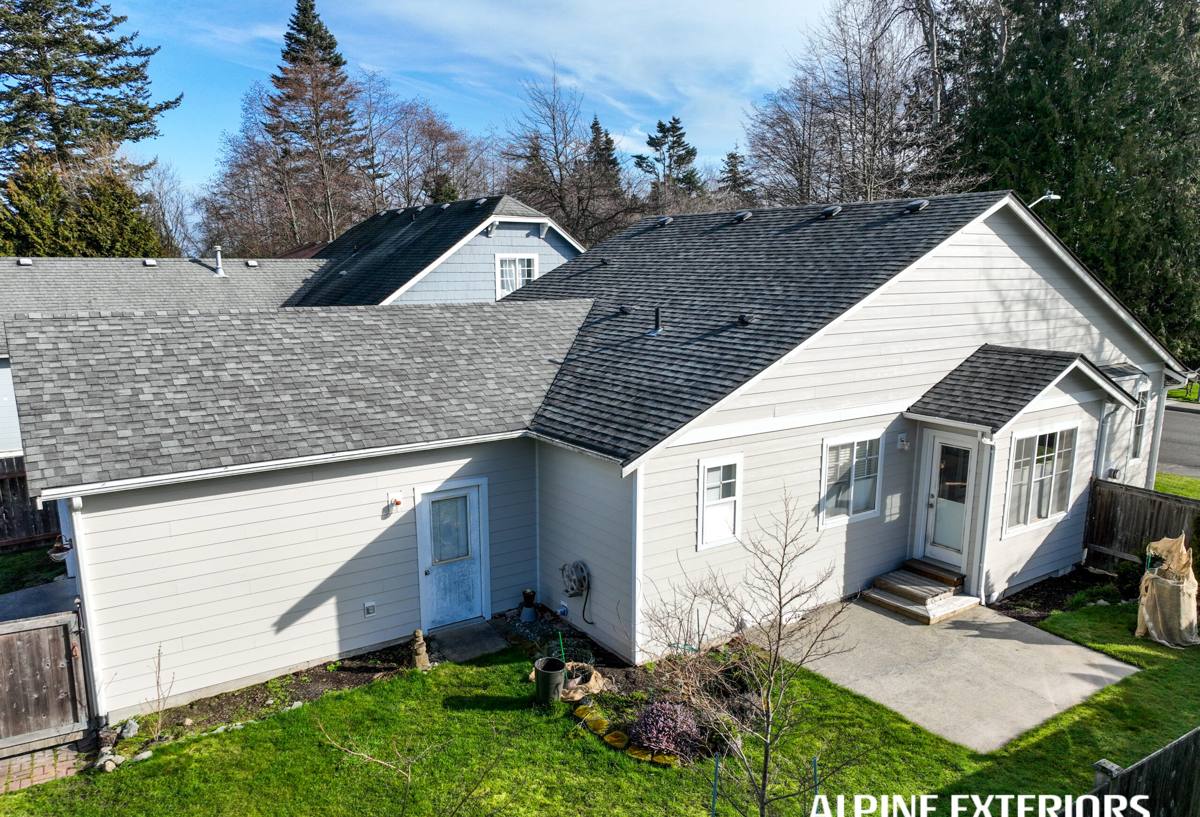
What This Climate Actually Demands From a Roof
Salt Air and Corrosion
Proximity to Semiahmoo Bay and the greater Puget Sound means airborne salt is a real factor here, even a few miles inland. Salt accelerates corrosion at cut edges, exposed fasteners, and any spot where a panel's protective coating has been scratched or ground during installation. This is one of the most common reasons a metal roof rusts prematurely — not the panel material itself, but fasteners or trim pieces that weren't rated for a coastal environment.
Driving Rain
Winter storms off the Strait of Georgia don't just drop rain straight down — they push it sideways and up under eaves, valleys, and poorly lapped flashing. A metal roof's watertight performance depends almost entirely on how the flashing, underlayment, and panel laps are detailed at every transition: valleys, chimneys, skylights, wall intersections. The panels themselves rarely fail. The details around them do.
Moss and Standing Moisture
Shaded roof sections, especially on the north side of a lot or under mature trees, stay damp long after a storm passes. That's exactly the environment moss needs to establish. Moss on a shingle roof works its way under tabs and lifts them. On a properly installed metal roof, moss has a much harder time gaining a foothold because there's no granulated surface for spores to catch on and the panels shed water fast — but moss can still build up in areas with poor slope, clogged valleys, or where debris collects against a wall flashing.
Panel Types We Install
Not every metal roofing system is built the same way, and the differences matter more here than in a dry climate. The table below compares the systems we most commonly install or recommend for Bellingham homes.
| Panel Type | Fastening | Best Fit | Coastal Notes |
|---|---|---|---|
| Standing Seam | Concealed clips, no exposed screws on the field | Full roof replacements, homes near the water | Best long-term choice in salt air — no exposed fasteners to corrode |
| Exposed Fastener (Ag Panel) | Screws driven through the panel face | Budget-conscious projects, outbuildings, shops | Requires periodic fastener inspection and eventual re-torquing or replacement |
| Metal Shingles/Shakes | Interlocking, mostly concealed | Homes wanting a traditional look with metal performance | Good moisture shedding; more seams than standing seam, so flashing detail matters more |
For homes within a mile or two of the water, we lean toward standing seam whenever the budget allows. Removing exposed fasteners from the equation removes the single most common point of coastal corrosion.
What a Correct Installation Actually Involves
Underlayment
Metal panels are not the waterproofing layer by themselves — the underlayment beneath them is doing real work, especially at seams and around penetrations. In a climate with this much sustained moisture, we use synthetic or self-adhered underlayment rated for the exposure the roof will see, not a minimum-code product, particularly in valleys and along eaves where ice and wind-driven rain concentrate.
Fasteners and Flashing Metal
Every fastener, screw, and piece of flashing on the roof needs to be compatible with the panel metal to avoid galvanic corrosion — mixing incompatible metals is a slow, hidden way to ruin an otherwise good roof. In a salt-air environment we specify corrosion-resistant fasteners and flashing rated for coastal exposure, not standard-grade hardware.
Ventilation
A roof deck that can't breathe traps moisture underneath the metal, which leads to condensation, deck rot, and premature failure from the inside out — often invisible until it's expensive. We check ridge and soffit ventilation on every metal roofing project, since this is one of the most overlooked details on jobs done by crews unfamiliar with the climate here.
Slope and Panel Direction
Low-slope sections and complex rooflines need panel layouts and seam types matched to how much water will actually move across them. A panel system that works fine on a steep, simple gable can leak on a shallow porch roof if the wrong seam type or lap direction is used.
Our Process
Every metal roofing project follows the same sequence, whether it's a full replacement or a roof section over an addition:
- On-site assessment: we inspect the existing deck, ventilation, flashing points, and any moss or moisture staining before quoting anything.
- Written estimate: panel type, underlayment, flashing plan, and ventilation adjustments spelled out clearly — no vague line items.
- Deck prep: repair or replace any damaged sheathing before a single panel goes down. Installing over a soft or rotted deck is how good roofs fail early.
- Underlayment and flashing installation: the layer that actually keeps water out, done first and done right.
- Panel installation: laid and fastened to manufacturer spec, with attention to lap direction relative to prevailing wind and rain.
- Final walkthrough: we review the finished roof with the homeowner, including what routine maintenance looks like going forward.
Maintenance and Moss Prevention
Metal roofing requires less upkeep than most materials, but "less" isn't "none," especially here. A short annual routine keeps a metal roof performing the way it's supposed to for decades:
- Clear valleys, gutters, and any debris that collects against wall flashing before fall rains start
- Check shaded or north-facing sections for early moss growth and remove it before it spreads
- Inspect exposed fasteners (if the roof uses them) for loosening or early rust
- Look at sealant and flashing around chimneys, vents, and skylights for cracking or lifting
- Trim back overhanging branches that keep sections of the roof shaded and damp longer than necessary
We avoid pressure washing metal roofs — it can strip protective coatings and drive water up under laps. A soft rinse and manual debris removal is the safer approach.
Cost Factors
Metal roofing costs more upfront than asphalt shingles, but the gap narrows over the life of the roof given how much less maintenance and how few replacement cycles it needs. The main variables that move the price on a given project:
| Factor | Impact on Cost |
|---|---|
| Panel type (standing seam vs. exposed fastener vs. shingle-style) | Standing seam typically costs more due to labor and concealed clip systems |
| Roof complexity (valleys, dormers, penetrations) | More flashing detail work means more labor hours |
| Deck condition | Rot or soft sheathing found during tear-off adds repair cost |
| Ventilation upgrades | Adding or correcting ridge/soffit venting adds modest cost but prevents bigger problems later |
| Coastal-rated hardware | Corrosion-resistant fasteners and flashing cost more than standard-grade but pay off near the water |
We give a written, itemized estimate before any work starts so you know exactly what's driving the number.
Signs Your Current Roof Might Need Attention
A quick self-check that applies whether your current roof is metal, shingle, or something else:
- Moss visible on north-facing or shaded slopes, especially building up near the ridge or in valleys
- Rust streaking below fasteners or flashing on an existing metal roof
- Water staining on interior ceilings, particularly after wind-driven rain events
- Granules collecting in gutters (a shingle-specific sign of wear)
- Soft spots or sagging when walking the attic or crawlspace above the roof deck
- Gaps or lifting at flashing around chimneys, skylights, or wall intersections
Any one of these is worth a look before it turns into a deck repair or interior damage.
Why Hire a Crew That Already Works Bellingham
Metal roofing performance in this climate comes down to details a crew either already knows or has to learn on your roof: which fasteners actually hold up near the bay, where moss builds up fastest given local shade and slope patterns, how much underlayment is enough for the rain volume Whatcom County sees, and how to detail flashing so wind-driven rain doesn't find its way in. A crew that already works Bellingham roofs regularly has already made those calls dozens of times over. That's the difference between a roof that just looks right on installation day and one that's still performing correctly ten winters from now.
If you're weighing a metal roof for a Bellingham home, we're happy to take a look and walk you through what your specific roof needs — no pressure, no obligation. The form below gets you a free estimate.