 Semiahmoo Siding
 James Hardie Siding, Installed for Bellingham's Actual Weather
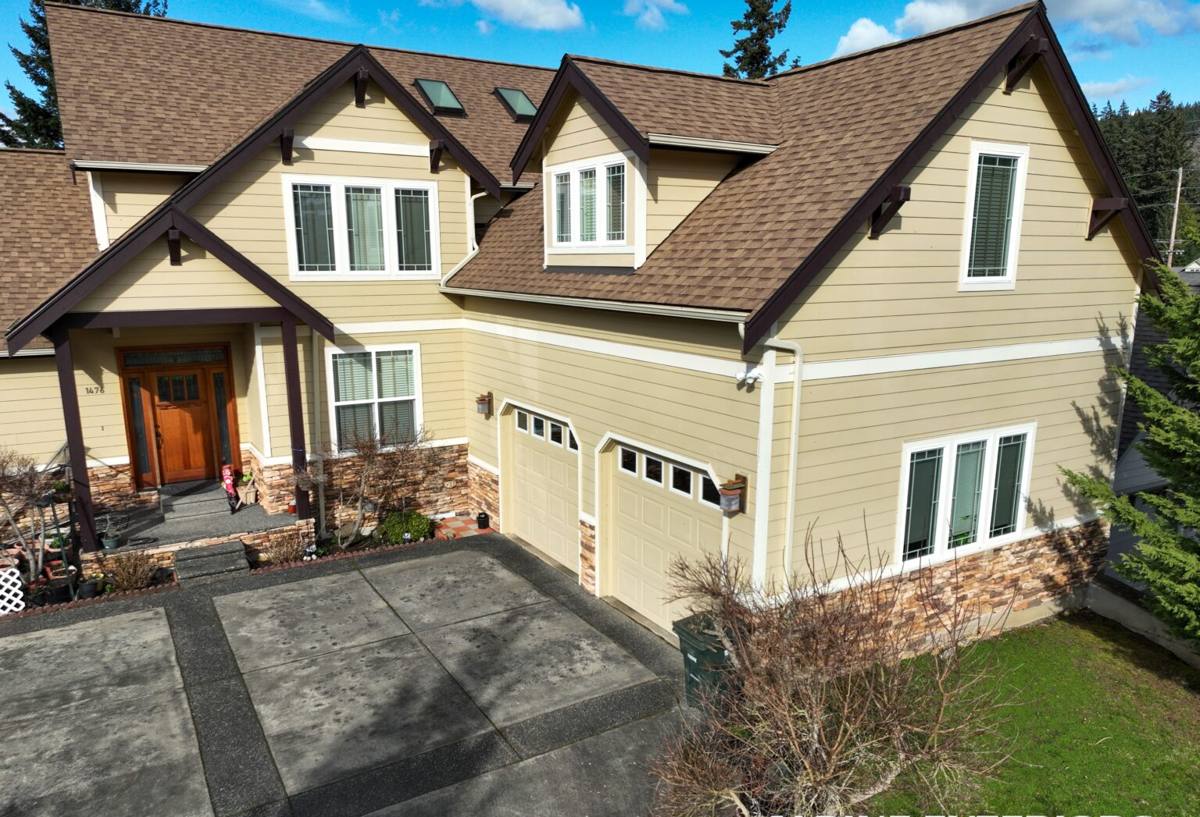
Bellingham sits on Bellingham Bay in a stretch of Whatcom County that takes a specific kind of punishment year-round: salt-tinged marine air moving in off the water, rain that arrives sideways as often as it falls straight down, and a moss and mildew season on shaded walls that can run most of the calendar year rather than just a few wet months. We install James Hardie fiber cement siding on Bellingham homes because it's the one system we've found that holds up to that exact combination, and this page is about that product specifically: what it is, how it's engineered for a climate like this, and what a correct installation actually requires here.
This isn't a general siding overview. It's a look at James Hardie as a product system, applied to one place, so a Bellingham homeowner considering it knows what they're actually buying and what a competent install looks like versus a rushed one.
Why Bellingham's Climate Is Hard on Siding
Marine Air and Salt Exposure
Living on the bay means a steady flow of moisture-laden, salt-tinged air moving across the city, not just during obvious storm events. That kind of continuous exposure works slowly on fasteners, flashing, and lower-grade finishes, and the damage is usually quiet enough that it isn't obvious until years into a siding's life.
Wind-Driven Rain
Rain here is frequently pushed sideways by wind off the bay and the Salish Sea, which means it hits lap joints, trim seams, and wall penetrations from an angle rather than falling straight onto a roofline. A siding system engineered around a purely vertical rainfall model, rather than wind-driven exposure, is working against the wrong assumption from day one.
A Long Moss and Mildew Season
Mild temperatures, tree cover, and consistent dampness combine to keep moss and mildew active on north-facing and shaded walls across much of the year in Bellingham. Any siding material that holds even a little moisture against its surface, instead of shedding it cleanly, becomes a growth surface over time, and it tends to show up first in the spots homeowners check least often.
What James Hardie Fiber Cement Actually Is
James Hardie siding is a fiber cement product: a mix of cellulose fiber, sand, and Portland cement formed into boards and panels, then cured. That composition is what gives it properties wood-based and vinyl products don't share. It doesn't feed a fire the way wood-based siding can, since the core is non-combustible. It doesn't expand and contract with moisture the way engineered wood does, so it isn't prone to swelling, cupping, or warping after repeated wet-season cycles. And because it's cement-based rather than a painted or coated wood product, its dimensional stability holds up over decades rather than years, which matters directly in a climate that stays wet as much of the year as Bellingham's does.
HZ5: The Formulation Built for This Region
James Hardie makes region-specific formulations, and the HZ5 line is engineered for climates with heavy sustained moisture and freeze-thaw cycling — which describes coastal Whatcom County more accurately than a generic, one-size-fits-all national siding spec would. We install HZ5 on Bellingham homes for that reason specifically, not because it's the newest or most expensive option on a price sheet.
ColorPlus: Why the Finish Matters as Much as the Board
James Hardie's ColorPlus technology applies color in a controlled factory setting and cures it before the boards ever reach a job site, rather than relying on paint brushed on after installation. That matters in a marine climate because field-applied paint is only as good as the weather conditions it was applied in and the maintenance schedule that follows it, both of which are harder to control here than in a drier region. A factory-cured finish resists fading, chalking, and moisture intrusion at the surface far longer, which translates directly into fewer repainting cycles over the life of the siding.
James Hardie Product Lines We Install
James Hardie isn't a single product; it's a system of profiles that solve different design and performance needs. Which line makes sense for a given Bellingham home depends on the home's style, wall exposure, and what's already on it.
| Product Line | Profile | Where It Fits Best |
|---|---|---|
| HardiePlank | Horizontal lap siding | The most common full-home re-side; traditional lap look across most Bellingham housing styles |
| HardieShingle | Staggered or straight-edge shingle panels | Craftsman and cottage-style homes, or accent gables and dormers |
| HardiePanel | Vertical sheet siding | Modern builds, accent walls, and board-and-batten assemblies with battens over the seams |
| HardieTrim | Trim boards for corners, windows, and fascia | Every job — trim is where water intrusion most often starts if it's mismatched or poorly flashed |
| HardieSoffit | Pre-finished soffit panels | Homes where the existing soffit shows moisture staining or venting problems |
Most Bellingham projects use HardiePlank as the primary field material with HardieTrim throughout, and we'll walk through which combination fits your home's actual layout and exposure during the estimate rather than defaulting to one option for every house.
Why We Install Only James Hardie
We don't offer a menu of siding brands. We install James Hardie fiber cement, and the reason is what we've consistently seen on tear-offs and repair calls in this specific climate: LP SmartSide is an engineered wood product that's more sensitive to moisture intrusion at cut edges and fastener penetrations than fiber cement, which is a real liability in a climate this wet. Vinyl is affordable and low-maintenance in a general sense, but it can warp under sun exposure, crack in a cold snap, and trap moisture behind the panel if the house wrap and flashing underneath aren't handled carefully — an easy thing to get wrong and a hard thing to catch once the siding is up. Cedar and primed spruce are attractive, legitimate materials, but they need an ongoing painting or sealing schedule to keep moisture out, and in a climate with this much sustained rain, that maintenance schedule tends to slip in a way that shortens the material's real-world lifespan. Those are honest trade-offs, not knocks on the products — other contractors install them competently. We made a professional decision that standing behind one system we trust completely, backed by a strong transferable warranty when installed to spec, is a better position for Bellingham homeowners than offering a cheaper option that quietly shifts maintenance risk onto them a few years down the road.
What a Correct James Hardie Installation Requires
Buying the right material is only half the job. James Hardie siding performs the way it's engineered to only when the installation follows the manufacturer's spec, and in a climate like Bellingham's, skipped details show up faster than they would somewhere drier.
- House wrap or weather-resistive barrier installed and lapped correctly, shingle-style, before any siding goes up
- Correct clearance from grade, roofline, and any horizontal surface so the bottom edge of the siding isn't sitting in standing water or snow
- Joints lapped and flashed, not just caulked, so wind-driven rain hitting a seam at an angle has somewhere to go besides behind the board
- Fasteners at the manufacturer's specified spacing and depth, using corrosion-resistant fasteners suited to marine air exposure
- Field-cut edges primed before installation, since ColorPlus only protects the factory-finished face and edges, not a fresh cut made on site
- Trim, window, and door flashing integrated with the house wrap as one continuous drainage plane, not installed as separate, disconnected steps
Rushed or corner-cut installation is one of the most common reasons a genuinely good product develops a bad reputation. A poorly flashed window or an unlapped seam won't fail on install day — it'll fail two or three wet seasons later, once moisture has had time to work behind the wall assembly, which is exactly why we treat installation detail with the same seriousness as the material choice itself.
How We Handle a Bellingham Hardie Project
We start with an on-site look at the home, not a phone quote, because Bellingham's housing stock varies enough — from older homes on the hillsides above the bay to newer construction further from the water — that wall exposure and existing damage differ from property to property even within the same neighborhood. From there we assess what's underneath the current siding, since moisture that's been tracking behind an old wall assembly changes the scope of the job. If the sheathing is sound, we plan the Hardie product lines, trim details, and color for your home specifically. If it isn't, we tell you plainly before any material gets ordered, not after demo day when the surprises are already unavoidable.
Repair vs. Full Replacement
Not every siding issue on a Bellingham home means a full tear-off. Isolated impact damage, a section that failed around a window, or trim that's come loose can often be repaired and matched into existing Hardie siding without redoing the whole house. But when moisture has been tracking behind the wall for a while, or the existing siding is an older product that's simply reached the end of its service life, a patch usually just postpones a larger job at greater cost. We'll tell you which situation you're actually in before recommending either path.
Cost Factors for a Bellingham Hardie Project
| Factor | What It Affects | Why It Matters in Bellingham |
|---|---|---|
| Home size and wall complexity | Total material and labor | Bellingham's older hillside homes often have more dormers, trim, and roofline intersections where wind-driven rain can find its way in |
| Existing sheathing condition | Whether repair work is needed before new siding goes up | Years of marine moisture exposure can hide substrate damage behind older siding |
| Product line and profile | Material cost per square foot | HardiePlank, HardieShingle, and HardiePanel price differently and suit different home styles |
| Trim and detail work | Labor hours for flashing and joint work | Correct flashing at every trim transition is what actually keeps wind-driven rain out |
| Access and site conditions | Labor time and equipment needs | Hillside lots and mature landscaping common in Bellingham can add setup time |
Why a Local Crew Matters for a Hardie Install
A crew that installs James Hardie siding across Bellingham and the surrounding Semiahmoo and Whatcom County area regularly sees how marine air, wind-driven rain, and moss actually behave on real houses over a full year, not just how the product performs in a manufacturer's spec sheet. That experience shows up in small, practical decisions on install day: where extra flashing attention actually pays off, which wall orientations stay wet longest and need closer attention at seams, and which shortcuts are never worth taking in a climate this consistently damp. It's also what lets us stand behind a Hardie installation with confidence rather than hoping it holds up — we've seen what happens when the details are skipped, and we build around avoiding that outcome rather than discovering it on a callback.
If you're considering James Hardie siding for a Bellingham or Semiahmoo-area home, we're glad to take a look and give you an honest read on what your home actually needs. Reach out using the form below to schedule a free, no-pressure estimate.