 Semiahmoo Siding
 Bellingham Roofs Face a Tougher Job Than the Manufacturer's Spec Sheet Admits
Asphalt shingles are rated and tested under conditions that don't look much like Whatcom County. A shingle warranty is written assuming reasonable ventilation, moderate humidity, and a roof that dries out between storms. Bellingham doesn't offer much of that. Homes here sit close enough to the water to pick up salt-laden air, see long stretches of steady rain rather than short downpours, and go through a real moss season that can run half the year in shaded, north-facing sections of a roof. None of that makes asphalt shingles a bad choice — they're still the most practical, cost-effective roofing material for the vast majority of homes here. It does mean the installation details matter more in this climate than in a dry one, and cutting corners shows up faster.
A shingle roof that's installed correctly for this region should handle decades of Pacific Northwest weather without drama. One that's installed to a generic national standard, with no thought given to local conditions, tends to develop problems in the exact places you'd expect: valleys, north-facing slopes, low-slope sections, and anywhere moss or debris can hold moisture against the shingle surface.
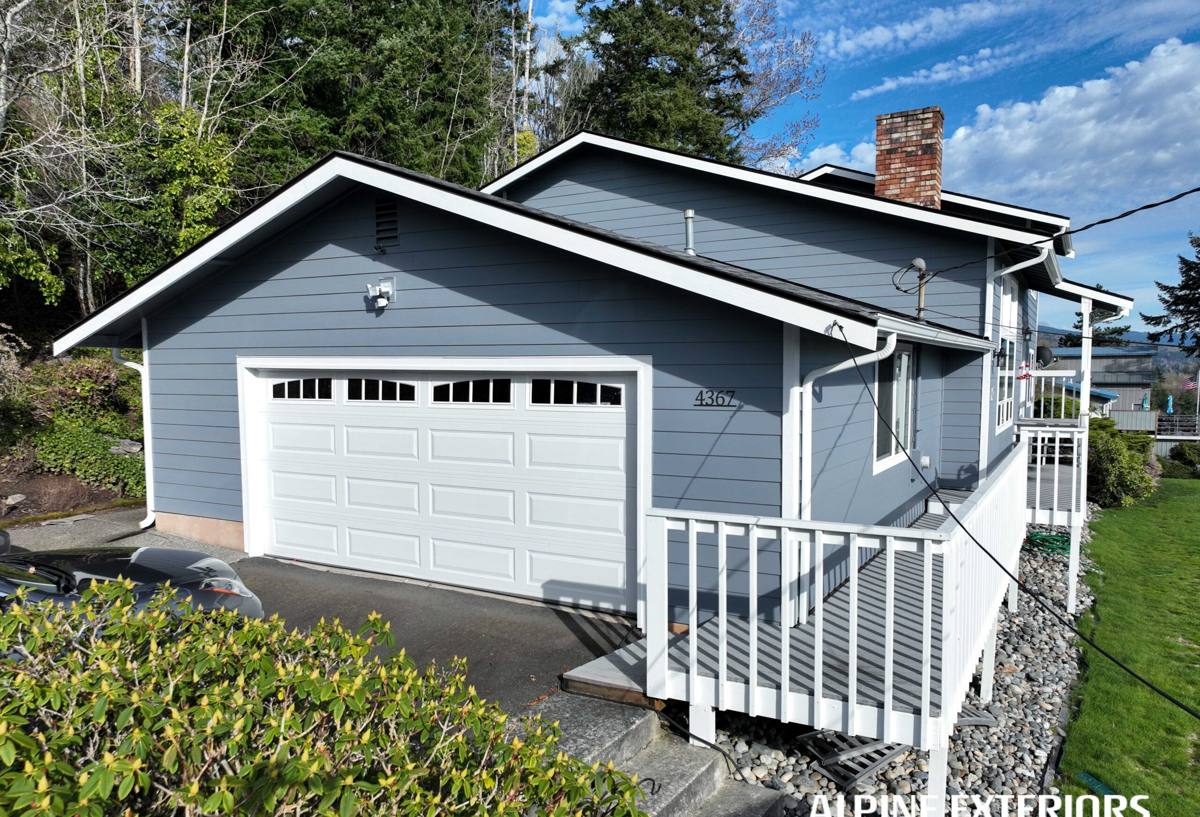
What Actually Wears Out an Asphalt Roof Here
Moss and Organic Growth
Moss doesn't just sit on top of a roof — it holds moisture against the shingle granules, works its way under shingle tabs as it grows, and can lift edges enough for wind-driven rain to get underneath. Shaded roof sections, roofs under overhanging trees, and north-facing slopes that never fully dry out are the areas that need the most attention. Left unmanaged over several moss seasons, this is one of the more common reasons a roof needs early repair or replacement in this area.
Driving Rain and Wind-Driven Moisture
Rain in this region doesn't always fall straight down. Wind off the water pushes rain sideways into roof-wall intersections, under poorly lapped flashing, and into any gap in the underlayment. A roof that would be fine in a calmer climate with basic flashing can leak here if the flashing details weren't built for wind-driven rain specifically.
Salt Air and Fastener Corrosion
Homes closer to the water deal with airborne salt that accelerates corrosion on exposed metal — nails, flashing, vents, and fasteners. Standard fasteners can start showing rust streaks and losing holding strength years before they would inland. This is a material selection issue as much as an installation issue.
Temperature Swings and Granule Loss
Cooler, damp winters followed by warmer, drier summers cause the freeze-thaw and expansion-contraction cycling that gradually loosens granules and stresses the shingle mat. It's slower and less dramatic than what colder inland climates see, but it adds up over a 20-30 year roof life.
What a Correctly Installed Roof Includes in This Climate
Not every asphalt shingle installation is the same job with a different shingle color. For Bellingham homes, a correct installation includes a few things that are easy to skip and hard to notice until they fail:
- Full synthetic underlayment — not just felt paper — as a real second layer of water protection, since shingles alone aren't a complete waterproofing system.
- Ice-and-water shield membrane at eaves, valleys, and roof-wall intersections, the areas most exposed to wind-driven rain and moss buildup.
- Corrosion-resistant fasteners and flashing, especially on homes with any water exposure, so nails and flashing aren't the first thing to fail.
- Balanced attic ventilation — intake at the eaves and exhaust at the ridge — so moisture doesn't get trapped under the deck and cause problems from underneath.
- Properly lapped and sealed valley and step flashing, built for sideways rain rather than assuming water only moves straight down.
- Starter strip and hip/ridge shingles rated for wind, since edge and ridge failures are usually where a roof loses shingles first in a storm.
Skip any one of these and the roof can still look fine on installation day. The difference shows up three, five, or ten years later — usually as a leak in a spot that seemed unrelated to the original shortcut.
Choosing the Right Shingle for Salt Air and a Long Moss Season
Not all asphalt shingles are built the same, and the differences matter more here than in a milder climate. We look at three things for every Bellingham roof: algae resistance, wind rating, and how the shingle profile sheds water and debris.
Algae-Resistant (AR) Shingles
Most quality shingles today include copper-infused granules designed to resist algae and moss growth. This isn't a gimmick — on a shaded, damp roof, the difference between AR-rated and standard shingles is visible within a few years. We treat AR shingles as the standard for this area, not an upgrade.
Wind and Impact Rating
Coastal exposure means checking the shingle's wind rating against the actual exposure of the roof, not just picking whatever's on the shelf. A shingle rated for a sheltered inland lot isn't necessarily the right choice for a roof with open exposure toward the water.
Architectural vs. Three-Tab
Architectural (laminate) shingles are heavier, have a longer track record in wet climates, and generally hold up better against moss lift and wind uplift than older three-tab styles. We don't install three-tab shingles as our standard offering — the extra material and multi-layer construction of architectural shingles is a better match for what this climate does to a roof over time, and the cost difference is smaller than most homeowners expect.
| Factor | Standard-Grade Shingle | Higher-Grade Architectural Shingle |
|---|---|---|
| Typical lifespan (this climate) | 15-20 years | 25-30+ years |
| Algae/moss resistance | Basic or none | Enhanced AR granules standard |
| Wind rating | Lower, entry-level | Higher, better for open/coastal exposure |
| Upfront cost | Lower | Moderately higher |
| Cost over full roof life | Often higher (earlier replacement) | Typically lower per year owned |
Our Process for a Bellingham Roof Replacement
1. On-Site Assessment
We walk the roof and the attic, not just the roof. Ventilation problems, deck moisture, and moss patterns tell us more about what the roof actually needs than a ground-level look ever could.
2. Honest Scope and Estimate
We tell you what's actually needed versus what's optional — including whether repair is a reasonable option or full replacement is the more honest recommendation given the roof's age and condition.
3. Tear-Off and Deck Inspection
Full tear-off lets us inspect the roof deck itself for soft spots or rot, usually from long-term moisture intrusion, before anything new goes down. Covering up a bad deck with new shingles just delays a much bigger problem.
4. Installation to the Details Above
Underlayment, ice-and-water shield, flashing, ventilation, and fastener selection all follow the standard we described above — not a stripped-down version of it.
5. Cleanup and Walkthrough
Magnetic sweep for nails, full site cleanup, and a walkthrough so you know what was done and what to watch for going forward.
Living With a Moss Season: What Ongoing Care Actually Looks Like
A well-installed roof still needs some seasonal attention in this climate. This isn't about creating extra maintenance work — it's about protecting the investment:
- Keep gutters and valleys clear of debris so water and moss spores don't have a place to sit and accumulate.
- Trim back overhanging branches where practical to reduce shade and debris on the roof surface.
- Address visible moss growth before it spreads under shingle tabs rather than after.
- Have the roof looked at after major windstorms, since lifted or displaced shingles are easy to miss from the ground.
- Confirm attic ventilation is still working as intended if you notice condensation or musty smells in attic spaces.
Signs Your Current Roof Needs a Closer Look
Most roof failures in this area don't happen suddenly — they show warning signs for months or years first:
- Granules collecting in gutters or at downspout outlets
- Moss visibly growing on or lifting shingle tabs, especially on north-facing slopes
- Curling, cupping, or cracked shingles
- Dark streaking that doesn't wash off with normal rain
- Soft spots, sagging, or visible dips when viewed from a distance
- Water stains on interior ceilings or attic sheathing
- Rusting nail heads or flashing visible at roof edges
Why Local Experience Matters More Than a Low Bid
Plenty of roofing crews can install a shingle roof to a national baseline standard. Fewer have spent years watching how those same details actually perform through a Whatcom County winter, a wet spring, and a full moss season. That experience shapes real decisions: where we upgrade underlayment even when it's not strictly required, which valleys get extra flashing attention, and which shingle lines we've seen hold up versus which ones we've seen struggle in shaded, damp conditions specific to this area. It's also why we can give you a straight answer about repair versus replacement instead of defaulting to whichever is more profitable for us.
Warranty and What It Actually Covers
Shingle manufacturers offer material warranties, and we back our installation work separately. It's worth understanding the difference: a material warranty covers defects in the shingle itself, while workmanship coverage is what protects you if a flashing detail or installation step wasn't done correctly. We'll walk you through exactly what's covered under each before any work starts, so there are no surprises later — including what voids coverage, since improper attic ventilation or ignored moss buildup can affect manufacturer warranty claims down the road.
If your roof is showing any of the signs above, or you're simply due for an honest opinion on its condition, we're happy to take a look. Use the form below to request a free, no-pressure estimate — we'll give you a straight assessment of what your roof actually needs, not just a quote for the biggest job possible.