 Semiahmoo Siding
 Blaine's Siding Problem Isn't Like Bellingham's
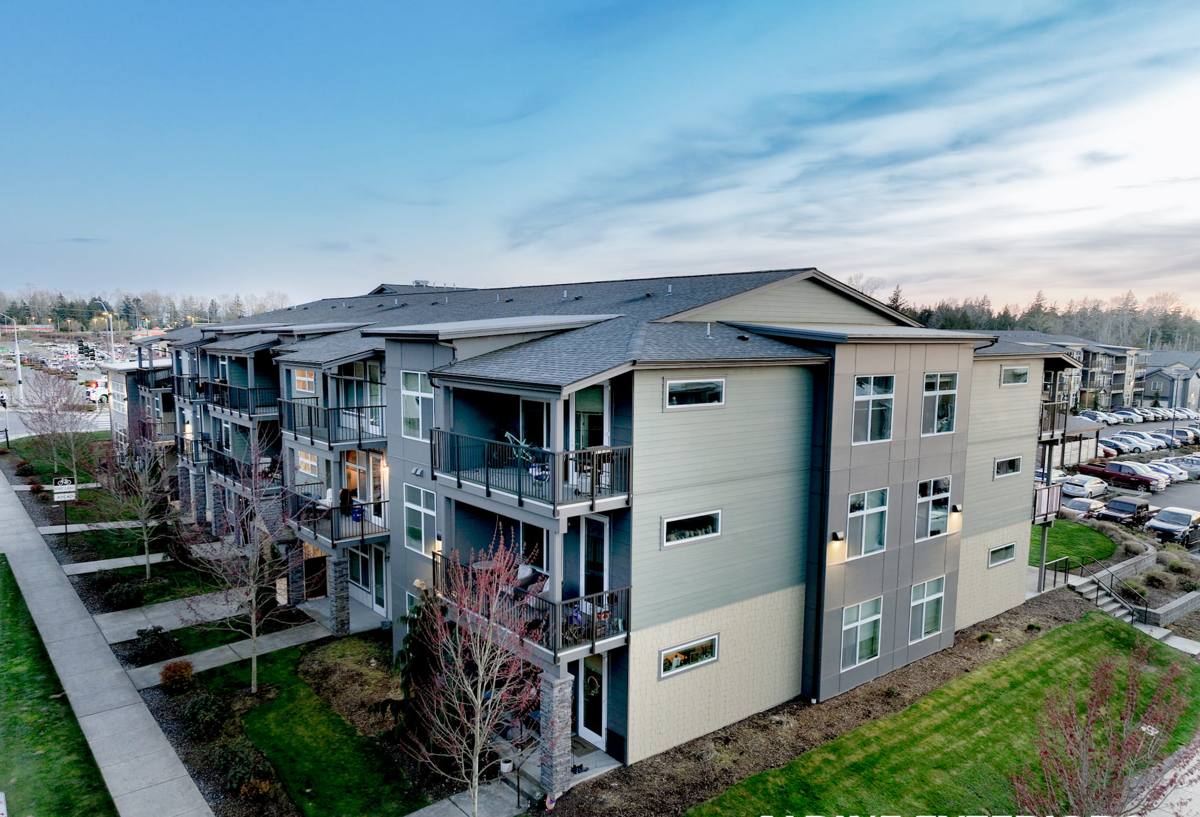
Blaine sits right on the water at the top of Whatcom County, and that changes what a siding job has to survive. Homes near Semiahmoo Bay and the Blaine waterfront take on salt-laden air coming off Drayton Harbor and the Strait, near-constant winter rain driven sideways by wind off the water, and a moss and algae season that can run eight months out of the year on north- and west-facing walls. A siding product and installation detail set that works fine twenty miles inland doesn't automatically hold up two blocks from the bay.
We install siding across Whatcom County, but Blaine jobs get planned around this specific combination: salt exposure, wind-driven rain, and heavy moisture retention from moss and shade. Get any one of those wrong and the siding looks fine for a year or two before the problems show up.
What Salt Air Actually Does to Siding
Salt air isn't just a coastal talking point — it's a real mechanism of failure for the wrong materials. Airborne salt settles on exterior surfaces and accelerates corrosion of exposed metal fasteners, flashing, and trim hardware. It also draws moisture, keeping surfaces damp longer than they would be a few miles inland, which matters for any siding material that isn't fully water-stable.
Why This Rules Out Some Common Choices
Vinyl siding can hold up to salt air in terms of the plastic itself, but the fastening and flashing details around windows, corners, and penetrations are where salt-accelerated corrosion causes problems over time. Wood-based products — cedar, primed spruce — are the more direct concern: salt-laden moisture speeds up the cycle of swelling, cracking, and paint failure that wood siding already struggles with in the Pacific Northwest. That's a large part of why we don't install those products on this coastline, on Blaine homes or anywhere else in our service area.
Fiber cement doesn't have that vulnerability. It's not organic material for salt-driven moisture to work into, and it doesn't rely on a paint film that salt air will break down faster than normal. That's one of the core reasons we standardized on James Hardie for homes in this zone.
Driving Rain and the Water-Management Layer
Blaine gets plenty of straightforward rain, but the rain that causes siding failures is the sideways kind — wind-driven rain off the water that gets pushed up under laps, around trim, and into any gap in the water-resistive barrier. This is a detail problem, not a material problem. Even the best siding material fails early if the house wrap, flashing, and drainage plane behind it aren't installed correctly.
What a Correct Water-Management Setup Includes
- A continuous, properly lapped water-resistive barrier (house wrap) with all seams and penetrations taped or sealed
- Flashing at every horizontal transition — window and door heads, deck ledgers, roof-to-wall intersections — installed shingle-fashion so water sheds outward, not in
- Correct lap exposure and fastener placement per the James Hardie installation manual, not shortcuts based on "how it's usually done"
- A drainage gap or rainscreen detail where the wall assembly calls for one, so any water that does get behind the siding can drain and dry instead of sitting against the sheathing
- Sealant only where the manufacturer's install guide specifies it — over-caulking traps moisture just as often as it keeps it out
On a home exposed to driving rain off Semiahmoo Bay, these details aren't optional extras — they're the difference between siding that lasts thirty-plus years and siding that needs rework in five.
Moss, Algae, and the Long Wet Season
Blaine's growing season for moss and algae is long, and shaded or north-facing walls near mature trees or close to the water stay damp for extended stretches. That moisture retention is hard on any siding finish that isn't engineered for it — paint films can chalk, streak, or host algae growth faster than they would in a drier climate.
James Hardie's ColorPlus factory finish is baked on in a controlled environment and backed by its own finish warranty, which holds up to sustained moisture exposure better than field-applied paint on wood or engineered wood products. It won't stop moss from growing on a shaded wall entirely — nothing does — but it resists the staining and finish breakdown that moss and algae cause on less moisture-stable materials, and it cleans up without stripping the substrate underneath.
Why We Only Install James Hardie on Blaine Homes
We get asked why we don't offer LP SmartSide, vinyl, or wood siding as options. The honest answer: in a salt-air, high-rainfall, long-moss-season environment like Blaine's, those products carry real trade-offs we're not willing to install and then be responsible for.
| Factor | Wood / Primed Spruce | Vinyl | James Hardie Fiber Cement |
|---|---|---|---|
| Moisture behavior | Swells, cracks, rots over time in sustained wet conditions | Doesn't absorb water, but seams and fasteners are corrosion-prone in salt air | Non-organic, dimensionally stable, engineered for wet climates |
| Salt air resistance | Poor — accelerates paint failure and decay | Fair material, weaker at fastener/flashing points | Strong — not a mechanism it's vulnerable to |
| Finish durability | Repaint every 3-7 years in this climate | Color molded in, but can fade and chalk | Factory ColorPlus finish, separate finish warranty |
| Fire resistance | Combustible | Combustible | Non-combustible fiber cement |
| Typical lifespan here | 15-25 years before major work | 20-30 years, seams degrade sooner | 30+ years when installed to spec |
James Hardie isn't the cheapest material on the market, and we're upfront about that. But for a house absorbing salt air and wind-driven rain year-round, it's the product that holds its line, color, and water-tightness longest without repeat maintenance — and it comes with a strong transferable warranty that follows the house, not just the original owner.
What Correct Installation Looks Like on a Blaine Job
Hardie siding is only as good as the crew installing it. The material is engineered to spec, but the manufacturer's warranty depends on installation matching that spec — clearances, fastener patterns, joint treatment, and flashing all have to be right.
Our Process
- Site walk and assessment — we look at wall orientation, shade patterns, existing moisture damage, and current siding condition before quoting anything
- Tear-off and sheathing check — we remove the old siding and inspect the sheathing and framing underneath for rot or damage before anything new goes on; problems found here get addressed, not covered up
- Water-resistive barrier and flashing — house wrap, window and door flashing, and any rainscreen detail installed per code and manufacturer requirements
- Hardie panel or plank installation — installed to James Hardie's published fastening schedule, clearances, and lap exposure, with joints and corners treated per spec
- Trim, caulking, and paint touch-up — finished with manufacturer-approved sealant and touch-up paint matched to the ColorPlus finish
- Final walkthrough — we go over the finished work with the homeowner before calling the job done
Every step matters more on a coastal job than an inland one, because the margin for a sloppy flashing detail or a missed sealant point is smaller when the wall is absorbing salt air and driving rain on a regular basis.
Signs a Blaine Home Needs New Siding Now
Some warning signs are specific to this coastal environment and worth watching for before they become structural problems:
- Soft or spongy spots near the bottom courses of siding, especially on walls facing the water or prevailing wind
- Persistent moss or algae staining that comes back within weeks of cleaning
- Peeling or chalking paint on wood-based siding, particularly on north-facing walls
- Visible rust streaking from fasteners or flashing, a sign salt-accelerated corrosion is underway
- Gaps opening up at seams, corners, or trim where caulking has failed
- Warping, buckling, or visible panel separation after a windy, wet winter
Any of these on a Blaine home is worth a look before the next wet season, since damage behind the siding tends to get worse — and more expensive — the longer it's covered up.
Why a Crew That Already Works Blaine Matters
A contractor who only occasionally works this far north can still do competent work, but a crew that regularly installs on homes exposed to Semiahmoo Bay and Drayton Harbor already knows which walls in this area take the worst of the wind-driven rain, how long the moss season actually runs here compared to inland Whatcom County, and where salt exposure tends to concentrate damage first. That local pattern recognition shows up in small decisions — where to add extra flashing attention, which walls need a closer look at the sheathing before closing them up — that a generic install approach can miss.
If your Blaine home needs new siding, or you want a second opinion on a bid you've already received, we're happy to walk the property and give you a straight answer on what it needs. Reach out for a free, no-pressure estimate — there's a form below to get started.