 Semiahmoo Siding
 Why Peace Arch Roofs Take a Different Kind of Beating
Homes in the Peace Arch area sit close enough to the water that the roof over your head is doing more work than a roof fifty miles inland. Wind coming off the strait doesn't just blow through — it carries salt, and salt is corrosive to fasteners, flashing, and exposed metal edges long before it does visible damage to shingles or siding. Add Whatcom County's long wet season, where driving rain can come sideways for days at a time, and you've got a roof system that's being tested from multiple directions almost year-round.
Then there's moss. The combination of shade, moisture, and mild temperatures in this part of Washington gives moss an extended growing season compared to drier parts of the state. Moss doesn't just look bad — it holds water against the roofing material, works its way under shingle tabs, and lifts edges just enough for wind-driven rain to get underneath. A storm that would be a non-event on a clean, well-maintained roof can turn into real damage on a roof that's already been softened up by a season or two of moss growth.
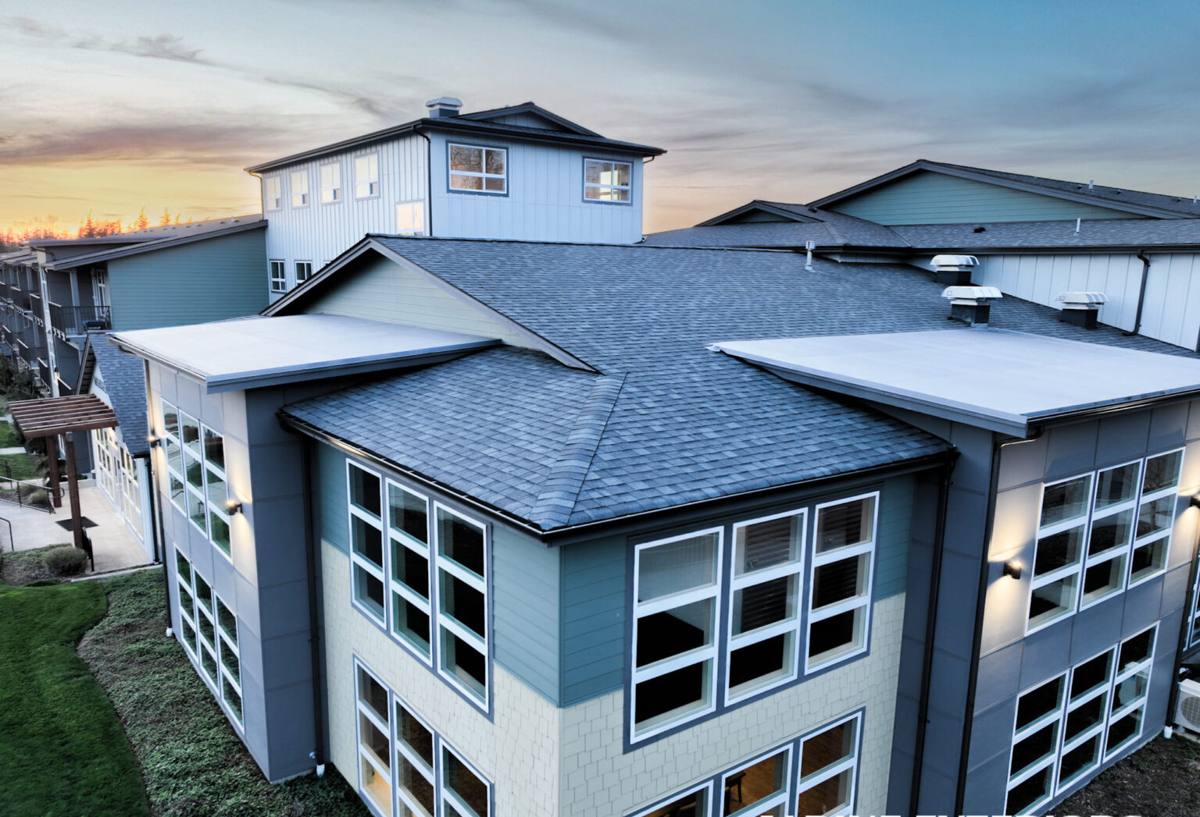
What "Storm Damage" Actually Looks Like Here
Storm damage isn't always a dramatic hole in the roof. In Peace Arch, it's more often a combination of smaller failures that add up:
- Wind-lifted or creased shingles, especially along ridgelines and roof edges where uplift pressure is highest
- Flashing that's been worked loose around chimneys, skylights, and roof-to-wall transitions
- Granule loss from wind-driven rain and debris, which accelerates aging on the sun-and-salt-exposed slopes
- Gutter and fascia damage from wind-thrown branches, common where mature trees sit close to the roofline
- Moss-softened decking or underlayment discovered only once shingles are pulled back
- Corroded fasteners or exposed nail heads where salt air has accelerated rust
The last two are the ones homeowners miss most often, because they don't show up as an obvious leak until the damage has been building for a while. That's part of why a post-storm inspection matters even when nothing looks obviously wrong from the ground.
What a Correct Repair Actually Involves
Inspection Before Anything Else
A proper storm damage repair starts with getting on the roof, not just looking at it from the driveway. That means checking every slope, not just the side that faces the storm — wind in this area frequently shifts direction as a front moves through, so damage can show up on the leeward side too. We check flashing points, valleys, penetrations, and the condition of the decking underneath any lifted or missing shingles, since decking that's stayed wet for even a short time can start to soften.
Matching Materials, Not Guessing
Repairs should match the existing roofing in weight, profile, and as close to color as the manufacturer's current lineup allows. A patch that doesn't match the surrounding shingles in thickness or exposure will telegraph as a visible seam and, more importantly, may not shed water the same way the surrounding material does. If your roof is old enough that the exact shingle is discontinued, we'll tell you that plainly rather than installing something that's a poor structural match just because it's close in color.
Flashing and Underlayment Get Rebuilt, Not Patched Over
Storm damage that affects flashing almost never gets fixed correctly with caulk alone. Step flashing, counter-flashing, and valley metal that have been bent, lifted, or corroded need to be replaced and properly integrated with new underlayment at that section — not sealed on top of the old material. This is the step that's most often skipped by fast, cheap patch jobs, and it's the one most likely to cause a repeat leak the next time a storm hits.
Documentation Along the Way
We photograph damage before, during, and after the repair. If you're filing an insurance claim, this documentation is often more useful to your adjuster than anything we can say verbally, and it gives you a record of exactly what was found and what was done.
How Our Process Works
| Step | What Happens | Why It Matters |
|---|---|---|
| Initial contact | You describe what you noticed — a leak, missing shingles, storm event | Helps us prioritize urgent vs. non-urgent visits |
| On-roof inspection | Full walk of all slopes, flashing, and any active leak points | Catches damage that isn't visible from the ground |
| Written scope and estimate | Plain-language explanation of what's damaged and what it takes to fix | No surprise add-ons once work starts |
| Insurance coordination (if applicable) | We share our documentation with you for your adjuster | Keeps your claim grounded in what was actually found |
| Repair | Matched materials, rebuilt flashing where needed, cleanup | Fixes the cause, not just the symptom |
| Final walk-through | We show you what was done and answer questions | You know exactly what's under your roof now |
Repair Options and What They Actually Cost You Long-Term
Not every storm-damaged roof needs the same level of intervention, but it helps to understand what you're trading off with each approach.
| Approach | Typical Cost Range | Trade-offs |
|---|---|---|
| Temporary tarp or emergency patch | Low | Stops active leaking short-term; not a permanent fix, and salt-air exposure continues underneath |
| Localized repair (shingles, flashing at one section) | Moderate | Addresses the actual damaged area properly; won't extend the life of the rest of an aging roof |
| Multi-area repair | Moderate to higher | Makes sense when a storm affected several sections or the roof already had moss-related wear |
| Full roof replacement | Highest | Right call when repeated storm damage, age, and moss history mean patching is just delaying the inevitable |
We'll always recommend the least invasive option that actually solves the problem. If a full replacement isn't warranted, we won't sell you one — but we'll also tell you honestly if a patch is just going to buy you another year before the next storm finds the same weak spot.
Insurance Claims: What to Know Going In
If your storm damage is significant enough to consider a claim, a few honest points worth knowing:
- Adjusters respond better to clear photo documentation than to verbal descriptions — this is why we document thoroughly before touching anything
- Not all storm damage is covered the same way; long-term moss deterioration is typically treated differently than sudden wind or impact damage, so it helps to know which one you're dealing with
- Getting an inspection soon after a storm, rather than waiting, gives you a cleaner record of cause and timing
- We work for you, not the insurance company — our estimate reflects what the roof actually needs, and you're free to share it with your adjuster as you see fit
Signs You Should Have Your Roof Checked After a Storm
- Shingles or granules visible in gutters or on the ground around the house
- Any new stain or damp spot on ceilings or in the attic after heavy rain
- Visible lifted, curled, or missing shingles from the ground
- Moss that's noticeably thicker or has spread since last season
- Gutters pulling away from the fascia or sagging after wind
- A neighbor's roof getting repair work — storms in this area tend to affect a whole block similarly
Why It Matters That We Already Work Peace Arch
A roofing crew that only shows up after you call from a general search isn't going to know, without being told, that salt air corrodes fasteners here faster than it does twenty miles inland, or that moss growth on north-facing slopes in this part of Whatcom County often outpaces what a standard maintenance schedule assumes. A crew that already works in and around Semiahmoo and Peace Arch has seen these patterns repeatedly — which means less time spent diagnosing and more time spent fixing the actual problem correctly the first time.
It also means we're not guessing at material choices. We know which flashing details hold up against driving, wind-blown rain here, and we're not learning that lesson on your roof.
After the Repair: Keeping the Next Storm From Doing the Same Damage
A repair is only as good as what happens after it. A few habits make a real difference in this climate:
- Clear moss buildup before it establishes — a light touch early is far cheaper than dealing with moisture damage later
- Keep gutters clear so wind-driven rain has somewhere to go instead of backing up under the roof edge
- Trim back branches that overhang the roof, since wind off the water regularly turns loose limbs into projectiles
- Have the roof looked at after any significant windstorm, even if nothing looks wrong from the ground
If your roof took a hit in a recent storm, or you're just not sure whether what you're seeing is normal wear or something that needs attention, we're happy to take a look. The estimate is free, there's no pressure to move forward, and you'll get a straight answer either way — use the form below to get started.