 Semiahmoo Siding
 Why Decks Near the Peace Arch Take a Different Kind of Beating
Homes in the Peace Arch area sit close to Semiahmoo Bay and Drayton Harbor, which means the air carries a steady dose of salt mist year-round. Add in the driving rain that comes off the Strait of Georgia through fall and winter, plus a moss season that can stretch from October into April, and you have a climate that is genuinely harder on an outdoor deck than most of the country ever deals with. It isn't dramatic damage that shows up first — it's the slow stuff: fasteners that weep rust stains, boards that stay damp two or three days longer than they should, and a green film that creeps across every north-facing surface.
Salt Air and Fasteners
Salt-laden air accelerates corrosion on anything metal — nails, screws, joist hangers, bolts. On a lot of older decks in this area we find fasteners that were adequate when the deck was built but were never rated for a marine-influenced environment. Once a fastener starts to corrode, it loses grip strength long before it looks obviously bad, which is part of why deck failures here are rarely sudden — they're the end result of years of quiet weakening.
Moss, Algae, and Trapped Moisture
Whatcom County's long, wet, low-light winters are ideal moss and algae conditions, especially on decks shaded by trees or a house's north side. Moss doesn't just look bad — it holds water directly against the wood surface, keeps boards from drying between rain events, and works its way into seams and fastener holes. Left alone through two or three wet seasons, that trapped moisture is what turns a cosmetic problem into a rot problem.
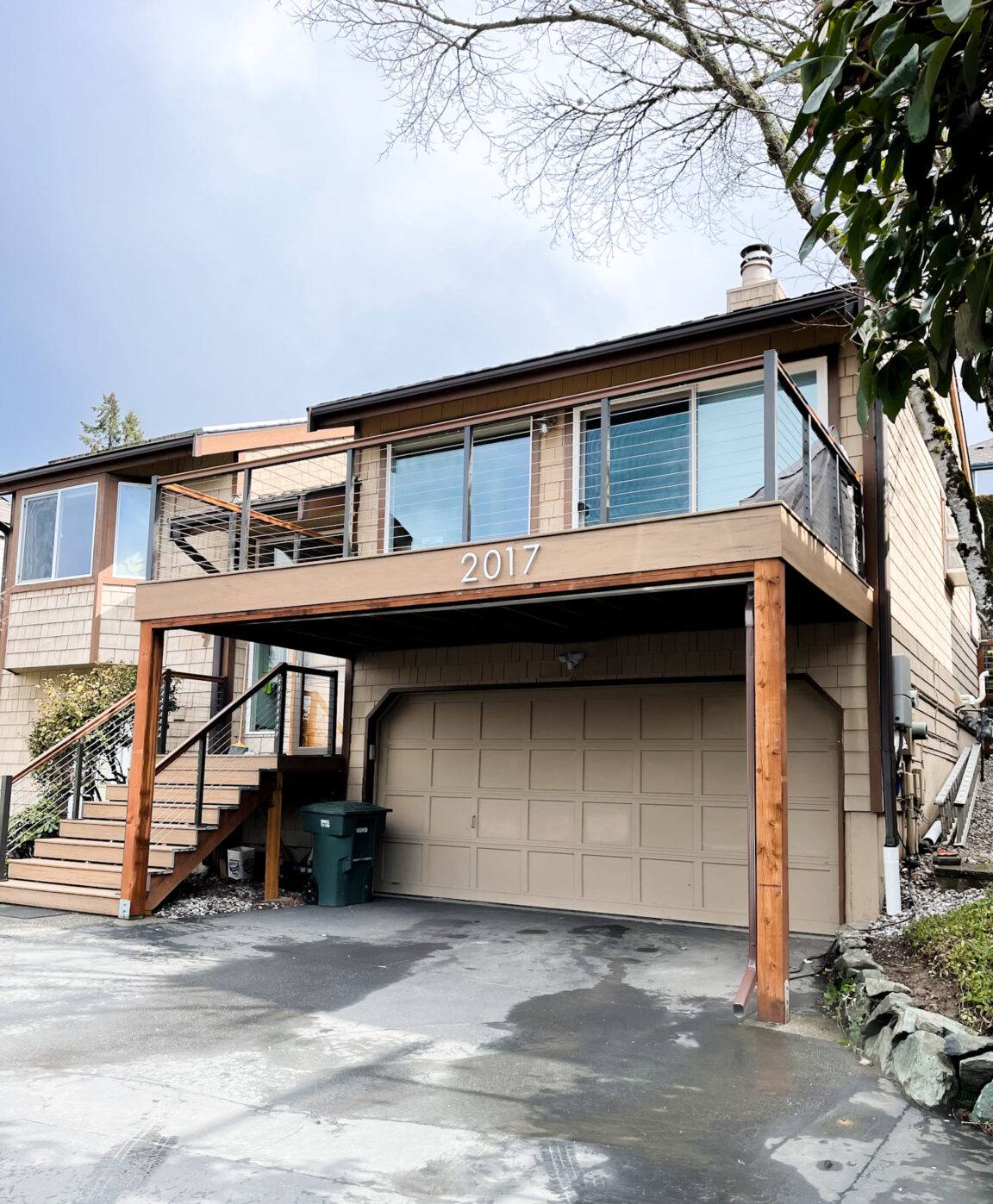
Signs a Peace Arch Deck Needs Repair
Most homeowners call us after noticing one obvious problem, but a proper inspection almost always turns up two or three related issues nearby. Here's what we tell people to check for before it becomes a safety issue:
- Soft or spongy spots underfoot, especially near the house or along board edges
- Railings or posts that wiggle when pushed, even slightly
- Rust streaks bleeding out from screw or nail heads
- Persistent moss or dark staining that comes back within weeks of cleaning
- Gaps opening up between decking boards or where the deck meets the house
- Stair stringers that flex or squeak more than they used to
- Visible daylight or water staining underneath the deck at the ledger board
- A general "give" in the structure when several people are standing on it
Any one of these on its own might just need a targeted fix. Two or more together usually mean water has been getting into the structure for a while, and it's worth having someone look underneath, not just at the surface.
What a Correct Deck Repair Actually Involves
Structure First
The part of a deck that actually holds people up is the framing underneath — the ledger board bolted to the house, the joists, the beams, and the posts and footings below. A repair that only replaces a few visibly rotten boards but ignores a compromised ledger connection or an undersized, corroding joist hanger isn't a repair, it's a temporary patch. Anytime we're on a deck for repair work, we check the ledger flashing and the framing before we touch the decking surface, because that's where a failure would actually hurt someone.
Surface and Safety Items
Once the structure is sound, surface repairs cover the decking boards themselves, railings, baluster spacing, and stairs. Railings deserve particular attention on older decks — codes around baluster spacing and railing height have tightened over the years, and a repair is a natural point to bring an old railing up to a safer standard even if it isn't strictly required.
Repair or Replace? The Honest Cost Factors
Not every damaged deck needs to come out. The decision usually comes down to how much of the structure — versus just the surface — has been affected, and how old the deck already is relative to its expected lifespan in this climate.
| Factor | Leans Toward Repair | Leans Toward Replacement |
|---|---|---|
| Framing condition | Ledger, joists, and posts are solid | Rot or corrosion found in multiple structural members |
| Age of deck | Under 15-20 years, built with treated framing | Original construction is 20+ years old and near end of service life |
| Extent of damage | Isolated boards, railings, or fasteners | Damage spread across most of the deck surface or structure |
| Moisture source | Identified and fixable (flashing, drainage, moss buildup) | Chronic, unresolved moisture with no clear fix short of rebuilding |
| Budget goal | Extend usable life at lower upfront cost | Long-term investment, possible layout or material upgrade |
As a rough guide, targeted repairs on a Peace Arch-area deck often run in the low hundreds to a couple thousand dollars depending on scope, while a full rebuild is a much larger investment. We'll always tell you plainly which category your deck falls into rather than defaulting to the bigger job.
How We Approach a Deck Repair Job
1. Full Inspection, Including Underneath
We start below the deck, not on top of it. That means checking the ledger connection and flashing, joist condition, post bases, and footing condition, along with the visible surface issues you called about. This is where hidden moisture damage from moss and trapped rain usually shows up first.
2. A Written Scope and Material Plan
Before any work starts, you get a clear explanation of what's being replaced, what's being reinforced, and what fasteners and materials we're using and why — particularly around corrosion resistance, since that's the recurring failure point in this climate.
3. The Repair Work
Structural repairs happen first, then surface work. We match decking materials as closely as practical when repairing sections of an existing deck, and we don't cover up a structural shortcut with new boards on top.
4. Final Walkthrough
We walk the deck with you when it's done, point out what was fixed, and flag anything else worth watching — for example, a drainage issue near the house that's outside the scope of the repair but worth knowing about before next winter's rain.
Material and Fastener Choices That Hold Up Here
Decking Boards
Pressure-treated lumber and composite decking both have a place in a repair, and the right choice usually depends on matching what's already there and your maintenance preferences. Wood needs periodic cleaning and sealing to resist the moss and moisture load in this climate; composite costs more upfront but trades that maintenance for consistent performance in wet, shaded conditions. We'll walk you through the real trade-offs for your specific deck rather than pushing one material as universally "better."
Fasteners and Hardware
Given the salt air off the bay, we use fasteners and structural hardware rated for corrosion resistance — stainless steel or heavy hot-dip galvanized, depending on the application — rather than standard-grade hardware that wasn't built for a marine-influenced environment. This is one area where cutting corners doesn't show up as a problem for a year or two, but it absolutely shows up eventually, usually as the same rust staining and loosened connections that brought a lot of Peace Arch homeowners to us in the first place.
Railings, Permits, and Local Code Considerations
Whatcom County requires permits for deck work that involves structural repair or rebuilding, and railing height and baluster spacing are governed by current building code regardless of when the original deck was built. If your repair touches the structure or railings, we handle the permit process and make sure the finished work meets current code — not just the code that was in effect when the deck was originally built. Ledger board flashing is a specific area inspectors look at closely here, since it's the single most common point of water intrusion on an attached deck.
Why Hire a Crew That Already Works This Area
Deck problems here follow a pattern shaped by the local climate — salt exposure from the bay, shaded moss buildup, and a wet season that's longer than most of the country experiences. A crew that already works decks in the Peace Arch and greater Semiahmoo area has seen that pattern repeat across enough homes to know where to look first, which fastener grades actually hold up, and how local permitting works, instead of treating every job as a first encounter with this climate. That translates into a more accurate inspection, fewer surprises mid-repair, and a repair that's built to last through the next several wet seasons rather than just to pass a quick look.
If you've noticed soft spots, rust staining, a wobbly railing, or moss that keeps coming back no matter how often you clean it, we're happy to take a look. We offer free, no-pressure estimates — just an honest read on what your deck actually needs, whether that's a targeted repair or something bigger. Use the form below to get started.