 Semiahmoo Siding
 Metal Roofing Built for Birch Bay's Weather, Not Just Its Looks
Birch Bay sits right on the water in Whatcom County, close enough to the Salish Sea that homes here take a different kind of beating than roofs a few miles inland. Salt-laden air, wind-driven rain off the bay, and long stretches of gray, damp weather each year add up fast. When homeowners ask us about metal roofing, it's usually because they've already replaced one too many sets of asphalt shingles and want something that will actually hold up to this specific stretch of coastline.
Metal roofing isn't automatically the right answer for every house, and we'll say so if it isn't. But for a lot of Birch Bay properties — waterfront homes taking direct wind and salt spray, and wooded lots further back that stay shaded and damp most of the year — a correctly installed metal roof solves problems that shingles never fully will.
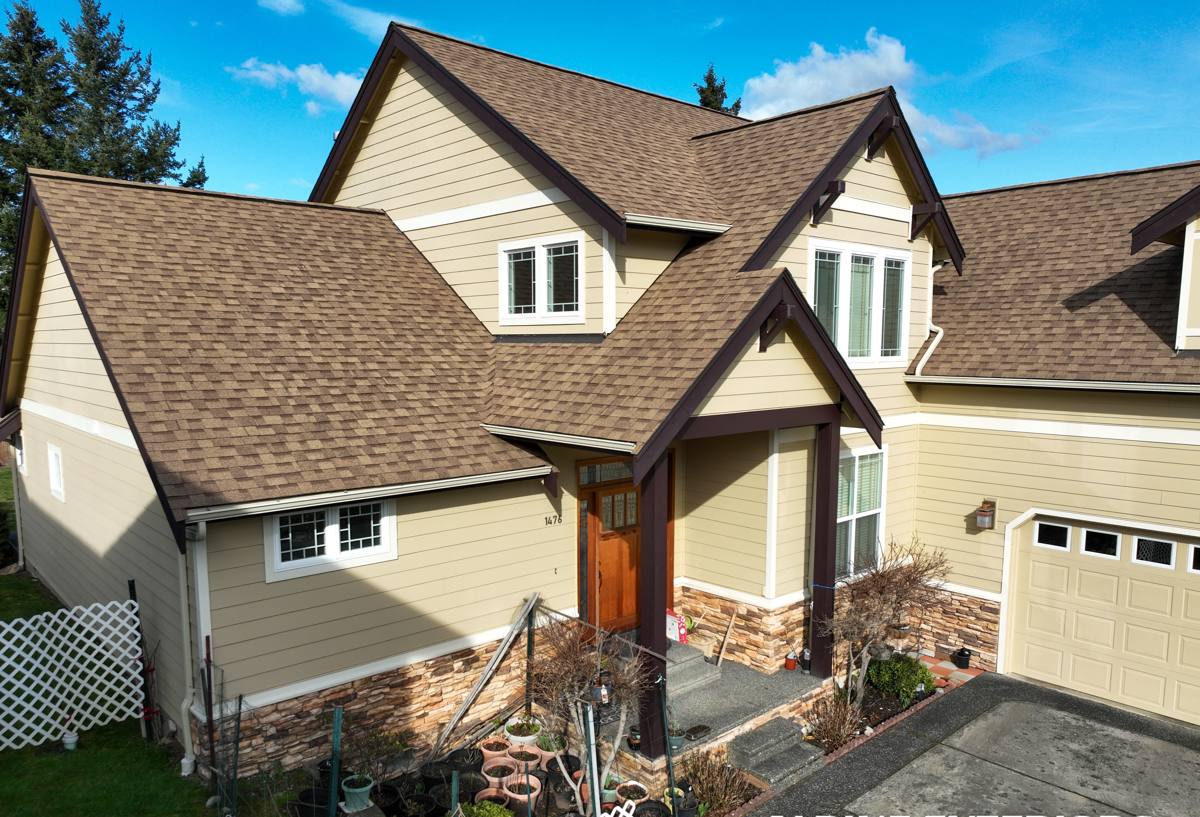
What Birch Bay's Climate Actually Does to a Roof
Salt Air and Corrosion
Homes closer to the water deal with airborne salt settling on every exterior surface, including the roof. Over time, salt exposure accelerates corrosion on unprotected metal fasteners, flashing, and trim. This is one of the biggest reasons material choice and coating quality matter more here than they would on a roof twenty miles inland — it's not just about picking "metal," it's about picking metal and hardware rated for a marine-influenced environment.
Wind-Driven Rain
Storms coming off the water don't just drop rain straight down — they push it sideways, up under eaves, and into any gap that isn't properly sealed. A roofing system that isn't detailed correctly at the edges, valleys, and penetrations will eventually let that wind-driven rain find its way in, even if the field of the roof looks fine.
Moss and Shade
Whatcom County's long wet season and plenty of tree cover around Birch Bay give moss everything it needs to take hold. Moss holds moisture against roofing material, and on shingles it works into the granules and shortens their life. Metal roofing gives moss far less to grip onto, which is a real advantage on shaded lots — but it isn't moss-proof on its own, and a roof with poor drainage or debris buildup can still grow moss in low spots.
Panel Types That Make Sense for This Area
Not all metal roofing is the same, and the right style depends on the look you want and how exposed the home is. Here's how the main options compare for a property like yours near Birch Bay:
| Panel Type | Best For | Trade-Offs |
|---|---|---|
| Standing seam | Waterfront and wind-exposed homes | Higher upfront cost, but concealed fasteners mean fewer long-term points of failure from salt corrosion |
| Metal shingles / shakes | Homes wanting a traditional or shake-style look | More seams and exposed fasteners than standing seam, so flashing detail and hardware quality matter more |
| Exposed-fastener panels | Outbuildings, shops, budget-conscious projects | Lowest cost, but fastener gaskets wear over time and need periodic checking, especially in salt air |
For most primary residences in Birch Bay, we lean toward standing seam or a well-detailed metal shingle system. Exposed-fastener panels have their place, but we're upfront that they ask more of the homeowner in terms of long-term upkeep this close to the water.
Coatings and Fasteners
The panel material is only part of the equation. Fastener quality — stainless or coated for marine exposure rather than standard galvanized — and a proper factory paint or coating system on the panels themselves are what actually determine how the roof holds up against salt air over the years. We won't cut this corner to save a little on material cost, because it's the corner that shows up as rust streaks and failed seals five or ten years down the road.
What a Correct Installation Actually Involves
A metal roof is only as good as what's underneath it and how it's flashed. This is where a lot of roofing problems in this area actually start — not with the panels themselves, but with shortcuts taken during prep.
Underlayment and Water Barrier
Given how much wind-driven rain this area sees, we don't treat underlayment as an afterthought. A high-temperature synthetic underlayment, with self-adhered ice-and-water barrier at eaves, valleys, and around penetrations, gives the roof a second line of defense if wind ever pushes water past the panel seams.
Flashing and Penetrations
Every chimney, vent pipe, and roof-to-wall transition is a place where water wants to get in. Flashing has to be formed and layered correctly, not just caulked over — sealant is a backup, not the plan. This detail work is where an experienced metal roofing crew earns its keep, especially on homes with multiple roof planes or dormers.
Ventilation
Metal roofs perform differently than shingles when it comes to attic temperature and moisture. Proper ridge and soffit ventilation keeps condensation from forming under the panels, which matters in a climate where humidity stays high for long stretches of the year. Skipping ventilation is a common mistake that shows up later as hidden moisture damage, not as an obvious install failure.
Our Process for Birch Bay Metal Roofing Projects
- On-site inspection of the existing roof, decking condition, and any moss, moisture, or ventilation issues
- Honest recommendation on panel type and system based on the home's exposure to wind and salt air
- Written estimate that breaks out material, labor, and any decking repair separately
- Tear-off (or overlay assessment, where structurally appropriate) and inspection of the deck underneath
- Underlayment, ice-and-water barrier, and flashing installation before a single panel goes on
- Panel installation with attention to seam alignment, fastener spacing, and penetration detailing
- Final walkthrough so you can see the completed work and ask questions before we consider the job done
We don't skip steps to move faster, and we won't quote a job without seeing the roof in person first — too many of the real cost factors in this area (deck condition, existing moss and moisture damage, roof complexity) only show up on-site.
What Drives Cost on a Birch Bay Metal Roof
Metal roofing costs more upfront than asphalt shingles, and homeowners deserve a straight answer on why, and what actually moves the price up or down.
| Factor | Why It Matters Here |
|---|---|
| Panel type | Standing seam costs more than exposed-fastener panels but needs less long-term attention in salt air |
| Roof complexity | Multiple planes, dormers, and valleys mean more flashing labor, which is where quality really shows |
| Deck condition | Moss and trapped moisture from years of shingle roofing sometimes mean deck repair before install |
| Tear-off vs. overlay | Full tear-off costs more but lets us inspect and address hidden moisture damage underneath |
| Hardware and coatings | Marine-grade fasteners and coatings cost more than standard but are worth it this close to the water |
We'd rather walk you through these factors on your specific roof than throw out a broad number that doesn't hold up once we're actually up there.
Living With a Metal Roof in a Salt Air, Moss-Prone Environment
Metal roofing is genuinely low-maintenance compared to shingles, but "low-maintenance" doesn't mean "no-maintenance," especially in Birch Bay's conditions. A few habits go a long way toward getting the full lifespan out of the system:
- Rinse off accumulated salt and debris from gutters and low-slope areas once or twice a year
- Keep overhanging branches trimmed back to reduce shade, debris, and moss pressure on the roof
- Check gutters and downspouts before the wet season so wind-driven rain has somewhere to go
- Have flashing and sealant points inspected periodically, since these are the most common points of failure, not the panels themselves
- Address any scratches to factory coatings promptly, since bare metal is what actually starts corroding in salt air
Why It Matters That We Already Work in Birch Bay
Roofing crews who mostly work inland don't always account for how much harder salt air and driving rain work against a roof here compared to a job forty miles east. Fastener selection, coating choice, and flashing details that would be perfectly fine elsewhere in Whatcom County aren't always enough on a home taking direct exposure off the bay. Working in this specific area regularly means we've seen how different panel systems and installation details actually hold up under these exact conditions, not just in a manufacturer's general specs.
It also means we understand the practical side of working here — narrower waterfront lots, seasonal weather windows, and the value of not leaving a roof partially open when a storm is rolling in off the water.
If you're weighing metal roofing for a home in Birch Bay, we're happy to take a look and give you an honest read on what your roof actually needs — no pressure, no upsell, just a straight assessment and a free estimate.