 Semiahmoo Siding
 Deck Building in Marietta: A Different Climate Than Most Builders Plan For
Marietta sits close enough to the water that its decks live under conditions most general contractors never design around. Salt-laden air off the bay works into metal hardware and fastener heads. Driving, wind-pushed rain gets under railings and behind ledger boards instead of just falling straight down. And a long, mild, damp season means moss and algae get a real head start on any horizontal wood surface that doesn't drain and dry quickly. A deck built to a generic spec sheet, without those three things in mind, tends to show its age in Marietta faster than it would twenty miles inland.
This page is about doing deck building correctly for this specific spot — not a general "we build decks" pitch, but what actually needs to be different about a deck here versus one built somewhere drier and calmer.
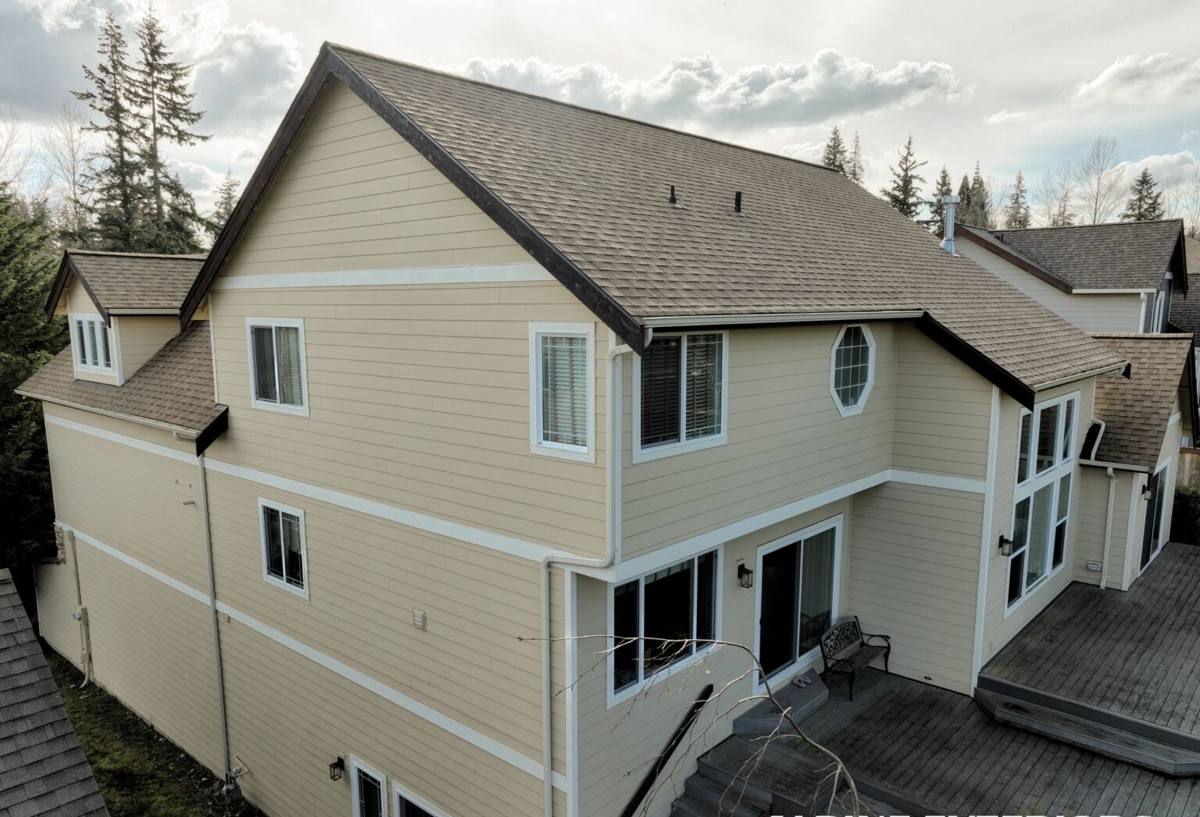
What Marietta's Climate Actually Does to a Deck
Salt Air and Metal Fatigue
Salt air accelerates corrosion on anything metal — fasteners, joist hangers, railing brackets, post bases. On a deck built with standard hardware, this shows up first as rust streaks bleeding down the face of the boards, then as weakened connections that aren't visible until they're a real problem. It's a slow process, which is exactly why it gets missed: nothing looks wrong for a few years, and then it does.
Driving Rain and Wind-Driven Moisture
Whatcom County gets a lot of rain, but the issue in a place like Marietta isn't just volume — it's direction. Wind off the water pushes rain sideways and up under rail caps, around post wraps, and behind ledger board flashing that was only designed for straight-down water. Framing that would be fine in a calmer setting can trap moisture here if it wasn't detailed for wind-driven exposure.
Moss, Algae, and Slow-Drying Surfaces
Long damp stretches with limited direct sun mean any deck surface that doesn't drain and air out quickly stays wet longer than it should. That's the setup moss and algae need. Beyond looking bad, a mossy deck surface gets genuinely slick underfoot and traps moisture against the board itself, which shortens the life of both wood and composite decking if it's left unaddressed.
What a Correctly Built Deck Needs Here
Framing and Fasteners
For Marietta, we treat fastener selection as a real decision, not an afterthought. Structural screws and connectors rated for coastal or high-moisture exposure cost more than standard galvanized hardware, but they're the difference between hardware that lasts the life of the deck and hardware that needs inspection and replacement well before the decking itself wears out. Joist hangers, post bases, and structural screws all get the same treatment — this isn't a spot to save money on the parts nobody sees.
Ledger Flashing and Water Management
Where the deck attaches to the house is the single most common source of hidden rot on any deck, anywhere, but it matters more here because of the wind-driven rain. Proper ledger flashing — installed so water is directed out and away from the house band board, not just draped over it — is non-negotiable on our builds. This is one of those details that's invisible once the deck is finished and only shows itself years later if it was skipped.
Decking Material Selection
Every decking material handles this climate differently, and the right choice depends on budget, maintenance appetite, and how much sun exposure the specific deck location gets — a shaded, water-facing deck behaves differently than one with more direct afternoon sun.
Decking Material Comparison for Marietta Conditions
| Material | Moss/Algae Resistance | Salt Air Behavior | Maintenance |
|---|---|---|---|
| Pressure-treated wood | Needs regular cleaning and treatment to resist growth | Fasteners and fittings need corrosion-resistant hardware | Annual cleaning, periodic staining/sealing |
| Cedar | Naturally more rot-resistant, still needs cleaning in damp shade | Handles moisture well if properly finished | Periodic oiling/sealing to maintain appearance |
| Composite decking | Resists rot but can still grow surface algae in deep shade | Doesn't corrode; hardware still needs to be rated correctly | Periodic washing, no staining/sealing needed |
| PVC decking | Very resistant to moisture-driven growth | Excellent in salt air; fully synthetic | Lowest maintenance, higher upfront cost |
None of these materials are wrong choices — they're trade-offs. Wood costs less up front and can be refinished if it starts to look tired; composite and PVC cost more initially but ask less of the homeowner year to year. We'll walk through the honest trade-offs for your specific deck's exposure rather than push one product line.
Designing Against Moss Before It Starts
Board Spacing and Air Movement
Correct gapping between deck boards isn't just a building-code detail — in a damp climate like this one, it's what lets water actually leave the surface instead of sitting in tight joints where moss gets its foothold. Framing height and joist spacing also affect how much air moves underneath the deck, which matters more here than in a drier region.
Drainage and Grading Under the Deck
Where the ground under a low deck stays wet, that moisture works its way back up into the framing from underneath. On builds where clearance is tight, we look at grading and drainage under the structure, not just the visible surface, because a deck that dries out from the top but stays damp underneath still has a shortened lifespan.
Our Deck Building Process
1. Site Assessment
We look at sun exposure, wind direction relative to the water, existing drainage, and the condition of the house band board where the deck will attach. This is where material and hardware recommendations actually get decided — not from a standard package, but from what your specific lot is doing.
2. Design and Permitting
Deck size, height, and railing design all factor into Whatcom County permitting requirements. We handle the permit process as part of the build so the finished deck is inspected and compliant, not something you have to sort out after the fact if you ever sell the home.
3. Construction
Framing first, with corrosion-resistant hardware and properly flashed ledger connections. Decking and railing go on last, with attention to board spacing and drainage details discussed above.
4. Final Walkthrough
Before we call the job done, we walk the deck with you — fastener placement, drainage, railing stability — so you know exactly what was built and what basic upkeep it'll need going forward.
What Affects Deck Building Cost in Marietta
| Factor | Why It Matters Here |
|---|---|
| Decking material | Composite and PVC cost more upfront but reduce long-term maintenance against moss and moisture |
| Hardware grade | Corrosion-resistant fasteners cost more than standard galvanized but hold up in salt air |
| Deck height and railing code | Taller decks require code-compliant railings, which add material and labor |
| Ledger and flashing work | Proper flashing at the house connection takes more time than a basic attachment but prevents hidden rot |
| Site access and grading | Sloped or low-clearance lots may need additional drainage or footing work |
We give straight, itemized estimates so you can see where the money is going — including where we're recommending an upgrade specifically because of Marietta's exposure, versus where a standard approach is genuinely fine.
Keeping a Marietta Deck in Good Shape
Even a well-built deck needs some seasonal attention in this climate. A short annual routine keeps moss from getting established and catches small issues before they become structural ones.
- Sweep debris and standing organic matter (leaves, needles) off the deck surface regularly, especially in fall
- Rinse or lightly scrub the surface at least once a year to interrupt moss and algae before it takes hold
- Check railing posts and stair connections annually for any looseness
- Look for rust streaking around fasteners or hardware, which signals it's time for a closer inspection
- Keep gutters and downspouts near the deck clear so runoff isn't draining directly onto or under it
- Reseal or restain wood decking on the schedule appropriate to the product — don't wait until it's visibly gray and worn
Why a Local Semiahmoo Crew Makes a Real Difference
A crew that already works in and around Semiahmoo has seen how decks in this specific pocket of Whatcom County actually age — which hardware holds up, which framing details fail first, and where moss shows up even on decks that were "built right" everywhere except the details that matter here. That's a different starting point than a builder pulling from a generic regional spec. It also means we're not learning the local permitting process or the county's inspection expectations on your project — we already know them.
We're not interested in overselling upgrades you don't need or cutting corners you'll pay for later. Our goal is a deck that's built correctly for where it actually sits, with honest material and hardware choices explained up front.
If you're planning a new deck or replacing one that's showing its age, we're happy to come take a look and put together a free, no-pressure estimate — just fill out the form below.