 Semiahmoo Siding
 Siding Repair in Lynden: What the Climate Actually Does to Your Walls
Lynden sits in a part of Whatcom County where the weather doesn't do anything extreme — it just doesn't let up. Damp air moves in off the water and settles into low-lying farmland and residential streets alike, and it stays there for months at a time. Add driving rain that comes in sideways during winter storms, plus a moss season that can run from October through May, and you have a climate that is genuinely hard on exterior siding, even siding that looked fine when it went up.
The damage this causes is rarely dramatic. It's slow. A board that stays damp two or three extra days a month, year after year, eventually swells, checks, or lets moisture behind it. Moss holds water against a wall long after the rain stops. Salt-tinged air from the nearby coast accelerates corrosion on fasteners and trim. None of this shows up as an emergency — it shows up as a soft spot near a downspout, a paint film that's failing faster than it should, or a corner board that's started to separate. That's the pattern we see most often on repair calls in this area, and it's why "just patch it" isn't always the right answer.
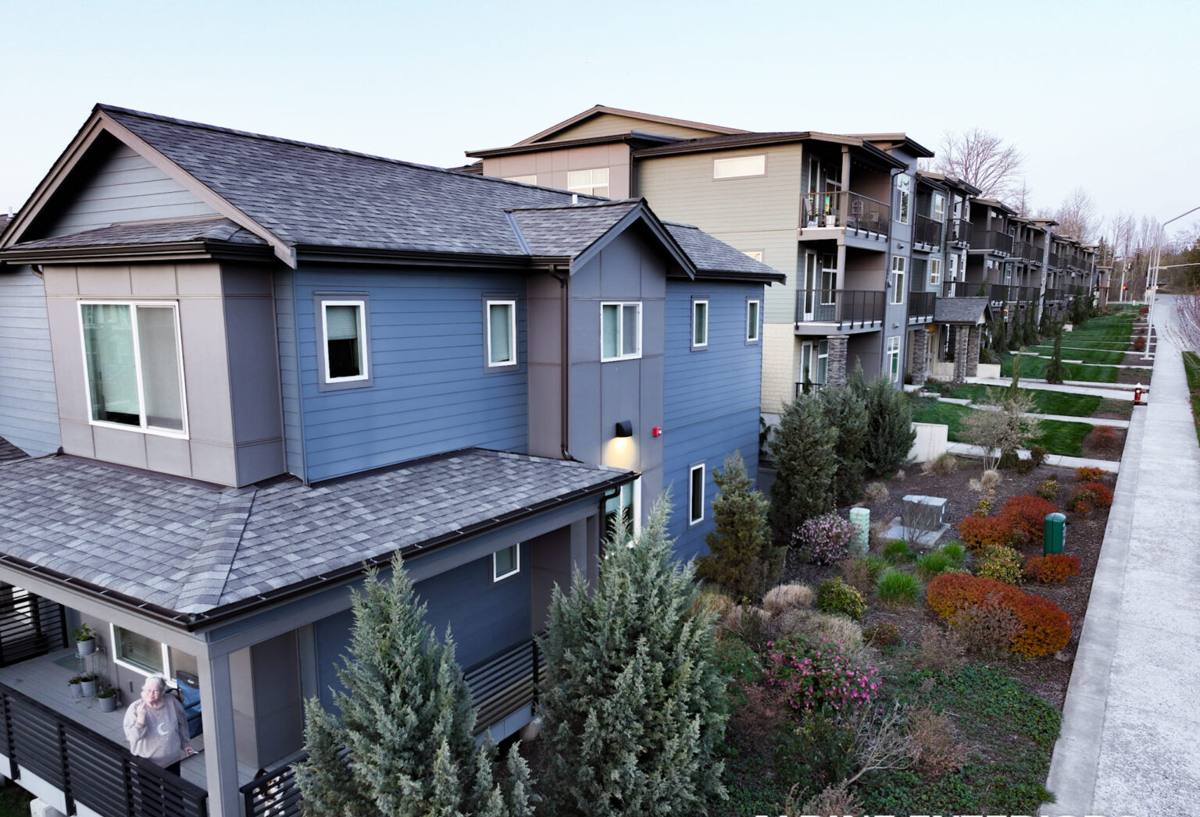
What a Correct Siding Repair Actually Involves
A repair that's done right is not just swapping a damaged board for a new one and caulking the seams. It starts with figuring out why that section failed in the first place — because if the underlying cause (a flashing gap, a clogged gutter, a missing kickout, a failed sealant joint) isn't fixed, the replacement piece will fail the same way, usually within a couple of seasons.
Steps we take on every repair
- Remove the damaged siding and inspect the water-resistive barrier and flashing underneath — this is where most repeat failures start
- Check for rot in the sheathing or framing behind the siding, not just the siding itself
- Identify and correct the moisture source (drainage, missing flashing, failed caulk, moss buildup) before replacing anything
- Match the replacement material, profile, and reveal so the repair doesn't stand out
- Re-seal and re-flash properly, using materials rated for the exposure the section actually gets
- Confirm paint or factory finish match, or recommend a repaint zone if an exact match isn't realistic
Skipping any of these steps is how a $400 repair turns into a $4,000 repair two years later.
Repair, Patch, or Replace? How We Make That Call
Not every siding problem in Lynden needs a full re-side, and we don't push people toward replacement when a targeted repair will hold. But we also won't sell a homeowner a patch job on siding that's failing broadly, because it doesn't actually save money — it just delays the bigger job while the damage spreads.
| Situation | Typical Fix | Why |
|---|---|---|
| One or two damaged boards, sound siding elsewhere | Targeted repair | Isolated damage with a clear, fixable cause |
| Damage clustered around a specific detail (deck ledger, chimney, downspout) | Repair plus flashing correction | The siding is a symptom; the detail is the actual problem |
| Soft or swollen boards on multiple elevations | Section replacement, evaluate whole wall | Moisture intrusion has likely spread past what's visible |
| Original material is wood, LP, or older composite showing widespread wear | Full re-side with James Hardie | Patching aging or discontinued product rarely matches and doesn't address material fatigue |
We'll tell you honestly which category your home falls into, including when the answer is "you don't need us to do anything yet."
Why Moss and Moisture Are the Real Enemy Here
Moss doesn't just look bad — it functions like a wet sponge glued to your wall. In a climate where surfaces can stay damp for days after a storm, moss extends that wet period even longer, and it holds moisture directly against seams, fasteners, and paint film. Over a long moss season, that constant dampness is what actually breaks down siding, not any single storm.
The fix isn't just cleaning moss off once. It's addressing why it's growing there in the first place — usually shade, poor airflow, or a section of wall that doesn't drain and dry the way the rest of the house does. When we repair siding in a moss-prone area, we look at whether trimming back vegetation, adjusting a downspout, or improving drainage at grade will keep the problem from coming right back.
Signs your siding is telling you it's time to call
- Paint that's peeling, bubbling, or chalking faster in one area than the rest of the house
- Boards that feel soft, spongy, or flex when pressed near the bottom edge
- Visible gaps opening at seams, corners, or trim joints
- Moss or dark staining that returns within a season of cleaning
- Interior signs like a musty smell or a stain on a wall that backs up to an exterior corner
Why We Repair With James Hardie — Not Whatever Was There Originally
When we're replacing damaged sections, we use James Hardie fiber cement, even if the original siding on the house was something else. There's a practical reason for this: fiber cement doesn't absorb water the way wood or wood-based composite products do, so a repaired section isn't just cosmetically fixed — it's actually more resistant to the exact conditions that caused the original damage. It's also non-combustible, which matters on a home where you want fewer long-term maintenance liabilities, not more.
We don't install LP SmartSide, vinyl, Cemplank, Allura, primed spruce, or cedar, and we're upfront about why. Each of those has legitimate uses, but they carry trade-offs we've decided not to build our repair and replacement work around — moisture sensitivity in wood-based products, expansion and fading behavior in vinyl, or inconsistent warranty backing depending on the manufacturer. James Hardie's ColorPlus factory finish and HZ5 product line, engineered for wetter climates, hold up to the pattern we see in this part of Whatcom County better than the alternatives, and the warranty is transferable if the home sells.
When a repair calls for matching an existing non-Hardie product exactly, we'll say so plainly and explain the options — including whether it makes more sense to transition that wall or elevation to Hardie now rather than chase a match that won't perform the same way long-term.
Why a Local Crew Matters for a Repair Job
Siding repair is detail work, and the details that matter in this area are specific to this area. A crew that already works Whatcom County knows what a Lynden winter does to a north-facing wall, how fast moss re-establishes after a cleaning, and which flashing details tend to fail first in homes built during particular eras of local construction. That's not something you get from a general contractor who repairs siding occasionally between other trades.
It also means faster, more accurate estimates. We're not guessing at exposure or guessing at how a repair will hold up through next year's storm season — we've already seen how similar repairs have performed on similar homes nearby.
Cost Factors for Siding Repair in This Area
Repair costs vary based on a few honest factors, and we'd rather explain them than throw out a number that doesn't hold up once we're actually on the roofline.
| Factor | Why It Changes the Cost |
|---|---|
| Extent of hidden damage | Rot behind the siding often extends further than what's visible from outside |
| Access and elevation height | Second-story and steep-roof sections take longer and need more setup |
| Underlying cause | Correcting flashing or drainage adds labor but prevents repeat failure |
| Material match | Matching discontinued or non-Hardie products can add time or push toward a broader replacement |
| Paint or finish blending | Getting a repaired section to visually match aged siding sometimes requires repainting a wider area |
Our Process, Start to Finish
- On-site inspection of the damaged area and a check of related details (flashing, gutters, grade, ventilation)
- Honest recommendation — repair, targeted section replacement, or full re-side — with the reasoning explained
- Written estimate that separates the repair itself from any drainage or flashing correction needed
- Repair work using James Hardie material, matched for profile and reveal
- Final check of seams, fasteners, and finish before we consider the job done
If your Lynden home has siding damage, or areas that just don't seem to be drying out the way the rest of the house does, we're glad to take a look and give you a clear, no-pressure assessment. The estimate is free, and we'll tell you straight whether you need a repair, a bigger fix, or nothing at all right now — just fill out the form below.