 Semiahmoo Siding
 Why Laurel Homes Wear Out Siding Faster Than You'd Expect
Laurel sits close enough to Semiahmoo Bay and the greater Whatcom County shoreline that homes here deal with a combination most inland siding never has to survive: salt-laden air, wind-driven rain that hits walls sideways instead of falling straight down, and a moss season that can run most of the year in shaded, north-facing spots. Any one of those is manageable. Together, over ten or fifteen years, they're what turns a siding job that looked fine at installation into a soft, discolored, failing wall system.
Salt air is corrosive to fasteners and hard on painted finishes, pulling moisture into seams and joints faster than drier climates would. Driving rain doesn't just wet the surface of the siding — it tests every lap, joint, and penetration for water intrusion, and it finds the ones that were installed wrong. And moss doesn't just look bad; it holds moisture against the siding surface for weeks at a time, which is exactly the condition that rots wood-based products and stains anything with a weak factory finish.
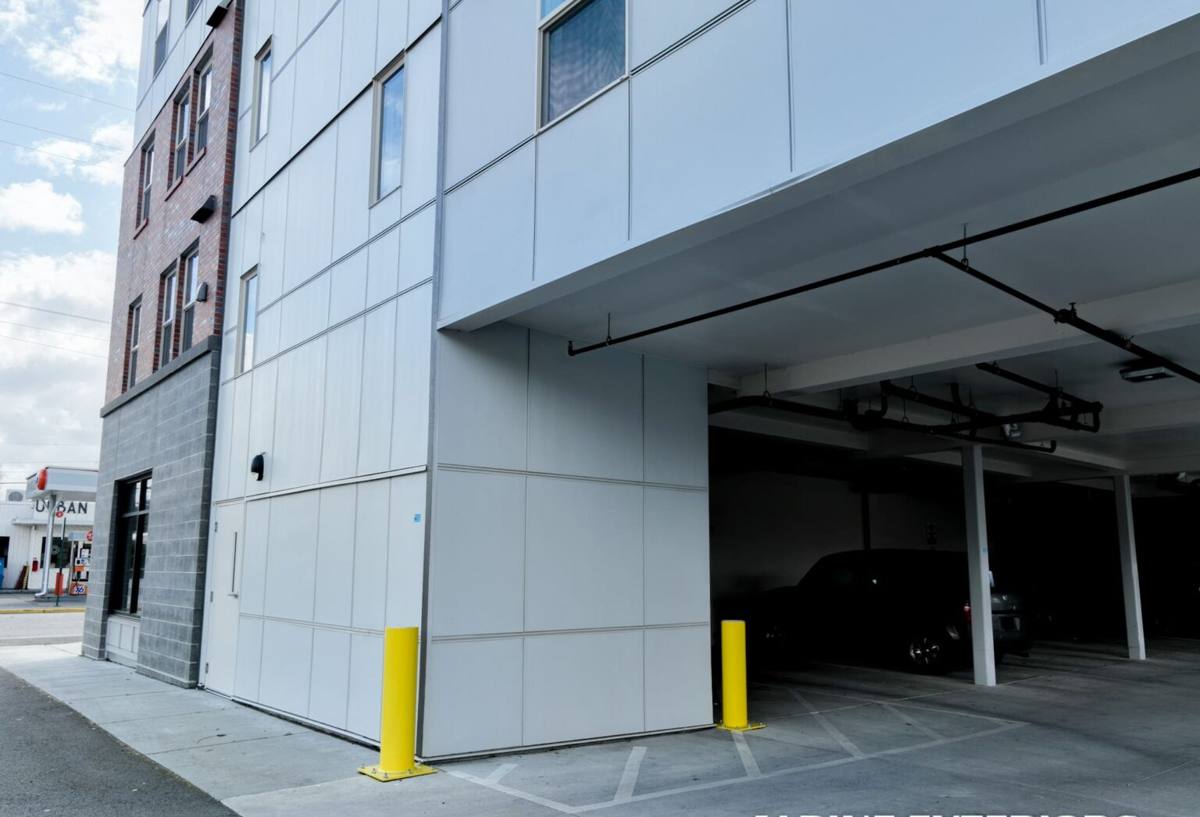
Signs a Laurel Home Needs Replacement, Not Just Repair
Not every siding problem calls for a full tear-off. But there's a point where patching stops being cost-effective and starts being a way to delay a bigger bill. Common signs we look for on Laurel homes include:
- Soft or spongy spots when you press on the siding, especially near the bottom courses or under windows
- Paint that's failing repeatedly in the same spots even after repainting — usually a sign moisture is getting behind the material
- Visible gaps, warping, or delamination at panel seams and butt joints
- Persistent moss or algae staining that comes back within a season of cleaning
- Siding that's original to a home built more than 20-25 years ago, particularly wood-based or older composite products
- Interior signs like musty smells, peeling interior paint, or damp drywall near exterior walls
If you're seeing two or more of these at once, it's usually a sign the water-resistive barrier behind the siding has already been compromised, not just the visible surface.
What a Correct Siding Replacement Actually Involves
A siding replacement is not just swapping old panels for new ones. Done right, it's a full envelope job, and skipping steps here is exactly how a brand-new job fails the same way the old one did — just slower. On a proper tear-off and replacement, the work includes:
Tear-Off and Substrate Inspection
Removing the old siding down to the sheathing lets us actually see what's underneath. In a wet climate like this, we routinely find rot at window sills, corners, and lower wall sections that isn't visible from outside. Any damaged sheathing or framing gets addressed before anything new goes up — covering over rot with new siding just hides the problem for a while longer.
Water-Resistive Barrier and Flashing
This is the layer that actually keeps water out, and it's the step most often shortcut on lower-quality jobs. A continuous, properly lapped weather-resistive barrier, correctly integrated flashing at windows, doors, and roof-to-wall transitions, and proper kick-out flashing where rooflines meet siding are what stop driving rain from getting behind the wall in the first place. The siding itself is the second line of defense, not the first.
Correct Fastening and Clearances
Fiber cement siding has manufacturer-specified nailing patterns, minimum ground clearance, and clearance from roof lines and decks — details that matter more in a salt-air, high-moisture area than they would somewhere dry. Fasteners that aren't rated for coastal exposure can corrode and stain the siding face over time; we use fasteners appropriate for the exposure this location gets.
Why We Install Only James Hardie Fiber Cement
We standardized this company on James Hardie siding and don't install vinyl, LP SmartSide, cedar, primed spruce, or other fiber cement brands. That's not a marketing position — it's a decision based on what actually holds up under conditions like Laurel's.
Wood-based siding products, including engineered wood, rely on a factory coating and careful field sealing of every cut edge to keep moisture out. In a climate with this much rain and humidity, that's a maintenance commitment that's easy to fall behind on, and the consequence of falling behind is swelling, rot, and warranty claims that are hard to make stick. Vinyl siding is low-maintenance in a different way, but it's a thin, flexible material that can warp in temperature swings, crack in impacts, and it's not fire-rated the way fiber cement is.
James Hardie's fiber cement is non-combustible, dimensionally stable in wet-dry cycling, and comes with a factory-applied ColorPlus finish that's baked on and warrantied against fading and peeling — which matters a lot more here than in a drier inland climate, because that finish is doing real work against salt air and constant moisture. Hardie's HZ5 product line is engineered specifically for cold, wet, freeze-thaw climates like the Pacific Northwest, and that's what we spec for Whatcom County homes by default.
What Hardie Gets You That Other Products Don't
| Factor | James Hardie Fiber Cement | Wood-Based / Engineered Wood | Vinyl |
|---|---|---|---|
| Moisture resistance | Engineered for wet climates (HZ5) | Requires diligent sealing/painting | Doesn't absorb water, but seams can trap it |
| Fire rating | Non-combustible | Combustible | Can melt/deform under heat |
| Finish durability | Factory-baked ColorPlus finish | Field-applied paint, needs recoating | Color molded in, can fade/chalk |
| Dimensional stability | Minimal expansion/contraction | Can swell, cup, warp | Expands/contracts with temperature |
| Typical lifespan when installed to spec | 30+ years | 15-25 years, weather-dependent | 20-30 years, appearance degrades sooner |
Our Siding Replacement Process
We walk every Laurel job the same way, because the failure points here are consistent enough to plan for:
1. On-Site Assessment
We inspect current siding, look for existing moisture damage, and check exposure — how much wind-driven rain and shade/moss risk a given wall actually faces, since not every side of a house needs the same attention.
2. Scope and Estimate
We give you a written scope covering tear-off, any sheathing repair contingencies, house wrap and flashing detail, and the Hardie product and color selected — no vague "and materials" line items.
3. Tear-Off and Repair
Old siding comes off, substrate gets inspected and repaired as needed, and we don't proceed to install over anything we haven't verified is sound.
4. Weather Barrier and Flashing Installation
This is the step that determines whether the house stays dry for the next 30 years, and we don't rush it.
5. Hardie Installation to Manufacturer Spec
Correct fastening, clearances, and joint treatment, following James Hardie's published installation requirements rather than shortcuts that void the warranty.
6. Final Walkthrough
We walk the finished job with you before calling it done.
What Drives Cost on a Laurel Siding Replacement
| Factor | Why It Matters |
|---|---|
| Home size and wall complexity | More corners, gables, and dormers mean more cutting, flashing, and labor time |
| Substrate condition | Rot found during tear-off adds repair scope that can't always be known before opening the wall up |
| Siding profile and trim details | Lap width, board-and-batten accents, and trim complexity affect material and labor |
| Access and exposure | Wind exposure and difficult access (steep grades, tight setbacks) affect scaffolding and time |
| Existing siding removal | Layers of old material, or hazardous materials like older siding types, add disposal cost |
We don't publish a flat per-square-foot number because these factors genuinely swing the cost, but we'll give you a firm, itemized number after seeing the house — not a phone estimate.
Why Hiring a Crew That Already Works Laurel Matters
Siding installation isn't uniform across climates, and it isn't even uniform across a single county. A crew that mostly works dry, low-wind areas can do a technically correct install by a general spec sheet and still get outperformed by weather here, because they're not used to detailing for driving rain and salt exposure as the default condition rather than the exception. A crew that already works this stretch of Whatcom County knows which wall orientations take the worst weather, where moss tends to establish first, and how much clearance and flashing detail actually holds up locally versus what's just the minimum code requirement.
That local pattern recognition is also why permitting, inspection expectations, and typical substrate conditions in older Laurel-area homes aren't a surprise to a crew that's already been doing this work nearby.
After Installation: Keeping New Siding Performing
Fiber cement is low-maintenance, not no-maintenance. A short annual routine keeps a new install performing for its full lifespan:
- Rinse siding annually to remove salt residue and organic growth before it takes hold
- Keep gutters clear so overflow doesn't run down the wall face
- Trim back vegetation and tree cover that keeps shaded walls damp and moss-prone
- Re-caulk joints and trim as needed — caulk fails well before the siding does
- Watch for any denting or impact damage and address it before it becomes an entry point for water
If your Laurel home's siding is showing its age or you're just planning ahead, we're happy to walk the property, tell you honestly whether you're looking at repair or replacement, and put together a free, no-pressure estimate — use the form below to get started.