 Semiahmoo Siding
 Siding Installation in Laurel: What the Climate Actually Demands
Laurel sits inland from Semiahmoo Bay in Whatcom County, but "inland" here doesn't mean dry. Homes in this part of the county still deal with salt-tinged marine air blowing off the Strait of Georgia, long stretches of driving rain off the water, and a moss season that can run eight months out of the year under the right tree cover. Siding installed without those three factors in mind tends to fail early — not dramatically, but quietly, through swelling seams, soft trim, and streaked paint that never quite looks clean again.
We install siding in Laurel and the surrounding Semiahmoo area regularly enough to know which details matter here specifically. This page walks through what a correctly installed siding job looks like for a Laurel home, what our crew actually does differently because of the local climate, and why hiring a crew that already knows this stretch of Whatcom County saves you from problems that show up two winters later.
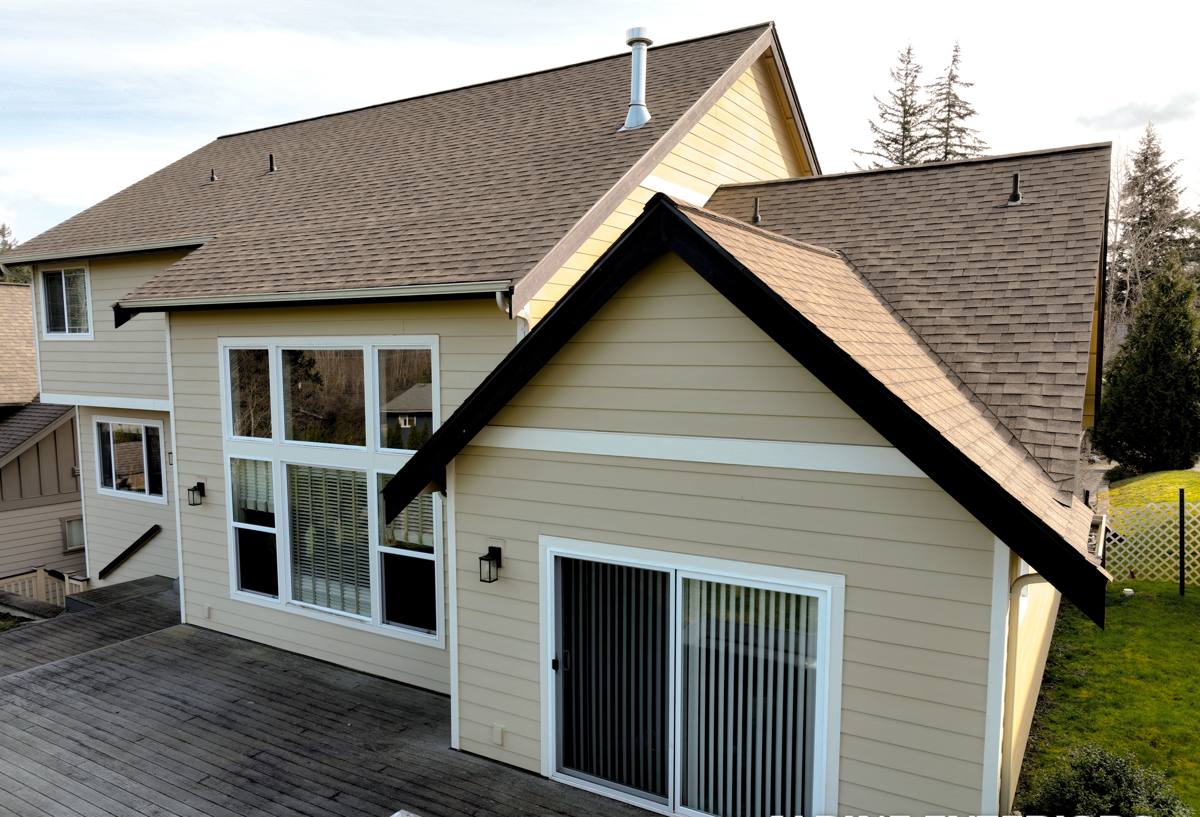
Why Salt Air and Moisture Change the Installation, Not Just the Material
A lot of homeowners assume the climate conversation begins and ends with "pick a material that handles moisture." That's part of it, but installation technique matters just as much as product choice. Salt-laden, moisture-heavy air affects a siding job in a few specific ways:
- Fastener corrosion: In coastal-influenced air, the wrong fastener — under-galvanized or plain steel — starts rusting years before the siding itself shows wear, leading to streaking and eventual fastener failure.
- Seam and joint behavior: Butt joints and trim intersections that aren't flashed and caulked correctly become the entry point for moisture, regardless of how good the siding panel itself is.
- House wrap and drainage plane performance: A weather-resistive barrier installed without a proper drainage gap traps moisture behind the siding instead of letting it escape, which is a slow, invisible problem until it isn't.
- Prolonged damp cycles: Rain that lingers rather than a hard downpour that clears keeps siding surfaces wet longer, which matters for anything with an organic component and for paint film longevity.
None of this is exotic engineering — it's standard best practice done consistently, every time, instead of skipped when a crew is rushing. That consistency is the actual value of hiring a local installer.
Moss: The Slow Problem Nobody Budgets For
Why Laurel's Tree Cover Makes This Worse
Whatcom County's tree canopy is part of what makes this area attractive to live in, but shaded, tree-lined lots hold moisture and slow evaporation on exterior walls — exactly the conditions moss needs. On a north-facing wall or a section of siding tucked under overhanging branches, moss can establish within a couple of seasons if the siding surface and the installation gaps give it somewhere to grip.
What Correct Installation Does to Limit It
Moss doesn't usually start because a material is "bad" — it starts because of gaps, rough surfaces, or standing moisture that installation choices could have avoided:
- Proper clearance between the bottom of the siding and grade, decks, or roof lines so splashback and standing moisture don't sit against the material
- Correct caulking at joints and trim so moss and algae don't get a foothold in gaps
- A factory-applied finish that resists the kind of surface texture that organic growth clings to, versus a field-painted or bare surface that's more porous
- Attention to where downspouts and roof runoff discharge relative to siding walls
This is one of the practical reasons we standardized on James Hardie fiber cement with its factory ColorPlus finish rather than field-finished wood-based products. The finish is baked on under controlled conditions, which gives it more consistent resistance to the kind of moisture and organic growth that Laurel's climate produces, and it holds color without the recoating cycle that painted wood-based sidings need in this environment.
What a Correct Siding Installation Involves, Start to Finish
| Stage | What Happens | Why It Matters in Laurel |
|---|---|---|
| Tear-off and substrate check | Remove old siding, inspect sheathing for rot or soft spots | Hidden moisture damage is common under old siding in wet climates and must be fixed before new siding goes on |
| Weather-resistive barrier | Install house wrap with a proper drainage gap behind the siding | Lets incidental moisture drain and dry instead of getting trapped against the wall |
| Flashing and trim details | Flash windows, doors, and horizontal joints correctly | These are the highest-risk points for water intrusion during driving rain |
| Fastening | Use corrosion-resistant fasteners at manufacturer-specified spacing and depth | Prevents streaking and fastener failure in salt-influenced air |
| Clearances | Maintain proper gap from grade, roofing, and decks | Reduces splashback moisture and moss establishment at the base of walls |
| Caulking and sealing | Seal joints, trim intersections, and penetrations per spec | Closes the gaps where moss, algae, and water intrusion typically start |
| Final inspection | Walk the full exterior checking reveal lines, fastener pattern, and seams | Catches small errors before they become multi-year problems |
Why We Install Only James Hardie Fiber Cement
We get asked fairly often why we don't offer vinyl, LP SmartSide, or other engineered wood options. It's a fair question, and the honest answer is that we made a standard for ourselves based on what holds up in this climate over the long run, not on what's cheapest to install.
Fiber cement is non-combustible, which matters to a lot of homeowners regardless of climate, but in a marine environment like Semiahmoo and Laurel, the bigger advantage is moisture behavior. Fiber cement doesn't absorb and swell at cut edges and seams the way wood-based products can if a fastener or a caulk line ever fails — and in a climate with this much sustained dampness, something eventually will need maintenance. James Hardie's HZ5 product line is specifically engineered for wetter, colder climates like the Pacific Northwest, and the ColorPlus factory finish means the color and protective coating are cured under controlled conditions rather than applied on-site where weather and temperature swings affect adhesion and cure quality.
We're not going to tell you other products are junk — plenty of homes around the country wear them fine. But for what this specific climate does to a house over ten, twenty, thirty years, we'd rather install one product correctly and stand behind it than offer several and hope the cheaper ones hold up as well. That's the whole reason our crew only carries James Hardie.
Why a Local Crew Matters More Than It Sounds Like It Should
Siding installation instructions read the same everywhere. What changes is judgment on the ground — knowing that a particular lot's tree cover means extra attention to a north wall, or that a property close to the water needs a harder look at fastener choice, or that a given roofline creates a runoff pattern worth accounting for before the first panel goes up. A crew that works Laurel and the greater Semiahmoo area regularly has already seen how houses in this specific setting age, which means fewer surprises and fewer callbacks.
There's also a practical scheduling side to it. A local crew isn't driving in from two counties away, which matters when weather windows for exterior work are already tighter here than in drier parts of the state. Rain delays are a normal part of doing this work correctly in Whatcom County — a crew based nearby can adjust the schedule without losing the job to someone else's calendar.
What to Check Before You Hire Anyone for Siding Work in Laurel
- Do they carry proper licensing and insurance for exterior contracting work in Washington State?
- Will they show you the specific fastener type and flashing details they plan to use, not just the siding brand?
- Do they account for drainage gap and clearance from grade in their installation process, or just nail panels to the wall?
- Can they explain how they'll handle your property's specific moisture or shade conditions?
- Do they offer a manufacturer-backed warranty that's actually transferable, not just a verbal promise?
- Are they willing to walk your specific site before quoting, rather than pricing off a phone call?
Signs Your Current Siding Is Already Losing the Battle
If you're weighing whether it's time to replace siding rather than patch it, a few signs in this climate are worth taking seriously rather than waiting on:
- Persistent moss or algae staining that comes back within a season of cleaning
- Soft or spongy spots when you press on siding near the bottom edge or around trim
- Paint that's peeling or bubbling rather than just fading, which usually points to moisture trapped underneath
- Visible gaps opening at seams or trim joints
- Warping or waviness in panel lines, especially on shaded or north-facing walls
Any one of these on its own might just need a repair. Several at once, especially on the same wall, usually means moisture has been getting behind the siding for a while and a full section — or the whole exterior — is due for replacement rather than another patch.
What This Looks Like as a Project
Every home is different, but a full siding installation on a typical Laurel home generally follows the same shape: an on-site walkthrough to assess the substrate and identify problem areas, a written estimate that spells out product line, color, and installation details rather than a vague lump sum, a tear-off and substrate repair phase if needed, then the installation itself with attention to the drainage, flashing, and clearance details covered above. Timeline depends on house size and weather, and weather is honestly the bigger variable in this part of Washington than it is almost anywhere else in the state.
If you're planning ahead for a siding project in Laurel or anywhere around Semiahmoo, we're glad to come take a look at your home and give you a straight assessment — no pressure, no inflated urgency, just what we'd actually recommend if it were our own house. Fill out the form below to request a free estimate.