 Semiahmoo Siding
 Building New on Drayton Harbor? The Windows Have to Match the Site
Drayton Harbor sits in one of the more exposed corners of Whatcom County. Homes here face a mix of salt-laden air off the harbor, wind-driven rain coming in off the water, and long stretches of gray, damp weather that keep siding, trim, and window openings wet for days at a time. If you're framing a new home or a major addition near the harbor, the windows you choose and how they're installed will do more to determine long-term comfort and durability than almost any other single decision on the exterior envelope.
New-construction window installation is different from a retrofit or pocket replacement. On new construction, the window goes in before the siding, before the final flashing layers, and often before the house is fully weathered-in. That's an advantage — it means we can build the water management right, from the framing out — but it also means there's no room for shortcuts. A window installed wrong at framing stage doesn't show a problem for years, and by the time it does, the fix involves opening up finished walls.
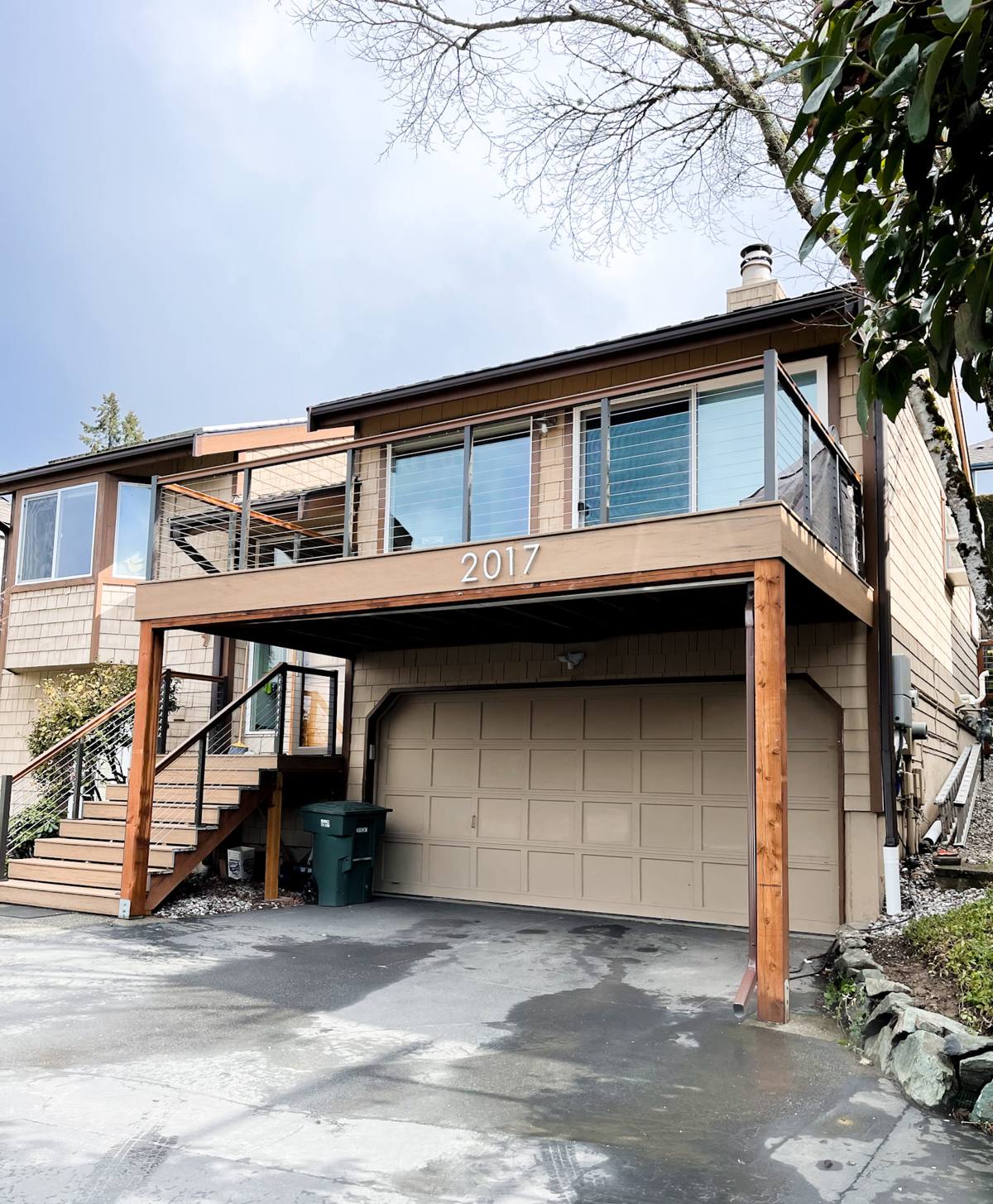
What Drayton Harbor's Climate Does to a New Window Opening
We install and flash windows across Whatcom County, but exposed harbor-front and near-shore lots like the ones around Drayton Harbor get a heavier dose of a few specific stressors:
- Salt air corrosion — airborne salt accelerates corrosion on unprotected fasteners, cheap flashing tape, and lower-grade hardware. It also degrades some sealants faster than manufacturers' inland warranty testing accounts for.
- Wind-driven, horizontal rain — storms off Semiahmoo Bay and the Strait don't just fall, they push water sideways into window heads and jambs. Flashing details that would be fine on a sheltered inland lot can fail here.
- Long moss and algae season — Whatcom County's wet months run long. Moisture that lingers around window trim and sills feeds moss and mildew growth, which holds even more water against wood trim and sealant joints.
- Temperature swing and condensation — cool, humid marine air against a warm interior means condensation risk at the glass and frame if the unit isn't properly rated and installed with a thermal break.
None of this means new-construction windows near Drayton Harbor need to be exotic or dramatically more expensive. It means the flashing sequence, sealant selection, and hardware grade need to be chosen for a harbor-exposed site, not a generic spec sheet.
What a Correct New-Construction Window Job Actually Involves
1. Rough Opening Prep
Before any window goes in, the rough opening gets checked for square, level, and correct dimension against the window's actual manufactured size (not just the plan spec — units can run slightly off). We also confirm the sheathing and any water-resistive barrier are in place and lapped correctly before flashing begins.
2. Sill Pan Flashing
This is the single most important step for a wet climate like ours. A properly formed sill pan — sloped slightly to the exterior, with back-dammed corners — gives any water that gets past the window a way out instead of a place to pool. On a harbor-exposed lot, we don't skip or shortcut this step even on units that claim to be "self-flashing."
3. Window Set and Fastening
The unit gets shimmed plumb, level, and square, then fastened per the manufacturer's schedule — not guessed at. Fastener type matters more here than on a sheltered inland build; we use corrosion-resistant fasteners appropriate for a salt-air environment rather than whatever's fastest.
4. Head, Jamb, and Sill Flashing Integration
Flashing tape and drainable housewrap details get integrated in the correct shingle-lap order — jambs before head, head lapping over the water-resistive barrier — so water is always directed outward and down, never trapped behind the window flange. This is where a lot of new-construction installs go wrong when the crew is moving fast and treats flashing as a formality instead of the actual waterproofing system.
5. Interior and Exterior Sealant
We use sealants rated for the temperature and moisture range they'll actually see, applied at the joints that need a sealed bead (not the whole perimeter — over-sealing a window can trap moisture that should be able to drain or dry).
6. Final Check
Before siding closes the wall in, we confirm every unit operates correctly, seals tight, and the flashing sequence is complete and photographed for the record — because once siding goes up, that flashing is invisible for the life of the house.
Choosing the Right Window for a Drayton Harbor Build
There's no single "best" window brand or material for every project — the right choice depends on budget, the home's style, and how exposed the specific lot is. What we do focus on for harbor-area builds is matching the window's performance rating and frame material to the actual conditions it'll face, rather than defaulting to whatever's cheapest or most common inland.
| Factor | Why It Matters Near Drayton Harbor |
|---|---|
| Frame material corrosion resistance | Salt air is harder on hardware and cladding than typical inland Whatcom County exposure |
| Water penetration rating | Wind-driven rain off the harbor pushes water harder against the window than a sheltered site sees |
| Condensation resistance rating | Marine humidity plus interior heating raises condensation risk at the glass edge and frame |
| Warranty structure | Some manufacturer warranties reduce coverage in coastal/salt-air zones — worth reading before you commit |
| Trim and cladding compatibility | Wood trim in a long-moss climate needs either careful detailing or a low-maintenance cladding option |
We'll walk through these trade-offs with you in plain terms during the estimate — including where a mid-range window installed correctly will outperform a premium window installed carelessly, which is more often the case than people expect.
Why the Installing Crew Matters as Much as the Window Itself
A window's warranty covers the manufactured unit. It does not cover a bad flashing job, and most manufacturers are explicit that improper installation voids product coverage for water damage. That puts the real long-term protection on the installer's flashing and sequencing, not the window's brand name.
Crews that don't regularly work harbor-exposed sites can install a window perfectly well by inland standards and still leave it vulnerable to the specific way water attacks a Drayton Harbor wall — driven sideways by wind, sitting damp for days, feeding moss at the sill. Working this stretch of Whatcom County regularly means we've seen how these openings fail when they're done wrong, and we build the sequence to prevent that from the start rather than reacting to it later.
New-Construction vs. Replacement: Why the Process Differs
It's worth being clear about scope, since homeowners sometimes assume "new windows" is one service. New-construction installation happens during framing, with full access to the wall assembly and the ability to build flashing in from scratch. Replacement work (retrofit or pocket) happens after the home is finished, working around existing siding and trim with a more constrained flashing approach. If your project is a new build, an addition, or a full exterior tear-off down to the studs, you're in new-construction territory — and that's the scope this page covers.
What to Confirm Before Windows Go In
- Rough openings are framed to the exact manufactured window dimensions, with allowance for shimming
- Sill pan flashing is specified and will be installed regardless of whether the window is marketed as self-flashing
- Flashing sequence (sill, jamb, head) follows correct shingle-lap order integrated with the housewrap
- Fasteners and hardware are rated for salt-air/coastal exposure, not just standard-grade
- Sealant is applied only where it should be, allowing the assembly to drain and dry as designed
- Window's water penetration and condensation resistance ratings are appropriate for a harbor-exposed lot
- Manufacturer's installation instructions are followed to keep the product warranty intact
- Flashing work is documented (photos) before siding closes the wall
Timing and Coordination on a New Build
Window installation on new construction has to be sequenced correctly with framing, the water-resistive barrier, and siding — it's not a standalone appointment. We coordinate directly with your builder or general contractor (or handle the full exterior scope if we're your siding contractor on the project) so windows go in at the right point in the build, with the wall assembly ready for them and no rush that leads to skipped flashing steps.
Get a Straightforward Estimate
If you're framing a new home or addition near Drayton Harbor or elsewhere around Semiahmoo, we're happy to walk your site, talk through window options that make sense for your budget and exposure, and give you a clear, no-pressure estimate. Use the form below to get started.