 Semiahmoo Siding
 Building Decks for Sumas Homes
Sumas sits at the northern edge of Whatcom County, tucked into the Nooksack valley near the Canadian border, and it has its own version of the weather that shapes every outdoor structure in this part of the state. It isn't a beachfront town the way parts of Semiahmoo are, but it shares the same maritime air mass — long wet winters, valley fog that sits low in the mornings, and a moss season that can run eight months or more. A deck built here has to shed water fast, dry out between storms, and resist the kind of slow biological growth that thrives in shade and standing moisture. That's a different design problem than building a patio deck in a dry climate, and it's why we treat every Sumas deck project as a drainage and material project first, and a carpentry project second.
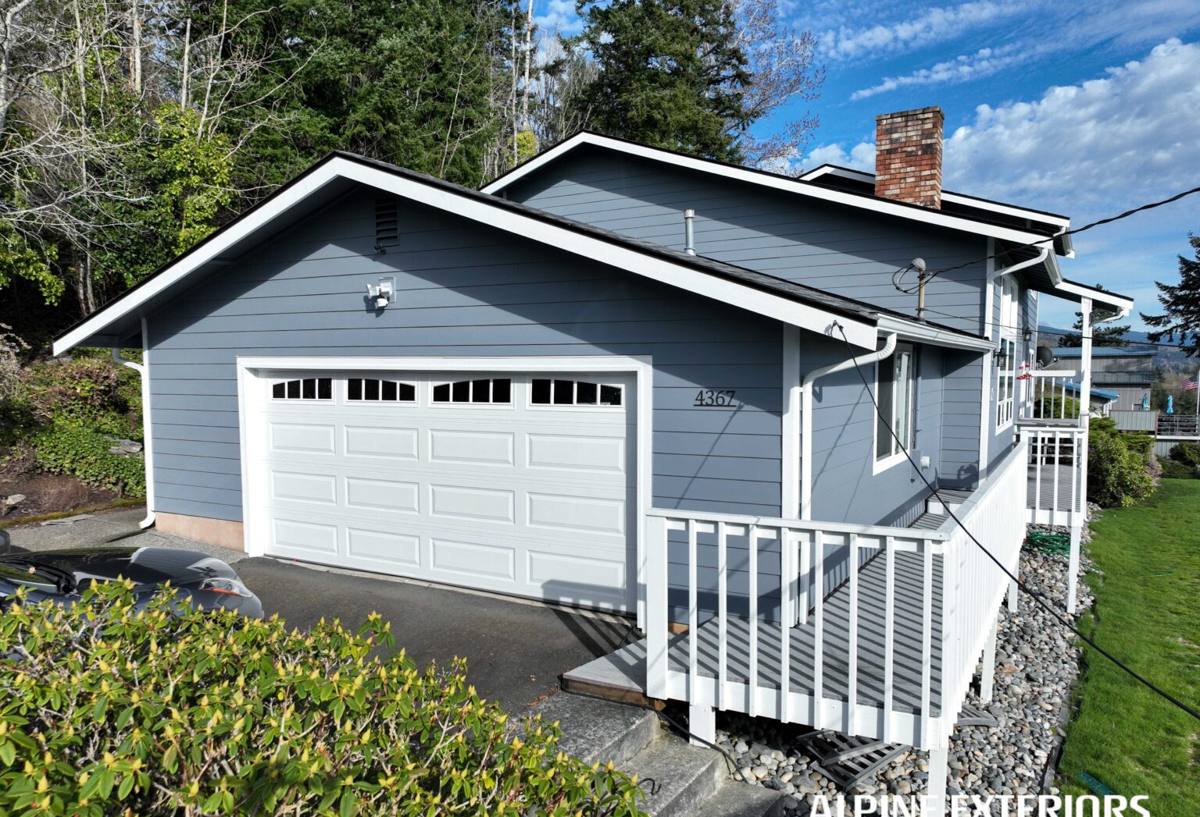
What This Climate Actually Does to a Deck
Most deck failures we see in this area aren't dramatic. They're slow. Water sits in a joint that never quite dries, moss gets a foothold on a north-facing stair tread, and five years later a board that looked fine is soft underneath. A few specific patterns show up again and again on decks in and around Sumas:
- Moss and algae building up on shaded boards, stair treads, and anywhere leaves or debris collect, creating a slick surface and holding moisture against the wood or coating
- Fastener corrosion where the wrong screws or nails were used against pressure-treated lumber, leaving black streaking and eventual loosening
- Ledger board rot where the deck attaches to the house, usually from missing or failed flashing rather than the wood itself
- Footings that were poured too shallow or without proper drainage, leading to frost heave or settling over multiple wet winters
- Gaps between boards that close up over time as wood swells, trapping debris and moisture instead of letting water drain through
None of these are exotic problems. They're what happens when a deck is built to a generic spec instead of to the conditions it actually has to survive here.
What a Correctly Built Deck Involves
Footings and Framing
Everything starts underground. Footings need to be sized and set to local frost depth and soil conditions, not just poured to the minimum. We use structural screws and connectors rated for exterior use, and we space joists to match the actual decking product going on top — composite and PVA boards often want tighter joist spacing than solid wood to avoid flexing and long-term sagging.
Ledger Attachment and Flashing
Where the deck meets the house is the single most important detail on the whole structure. A ledger board bolted directly to siding without proper flashing is one of the most common ways water gets behind a wall system, and in a climate that sees this much sustained rain, that failure point shows up fast. We flash it correctly the first time — it's not a place to save time.
Drainage and Airflow Underneath
A deck that can't breathe underneath stays damp longer than it needs to after every storm, and that's exactly the condition moss and rot need. Grading the ground below to shed water away from the house, keeping vegetation clear, and leaving enough clearance for airflow all matter more here than they would in a drier region.
Fasteners and Hardware
Pressure-treated lumber today uses a different chemical formulation than it did years ago, and it's more corrosive to standard fasteners. We use hot-dip galvanized or stainless hardware rated for contact with modern treated wood — mismatched fasteners are a small cost up front and an expensive problem later.
Decking Material Choices for This Climate
There's no single right answer for every project — budget, look, and how much upkeep a homeowner actually wants to do all factor in. Here's how the common options hold up specifically against sustained rain and moss pressure:
| Material | Moss/Moisture Behavior | Maintenance | Typical Lifespan Here |
|---|---|---|---|
| Pressure-treated wood | Absorbs moisture readily; needs a breathable finish to slow it down | Annual cleaning, refinish every 2-3 years | 15-20 years with upkeep |
| Cedar | Naturally rot-resistant but still needs sealing against constant wet | Regular cleaning and periodic oil/sealer | 15-25 years with upkeep |
| Composite decking | Doesn't absorb water like wood, but surface film can still grow moss if never cleaned | Periodic wash-down, no staining or sealing | 25-30+ years |
| PVC/capped polymer | Fully non-absorbent; best resistance to moss and moisture damage | Occasional wash-down | 30+ years |
We install all of the above and won't push a homeowner toward the highest-margin option. If budget favors treated lumber, we'll build it with the drainage and fastener details that let it actually reach its expected lifespan in this climate. If low maintenance matters more than upfront cost, composite or PVC earns its price back in time not spent scrubbing and refinishing.
Railings, Stairs, and the Details That Get Skipped
Stair treads and railing posts take the most direct weather exposure on a deck and are often where corner-cutting shows up first. Post bases need to be set to drain, not sit in a puddle after every rain. Stair stringers need the same fastener standard as the rest of the frame. And any horizontal surface — a wide rail cap, a landing — needs a slight pitch built in so water runs off instead of pooling and feeding moss growth right where hands and feet contact the deck most.
Our Deck Building Process
- On-site assessment — we look at drainage, sun exposure, soil, and how the deck will tie into the house before talking materials
- Design and material selection — sized to the space and matched to how much maintenance the homeowner actually wants long-term
- Permitting — most new decks and many rebuilds in Whatcom County require a permit; we handle that process rather than leaving it to the homeowner
- Footings and framing — set to local frost and soil conditions with corrosion-rated hardware throughout
- Ledger flashing — done correctly at the house connection before any decking goes down
- Decking, railing, and stairs installed — with attention to drainage pitch and board spacing for the material chosen
- Final walkthrough — we go over care and cleaning specific to the material installed, so it lasts as long as it's built to
Maintenance That Actually Extends a Deck's Life Here
Whatever material goes down, a little seasonal attention goes a long way in a climate like this one:
- Clear leaves and debris from between boards and off stair treads before they compost in place
- Wash down the surface at least once or twice a year to break up early moss and algae before it establishes
- Check that gutters and downspouts near the deck are directing water away, not onto it
- Inspect fastener heads and connectors annually for corrosion or loosening
- Reseal wood decking on the schedule the product actually calls for, not just when it looks bad
- Keep vegetation trimmed back from the deck edges to maintain airflow and sun exposure where possible
Cost Factors for a Sumas Deck Project
Every project is different, but the same handful of factors drive most of the cost difference between decks:
| Factor | Why It Matters |
|---|---|
| Size and footprint | Directly drives material and labor quantities |
| Height off the ground | Taller decks need more substantial footings, framing, and stair runs |
| Decking material | Treated wood costs less upfront; composite and PVC cost more but need far less upkeep over time |
| Railing style | Cable, glass, and custom rail systems add cost over standard baluster railing |
| Site access and grading | Sloped or hard-to-access lots add labor for footings and material handling |
| Ledger and flashing complexity | Older siding or unusual wall assemblies can add time to do the connection correctly |
We give straightforward, itemized estimates so a homeowner can see where the cost is actually going, rather than a single lump number.
Why Hire a Crew That Already Works This Area
A deck built to a generic national spec sheet can look fine on installation day and still fail early here, because it wasn't built for eight months of moss season and sustained coastal-influenced rain. Working regularly across Whatcom County, including Sumas and the Semiahmoo area, means we've seen how different framing details, fasteners, and materials actually hold up over years in this specific climate — not just how they're rated on paper. That local track record shapes every footing depth, flashing detail, and material recommendation we make, and it's the difference between a deck that needs real work in five years and one that's still solid in twenty.
If you're planning a new deck or need an honest look at whether an existing one is worth repairing or replacing, we're glad to come take a look. Estimates are free and there's no pressure — just a straight assessment and a clear breakdown of the options, using the form below.