 Semiahmoo Siding
 Why Custer's Climate Changes the Metal Roofing Equation
Custer sits close enough to Semiahmoo Bay and the Strait of Georgia that salt-laden air is a fact of life, not an occasional nuisance. Add Whatcom County's driving rain events and a moss season that can run eight or nine months out of the year, and you have a set of conditions that will find every weak point in a roofing system — fast. Metal roofing handles this combination better than most materials, but only when it's specified and installed with these specific stressors in mind. A metal roof detailed for a dry inland climate is not the same job as one detailed for Custer.
This page is about one thing: metal roofing on homes in and around Custer, and what actually holds up here versus what looks fine on paper but underperforms once salt air, wind-driven rain, and shade-grown moss go to work on it year after year.
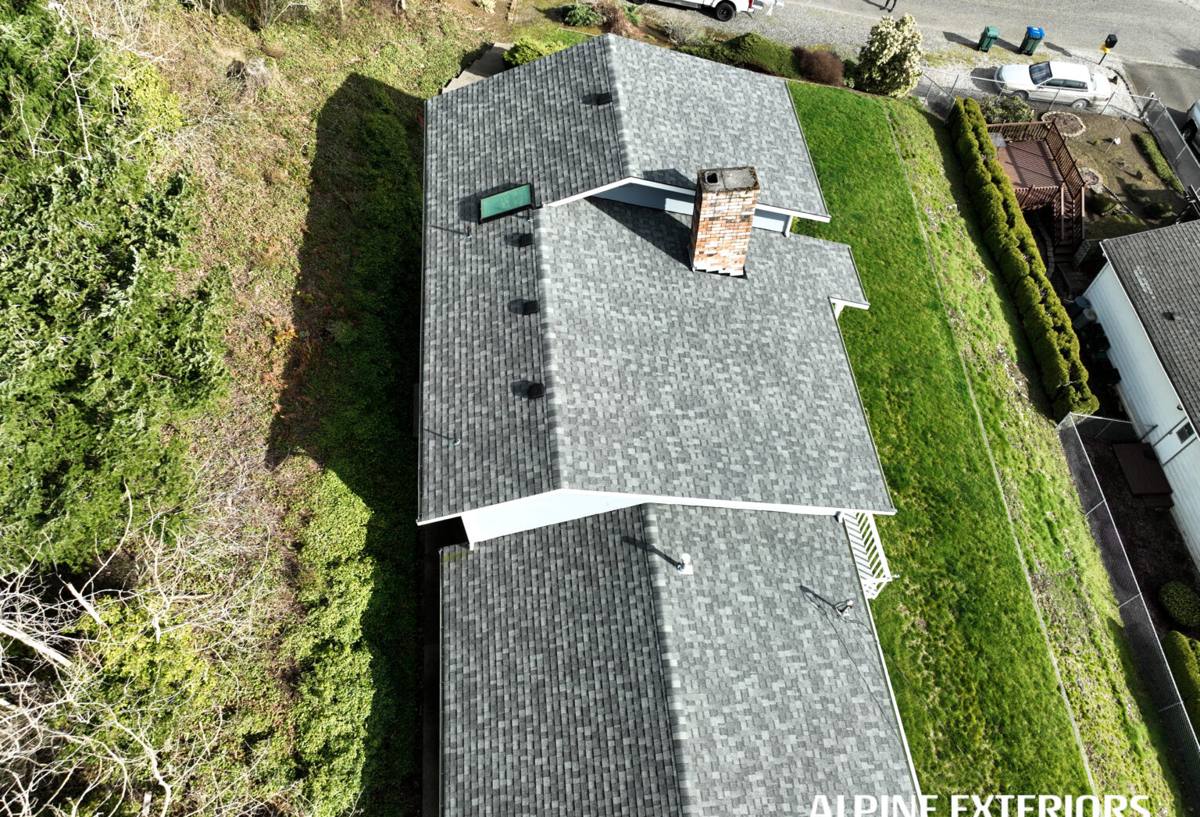
What Salt Air Actually Does to a Metal Roof
Salt air accelerates corrosion at any point where the panel's protective coating is broken, scratched, or simply absent — cut edges, fastener heads, and dissimilar-metal contact points are the usual failure spots. This isn't unique to Custer, but proximity to open water makes it a bigger factor here than it would be twenty miles inland.
Panel Material and Coatings
Galvalume steel with a quality PVDF (Kynar-type) finish is the standard we lean on for coastal-influenced jobs like this. The zinc-aluminum coating resists corrosion at cut edges better than plain galvanized steel, and a good paint system holds color and chalk resistance for decades instead of fading and chalking within the first several years. Bare or thinly coated aluminum is sometimes proposed as a "salt-proof" answer — it resists rust, but it's softer, dents more easily under hail or foot traffic, and isn't automatically the better choice once you weigh the full picture.
Fasteners and Trim
This is where a lot of otherwise-good metal roofs fail early near the water. Fastener heads and exposed screws need corrosion-resistant coatings matched to the panel metal, with rubber-gasketed washers that stay flexible instead of cracking after a few winters. Mixing incompatible metals — the wrong screw in the wrong panel, aluminum trim against steel panels without a barrier — sets up galvanic corrosion that eats through metal from the inside of the joint, often invisibly until it's already failed.
Standing Seam vs. Exposed Fastener: Which Fits a Custer Home
Both systems can perform well here, but they age differently under salt air and rain, and the right call usually comes down to roof pitch, budget, and how much maintenance the homeowner wants to sign up for.
| Factor | Standing Seam | Exposed Fastener |
|---|---|---|
| Fastener exposure | Concealed clips, no exposed screws on the field | Screws penetrate the panel face directly |
| Long-term maintenance | Very low — no gaskets to inspect on the field | Gaskets and screws need periodic checking |
| Upfront cost | Higher material and labor cost | More budget-friendly |
| Best fit | Steeper pitches, waterfront-adjacent exposure, long-term owners | Lower-pitch secondary structures, shops, budget-conscious re-roofs |
| Moss resistance | Smooth seams shed moss growth well | Similar shedding, slightly more surface texture at fastener rows |
For a primary residence close to the water, we generally steer homeowners toward standing seam when the budget allows, specifically because it removes the exposed-fastener maintenance item from a climate that's already hard on hardware. Exposed fastener systems are still a legitimate, durable choice for garages, shops, and re-roofs where cost matters more than the last inch of long-term ease.
Getting Driving Rain Off the Roof, Not Into It
Metal panels shed bulk water well, but wind-driven rain in this area doesn't always fall straight down — it can push sideways under laps, around penetrations, and up under improperly lapped flashing. The panel itself is rarely where a leak starts; it's almost always at a transition.
Flashing and Penetrations
Every valley, chimney, vent pipe, and wall transition needs flashing detailed for wind-driven rain, not just gravity drainage. That means proper lap direction, sealant used as a backup rather than the primary seal, and valley flashing wide enough to handle volume during heavy storm cells.
Underlayment as the Real Backup Plan
A synthetic, high-temp underlayment under the metal — with self-adhered ice-and-water membrane at eaves, valleys, and penetrations — is what actually keeps a roof dry if wind ever pushes water past the panel laps. This is not an optional upgrade in this climate; treat it as baseline.
Gutters and Downspouts Sized for Volume
Metal roofs shed water fast and in volume, which means undersized gutters or downspouts become obvious the first heavy rain after installation. Matching gutter capacity to the roof's actual shed rate — not just its square footage — is part of doing the job right, not an afterthought.
Moss, Shade, and the Long Wet Season
Whatcom County's tree cover and extended damp season give moss and algae plenty of time to establish, and roofs with any north-facing shade or overhanging branches are the most exposed. Metal roofing has a real advantage here — its smooth, hard surface gives moss far less to grip than the porous texture of asphalt shingles — but "moss-resistant" doesn't mean "moss-proof."
- Keep branches trimmed back from the roofline so panels get sun and airflow
- Clear needles and leaf litter from valleys and behind chimneys, where debris traps moisture longest
- Check that gutters aren't backing water up under the eave edge during heavy rain
- Look for any spot where moss has bridged from a shaded fascia board onto the panel itself
- Address minor moss early with a gentle rinse — never pressure-wash a coated metal panel, which can damage the finish
A roof with decent pitch, good sun exposure, and clear valleys will stay far cleaner over time than one crowded by trees, regardless of material. Part of a good install is thinking about pitch and drainage paths with the site's actual shade pattern in mind, not just the roof in isolation.
What a Correct Metal Roof Install Involves Here
The panels get the attention, but the assemblies underneath and around them are what determine whether the roof performs for thirty-plus years or starts showing problems in five.
- Deck inspection and repair before anything goes down — metal will telegraph an uneven or soft deck
- Ice-and-water membrane at eaves, valleys, and all penetrations
- Synthetic underlayment rated for the coastal humidity and temperature swings this area sees
- Corrosion-matched fasteners and trim, with galvanic separation wherever dissimilar metals meet
- Balanced intake and exhaust ventilation, so the underside of the deck isn't trapping moisture
- Flashing details built for wind-driven rain, not just standard gravity drainage
- Gutter and downspout capacity matched to the roof's actual water-shed rate
Our Process for a Custer Metal Roofing Job
We start with an on-site look at the existing roof, deck condition, ventilation, and how the site's shade and drainage patterns are likely to treat a new metal system over time. From there we walk through panel profile, coating, and fastener options against the home's exposure and the owner's budget — there's rarely one "correct" answer, just trade-offs worth understanding before you commit.
Install day includes deck repair as needed, full underlayment and ice-and-water protection, then panels, flashing, and trim in a sequence built to keep the structure weathertight at every stage, not just at the end. We walk the finished roof with the homeowner, and we clean the site — cut-offs, fasteners, and packaging don't get left in the yard or gutters.
Why a Crew That Already Works Custer Matters
A roofer who's worked this stretch of Whatcom County already knows how far salt exposure travels inland from the water, which fastener and coating combinations actually hold up here versus what fails early, and how local storm patterns tend to hit roofs from a particular direction. That's the difference between a spec that looks fine in a catalog and one that's actually right for a home near Semiahmoo. It also means straightforward answers about permitting, realistic timelines, and what your specific site — sun exposure, tree cover, roof pitch — actually needs, instead of a one-size answer built for a different climate.
Rough Cost Factors to Expect
| Factor | Effect on Cost |
|---|---|
| Panel type (exposed fastener vs. standing seam) | Standing seam runs higher due to material and labor |
| Roof pitch and complexity | Steep, cut-up roofs with many valleys and penetrations cost more to detail correctly |
| Tear-off vs. overlay | Removing old roofing adds labor but allows deck inspection and repair |
| Coating grade | Premium PVDF finishes cost more upfront, hold color and resist corrosion longer |
| Ventilation upgrades | Adding proper intake/exhaust ventilation is a modest add that protects the whole assembly |
Exact numbers depend on the roof itself, and we'd rather walk your specific site than quote a range that doesn't mean much without seeing the pitch, deck condition, and access. If you're weighing metal roofing for a home in or around Custer, we're happy to come take a look and give you a straight, no-pressure estimate using the form below.