 Semiahmoo Siding
 Custer's Climate Asks More of a Roof Than It Looks
Custer sits close enough to the water that salt-carrying air, wind-driven rain, and a long, damp moss season all work against a roof at the same time, year after year. Roofs in this part of Whatcom County rarely fail because of one dramatic storm. They fail slowly — moisture that never fully dries between rains, moss that gets a foothold every fall and holds on until late spring, and metal components that corrode faster near the water than they would twenty miles inland.
None of that is unusual for this area. But it does mean a roof built with generic, one-size-fits-all methods and materials will show its age here faster than it would in a drier climate. The details of how a roof is installed, not just what shingle is on top, are what decide whether it holds up.
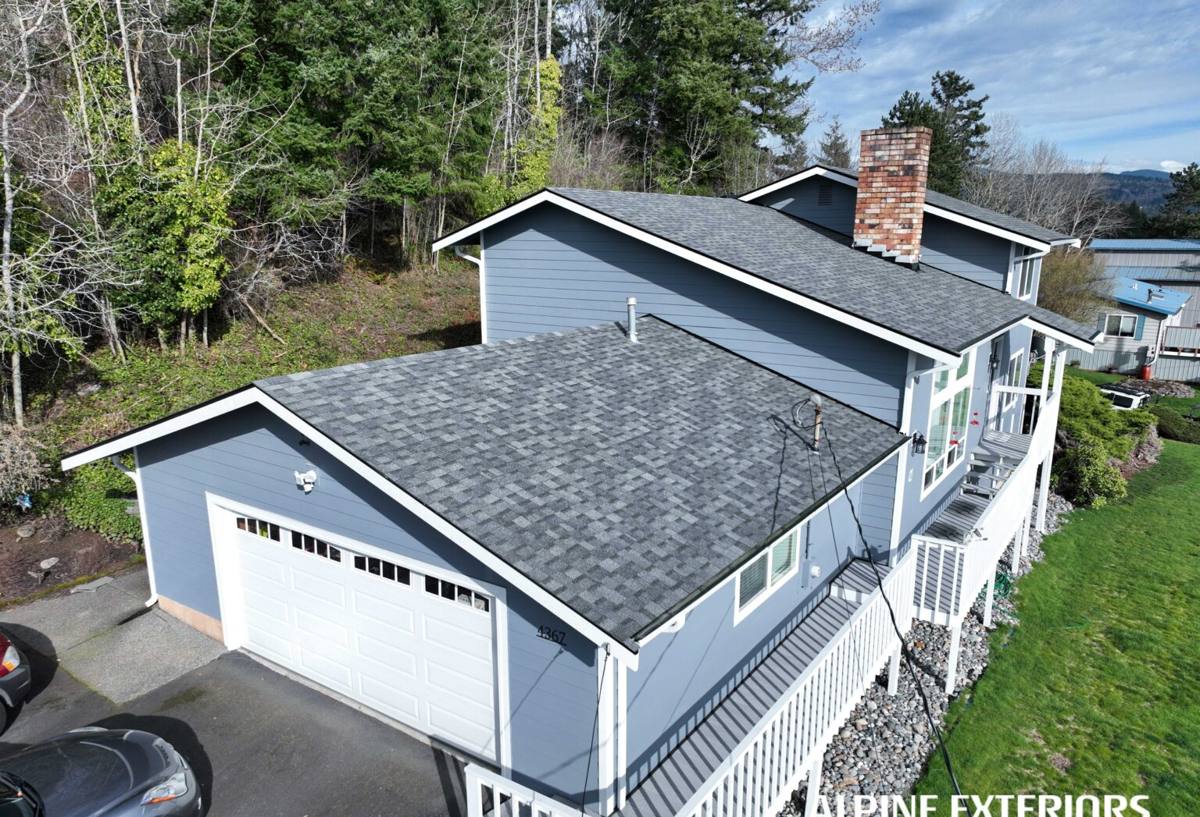
What a Correctly Built Asphalt Shingle Roof Needs Here
Underlayment That Actually Blocks Water
Shingles are the visible layer, but the underlayment underneath is what keeps a roof dry when wind drives rain sideways under the shingle tabs — something that happens more often in exposed, waterfront-adjacent areas like Custer than it does further inland. A synthetic underlayment with properly lapped seams, sealed around every penetration, matters more here than the shingle brand printed on the wrapper.
Ventilation That Keeps Moisture Moving
A roof deck that can't breathe traps humid air underneath it, and trapped moisture is what rots decking and shortens shingle life from below — a problem that shows up years before anyone notices a leak from above. Balanced intake at the eaves and exhaust at the ridge is a basic requirement, not an upgrade, on any roof in this climate.
Fasteners and Flashing That Don't Corrode Early
Salt air breaks down cheap or under-spec metal faster than most homeowners expect. Flashing around chimneys, skylights, and valleys, along with the nails holding the shingles down, need to be rated for coastal exposure. Using standard fasteners because they're what's on the truck is one of the most common shortcuts that shows up as rust streaks and loosened shingles a few years later.
Signs a Custer Roof Needs a Closer Look
Most roofing problems in this area give warning signs well before there's an active leak inside the house. Worth checking for, or having a contractor check for, on a regular basis:
- Dark streaking or a green-black tint on north-facing or shaded slopes — early algae and moss growth
- Granules collecting in gutters or at downspouts, which means the shingle's protective surface is wearing away
- Shingle edges that look curled, lifted, or cupped rather than lying flat
- Rust staining below metal flashing, vents, or fasteners
- Soft spots, sagging, or a spongy feel anywhere on the roof surface when walked
- Daylight visible through the attic roof boards, or damp insulation near the eaves
- Moss growing thick enough to hold visible moisture after a few dry days
Any one of these on its own isn't necessarily an emergency, but they're worth acting on before the next wet season rather than after.
How We Approach an Asphalt Shingle Roof Job
The process is the same whether the job is a full replacement or a significant repair — the details just scale to the scope of the work.
- Inspection first. We look at the roof surface, the attic from underneath, flashing details, and ventilation before recommending anything. A roof that looks fine from the ground can still have a moisture problem underneath.
- Honest scope. We tell you plainly whether you're looking at a repair, a partial re-roof, or a full replacement, and why — not the most expensive option by default.
- Tear-off and deck check. Old shingles come off down to the deck so we can actually see the plywood or OSB underneath. Soft or water-damaged sections get replaced, not covered over.
- Underlayment and flashing installed correctly. This is where most of the long-term water protection actually comes from, and it's the step that gets shortcut most often on rushed jobs.
- Ventilation confirmed or corrected. If intake or exhaust airflow is inadequate, we address it as part of the job rather than leaving it as a known issue.
- Shingles installed to manufacturer spec. Correct nailing pattern, exposure, and sealing — the fine details that determine whether a shingle roof performs anywhere near its rated lifespan in coastal wind and rain.
- Final walk-through. We show you the finished work and go over what maintenance, if any, we recommend going forward.
Choosing a Shingle for Salt Air, Wind, and Moss
Not every asphalt shingle is built the same, and in a climate like Custer's the differences matter more than they would somewhere drier. Here's a general comparison of the common tiers homeowners choose between:
| Shingle Type | Typical Lifespan | Moss/Algae Resistance | Best Fit |
|---|---|---|---|
| 3-tab (standard) | Shorter end of the range | Lower unless treated | Budget-driven jobs, secondary structures |
| Architectural (laminated) | Mid-to-long range | Better when algae-resistant granules are specified | Most primary homes in this climate |
| Algae-resistant granule upgrade | Same base shingle, added resistance | Meaningfully slower streaking and growth | Shaded roofs, north-facing slopes, tree cover |
| Impact-rated / high-wind rated | Long range with proper install | Varies by product, often paired with algae resistance | Fully exposed roofs facing prevailing wind and rain |
We'll talk through which tier makes sense for your roof's exposure, slope, and shading rather than defaulting to whatever's easiest to install. A shaded, moss-prone slope and a wide-open, wind-exposed slope on the same house sometimes call for different specifications.
Keeping Moss From Taking Over Between Roof Jobs
A well-installed roof still needs some upkeep in this climate, especially anywhere near tree cover or shaded by neighboring structures. Basic maintenance that actually extends a shingle roof's life:
- Keep gutters and valleys clear so water doesn't pool and feed moss growth
- Remove overhanging branches that keep a section of roof shaded and damp longer than the rest
- Have visible moss and algae treated or gently removed rather than left to spread — pressure washing shingles is not the right method and can strip granules
- Check attic ventilation isn't blocked by insulation, especially after any attic work
- Schedule a walk-through inspection every year or two, particularly after the wetter months
- Address small flashing or sealant issues promptly — they're inexpensive to fix early and expensive once they've caused deck damage
What Actually Affects the Cost of a Roof in Custer
Every roof is different, but the same handful of factors drive most of the cost variation we see on jobs in this area:
| Factor | Why It Matters |
|---|---|
| Roof size and number of slopes | More area and more valleys/hips mean more material and labor |
| Deck condition | Rotted or soft decking found during tear-off needs replacement before shingles go down |
| Shingle tier chosen | Algae-resistant and impact-rated products cost more up front but hold up longer here |
| Ventilation work needed | Adding or correcting intake/exhaust airflow adds labor but protects the deck long-term |
| Flashing and penetrations | Chimneys, skylights, and multiple vents each add detail work that takes time to do correctly |
| Access and pitch | Steep or hard-to-access roofs take longer and require more safety setup |
We'd rather walk your roof and give you real numbers than throw out a broad estimate that doesn't hold up once we're actually on the deck.
Why a Crew That Already Works in Custer Matters
A roofing crew that regularly works this stretch of Whatcom County has already seen how salt air, wind direction, and moss pressure play out on homes with similar exposure to yours. That's not a marketing point — it's the difference between guessing at a spec sheet and knowing, from repeated experience, which details matter most on a given slope orientation or tree-line situation. Local familiarity also means we're not learning the area's permitting norms or typical construction on the job; we're applying what we already know to your specific roof.
It also means we're accountable locally. A crew that plans to keep working in this community has every reason to do the flashing, ventilation, and fastener details right the first time rather than cutting corners on a job it won't have to answer for later.
Warranty Coverage — What It Actually Means
Shingle manufacturers offer product warranties, and installers typically back their labor separately — these are two different things, and it's worth understanding both before signing anything. A manufacturer's warranty generally covers defects in the shingle material itself. It does not automatically cover damage caused by poor installation, inadequate ventilation, or improper flashing work, which is where most real-world roof failures in this climate actually originate. A workmanship warranty from your installer is what protects you against those installation-related issues, so it's worth asking any contractor exactly what their labor warranty covers and for how long, in plain terms, before work begins.
If you're weighing a repair, a partial re-roof, or a full replacement for a home in the Custer area, we're happy to walk the roof with you and give you a straightforward, no-pressure estimate — no obligation, just an honest look at what your roof actually needs. Use the form below to get started.