 Semiahmoo Siding
 Composite Decking in Marietta: Built for What This Coastline Does to a Deck
Marietta sits close enough to Semiahmoo Bay and Drayton Harbor that homes here deal with a specific combination of punishment: salt-laden air, wind-driven rain that comes in sideways off the water, and long stretches of shade and dampness that keep moss and algae going most of the year. A deck built without that combination in mind will show it within a few seasons — soft spots, corroded fasteners, slick green boards, gaps that trap grit. Composite decking, installed correctly for this specific climate, holds up to all three in a way that untreated or minimally treated wood generally does not.
This page is about composite decking specifically for Marietta and the surrounding Semiahmoo area — what the local conditions demand, what a correct installation actually involves, and why a crew that already works this stretch of Whatcom County builds differently than one coming in from inland.
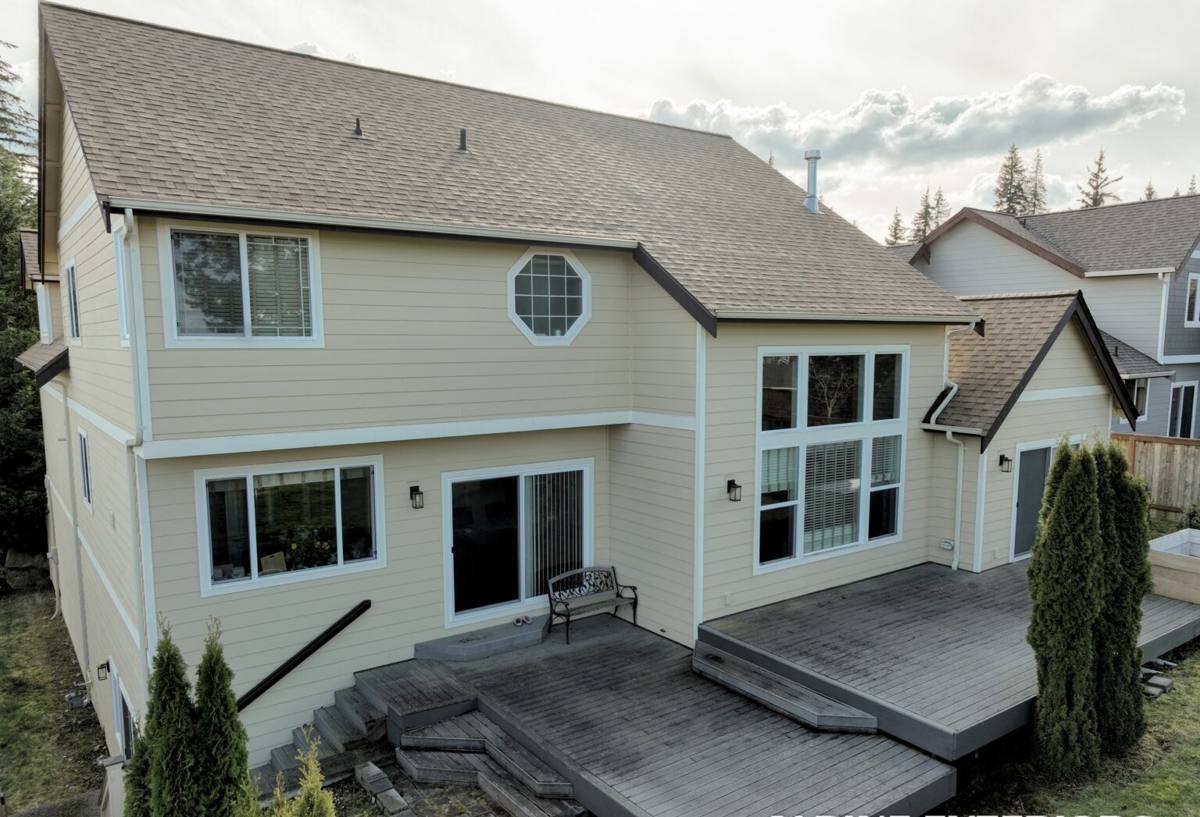
Why Marietta's Conditions Are Hard on Decking
Salt Air and Corrosion
Proximity to the bay means airborne salt settles on everything, including deck hardware. Standard zinc-coated screws and brackets corrode faster here than they would twenty miles inland. Corroding fasteners don't just look bad — they weaken the connection between boards and framing, and once a fastener starts rusting it can streak and stain composite decking permanently. This is one of the most common repair calls we see on decks that weren't built with coastal-grade hardware from the start.
Driving Rain and Moisture Cycling
Rain here doesn't fall straight down. Wind off the water pushes it sideways into ledger connections, under railings, and into any gap in the framing that isn't properly flashed. A deck that sheds water fine in calm conditions can still let moisture into the structure during a windstorm. Over time, that moisture cycling — wet, dry, wet again — is what rots ledger boards and joists even under decking that itself never rots.
Moss, Algae, and Shade
Whatcom County's long wet season, combined with tree cover and shaded north-facing exposures common in Marietta, creates ideal conditions for moss and algae growth on any horizontal surface. On wood decking this means regular pressure washing, sanding, and re-sealing to keep the surface from getting slick and losing its finish. On composite, the surface itself resists rot, but moss and algae can still grow on top of it if boards are laid without adequate airflow underneath — which is a framing and spacing issue, not just a cleaning issue.
Why Composite Decking Fits Marietta Homes
Composite decking is made from a blend of wood fiber and plastic (usually polyethylene or polypropylene), capped or fully encapsulated in a protective outer layer. It doesn't absorb water the way solid wood does, it won't splinter or rot from the inside, and it doesn't need annual staining or sealing. For a coastal, high-moisture, high-shade property, that combination removes several of the maintenance burdens that make wood decks expensive to keep looking good here.
It's not maintenance-free — nothing outdoors in this climate is — but the maintenance shifts from structural upkeep (sanding, sealing, replacing rotted boards) to surface cleaning (rinsing off salt film, brushing back moss, occasional soap-and-water washdown). For most homeowners in this area, that's a trade worth making.
What a Correct Composite Deck Installation Involves
Composite boards are only as good as what's underneath and holding them together. A lot of the failures we get called out to fix on other contractors' decks trace back to shortcuts in the parts nobody sees once the boards are down.
Substructure and Framing
Joists and beams should be pressure-treated lumber rated for ground contact where applicable, sized correctly for the span and the load, and spaced according to the composite manufacturer's requirements — composite typically needs tighter joist spacing than solid wood, especially at angles or diagonal patterns. Undersized or overspanned framing is a common cause of bounce and long-term sag in composite decks.
Ledger Attachment and Waterproofing
Where the deck attaches to the house, the ledger board needs proper flashing that directs water away from the house sheathing, not into it. Given how much sideways rain this area gets, we treat ledger flashing as one of the highest-stakes details on the whole project — a poorly flashed ledger is how water gets behind siding and into wall framing, and that damage is invisible until it's serious.
Fasteners and Hardware
Given the salt exposure, we use stainless steel or coated fasteners rated for coastal and treated-lumber contact rather than standard zinc hardware. Hidden fastener clip systems are common with composite boards and, done right, give a clean surface with no exposed screw heads to corrode or streak. The clips and screws still need to be corrosion-rated — a hidden fastener system with the wrong hardware just hides the rust until the board starts working loose.
Board Spacing, Airflow, and Drainage
Gapping between boards needs to account for composite's expansion and contraction with temperature, and the space underneath the deck needs enough airflow to let boards dry out between rain events. Decks built low to the ground or without ventilation gaps hold moisture longer, which is exactly the condition that lets moss and mildew take hold on top of the boards even though the material itself resists rot.
Composite vs. Other Decking Materials for This Climate
| Material | Salt Air Performance | Moisture/Rain Handling | Moss/Algae Resistance | Ongoing Maintenance |
|---|---|---|---|---|
| Composite (capped) | Good — resists corrosion staining with proper hardware | Good — won't rot, doesn't absorb water | Moderate — surface can still host growth if airflow is poor | Low — periodic cleaning |
| Pressure-treated wood | Fair — hardware corrodes faster near salt | Fair — needs sealing to resist rot | Poor — needs regular treatment | High — annual sanding/sealing |
| Cedar | Fair — natural rot resistance but still needs sealing | Fair — softer, more prone to weathering | Poor — moss takes hold quickly without upkeep | High — regular sealing and cleaning |
| PVC decking | Very good — no organic material to feed corrosion or rot | Very good — fully synthetic, doesn't absorb water | Moderate — similar airflow considerations as composite | Low — periodic cleaning |
We install composite as our standard recommendation for most Marietta projects because it balances upfront cost, appearance, and coastal durability well. PVC is a reasonable option for homeowners who want to prioritize moisture performance above all else and are comfortable with the look and cost trade-offs; we're happy to walk through both during an estimate rather than push one product regardless of the situation.
Our Process, Start to Finish
- On-site assessment: we look at existing framing (if replacing a deck), sun/shade exposure, drainage slope, and how close the site is to salt air and prevailing wind direction.
- Design and material selection: board pattern, color, railing style, and whether hidden fasteners or a picture-frame border make sense for the layout.
- Permitting: most deck work in Whatcom County requires a permit depending on height and attachment to the structure — we handle this as part of the project rather than leaving it to the homeowner.
- Framing and structural work: ledger flashing, joist installation, and any footing or post work needed to meet code and manufacturer span requirements.
- Decking installation: board layout, spacing, and fastening with corrosion-rated hardware throughout.
- Railing, stairs, and finish details: installed to match the deck's structural standard, not treated as an afterthought.
- Final walkthrough: we go over care and cleaning specific to a coastal property before we consider the job done.
Keeping a Composite Deck Looking Good in a Salt-Air, Moss-Prone Climate
- Rinse the deck periodically with a garden hose to knock off salt film and airborne grit, especially after storms.
- Brush or sweep debris out of board gaps before it composts into a base for moss and algae.
- Wash with mild soap and water (or a composite-safe cleaner) a couple times a year — avoid pressure washing at close range, which can damage the cap surface.
- Check railing posts and stair connections annually for any looseness, especially after windy winters.
- Keep nearby shrubs and tree limbs trimmed back to improve airflow and sun exposure across the deck surface.
- Inspect fastener heads and hidden clips periodically for early signs of corrosion staining.
What Affects the Cost of a Composite Deck in Marietta
| Factor | Why It Matters Here |
|---|---|
| Deck size and shape | Larger or multi-level decks require more framing, board material, and labor |
| Substructure condition | Replacing rotted or undersized framing adds cost but is essential for a durable coastal install |
| Board and railing selection | Composite lines vary in price by capping quality, color, and warranty terms |
| Hardware upgrade | Stainless or coastal-rated fasteners cost more than standard hardware but pay off in reduced corrosion issues |
| Site access and slope | Sites with limited access or significant grade changes near the shoreline can add labor time |
| Permitting requirements | Height, attachment type, and guardrail requirements affect permit scope and timeline |
We don't quote exact numbers without seeing the site, but composite deck projects in this area generally run from the mid four figures for smaller, simpler replacements up into five figures for larger decks with full substructure replacement and premium railing. We'll break the estimate down by these factors so you know what's driving the number.
Why Hire a Crew That Already Works Marietta
A lot of deck problems in this area aren't caused by bad decking material — they're caused by installation details that don't account for what this specific stretch of coastline does to a structure over time. A crew that hasn't worked salt-air, high-rain sites before may default to standard hardware, standard flashing, and standard spacing that would be fine forty miles inland but falls short here. Working Marietta and the broader Semiahmoo area regularly means we've already seen how decks in this exact climate fail, and we build to avoid those specific failure points from the start rather than learning it on your project.
If you're considering a new composite deck or replacing an aging one, we're glad to walk the site with you and put together a straightforward, no-pressure estimate. Use the form below to get started.