 Semiahmoo Siding
 Cherry Point Homes Face a Tougher Siding Environment Than Most
Cherry Point sits along the Whatcom County coastline in the Semiahmoo area, and that location comes with a specific set of problems for exterior siding. Homes here take on salt-laden air off the water, long stretches of driving rain pushed in by coastal wind, and a moss season that can stretch from fall through spring. Siding that would hold up fine in a drier inland town can fail early out here — not because it was a bad product everywhere, but because it wasn't matched to this environment.
This page is about one job: replacing siding on a Cherry Point home, done in a way that actually accounts for the salt air, the rain, and the moss. If you're trying to decide whether your current siding needs to come off, or you already know it does and want to understand what a correct replacement looks like, this is written for you.
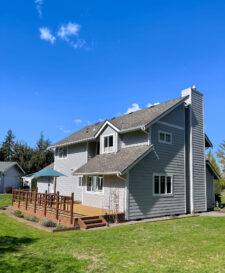
Why Salt Air, Driving Rain, and Moss Shorten Siding Life Near Semiahmoo
Salt air attacks fasteners and finishes first
Airborne salt is corrosive to metal fasteners, flashing, and any exposed hardware. Once corrosion starts at a nail head or a flashing seam, water follows the same path inward. It's rarely the siding panel itself that fails first near the water — it's the small metal details that were installed without the coastal environment in mind.
Driving rain finds every gap
Wind-driven rain in this part of Whatcom County doesn't fall straight down — it gets pushed sideways into seams, laps, and trim joints under pressure. Siding systems that rely on caulk alone to keep water out, rather than proper lap geometry and drainage behind the cladding, tend to let moisture in over time, especially at inside corners and around window and door trim.
Moss season adds sustained moisture load
A long moss season means siding, trim, and the ground line around a house often stay damp for extended stretches rather than drying out quickly between storms. Moss and algae growth on siding surfaces holds moisture against the material longer than bare siding would, which matters more for products that are sensitive to sustained wetness than for products engineered to shrug it off.
What "Correct" Siding Replacement Actually Involves
Siding replacement is not just removing old panels and nailing up new ones. On a coastal Whatcom County home, the work that happens underneath the visible siding matters as much as the siding itself.
- Full tear-off and sheathing inspection — old siding comes off so the sheathing underneath can be checked for rot, soft spots, or hidden water damage before anything new goes up.
- Weather-resistive barrier, installed correctly — a proper drainage plane behind the siding, lapped correctly from the bottom up, so any moisture that gets past the cladding has somewhere to go besides your wall framing.
- Corrosion-resistant fasteners and flashing — hardware rated for coastal exposure, not standard-grade fasteners that will corrode faster in salt air.
- Flashing at every penetration — windows, doors, hose bibs, vents, and any other wall penetration flashed individually rather than relying on caulk as the only defense.
- Correct clearances — proper gaps at the ground line, roofline, and deck ledger connections so siding isn't sitting in standing moisture or trapped against another material.
- Manufacturer-spec fastening and gapping — nailing patterns, panel gaps, and joint treatment done to the manufacturer's actual installation instructions, not "close enough."
Skip any one of these steps and you can end up with siding that looks right for a season or two before the underlying problems show up — usually as soft trim, staining, or bubbling paint.
Why We Install Only James Hardie Fiber Cement
We install one siding system: James Hardie fiber cement. We made that decision specifically because of environments like Cherry Point's — homes that deal with sustained coastal moisture, salt air, and heavy moss growth year after year.
Fiber cement is non-combustible and dimensionally stable, meaning it doesn't swell, cup, or warp with moisture cycling the way wood-based products can. James Hardie's HZ5 product line is engineered specifically for the wetter, harsher climate zones on this side of the country, with a factory-applied ColorPlus finish that's baked on rather than field-applied — which matters a lot in a place where paint has to survive constant damp exposure and moss growth rather than a dry summer and a mild winter. It also carries a strong, transferable manufacturer warranty when installed to spec, which is worth something on a home that's going to sit in this climate for decades.
We're not going to tell you every other siding product is worthless — plenty of products work fine in the right setting. But for a Cherry Point home taking salt air and driving rain head-on, we don't think it's the right place to gamble on a product that's more sensitive to moisture, more dependent on field-applied paint holding up, or more prone to maintenance issues down the line. That's our standard, and it's why James Hardie is the only thing we put on houses.
Our Siding Replacement Process for Cherry Point Homes
- On-site assessment. We walk the exterior, check current siding condition, look at trim, flashing, and any visible moisture damage, and talk through what we're seeing with you directly.
- Written scope and estimate. You get a clear breakdown of what's being removed, what's being repaired underneath if needed, and what's going back up — no vague allowances.
- Tear-off and sheathing check. Old siding comes off, and we inspect the sheathing before covering it back up. If there's rot or damage, we flag it before proceeding rather than sealing it in.
- Weather barrier and flashing installation. This is the step that determines how the house performs in coastal weather for the next 20-plus years, and we don't rush it.
- James Hardie installation to manufacturer spec. Correct fastening, gapping, and joint treatment, done by a crew that installs this product regularly.
- Final walkthrough. We go over the finished work with you before calling the job done.
What Drives the Cost of a Cherry Point Siding Replacement
| Factor | Why It Matters Here |
|---|---|
| Extent of hidden damage | Homes that have gone years with moisture intrusion often need sheathing or framing repair before new siding goes on |
| Home size and wall complexity | More corners, dormers, and trim details mean more flashing work and labor time |
| Siding profile and accessories | Trim boards, soffit work, and accent details add material and labor beyond flat panel siding |
| Access and site conditions | Coastal lots with limited access, slopes, or landscaping close to the house can add setup time |
| Current condition of trim and flashing | Salt-air corrosion on existing hardware often means full replacement rather than reuse |
We don't quote a job over the phone with a per-square-foot number — every one of these factors gets looked at in person before you get a real estimate.
Signs a Cherry Point Home Needs Siding Replacement Now, Not Later
- Soft or spongy spots when you press on siding or trim near the ground line
- Paint that's bubbling, peeling, or failing faster than a normal repaint cycle would suggest
- Persistent moss or algae staining that comes back within weeks of cleaning
- Visible warping, cupping, or gaps opening up between siding boards
- Rust streaking below fasteners or flashing joints
- Musty odors or visible staining on interior walls that back up to exterior siding
- Siding that's original to a home built more than 20–25 years ago and has never been replaced
Any one of these on its own might just need a repair. Several at once usually means the siding system as a whole is past the point where patching makes sense.
Why Hiring a Crew That Already Works in Cherry Point Matters
Coastal siding work isn't the same job as siding replacement 20 miles inland. A crew that regularly works Whatcom County's coastline knows to spec corrosion-resistant fasteners without being asked, knows which details tend to fail first in salt air, and knows how to sequence a tear-off around the region's rain patterns so the house isn't left exposed at the wrong time. That local pattern recognition is the difference between a siding job that looks good on install day and one that's still performing correctly a decade later.
If your Cherry Point home's siding is showing its age, or you just want an honest read on whether repair or full replacement makes more sense, we're glad to take a look. Fill out the form below for a free, no-pressure estimate — no obligation, just a straight answer about what your home actually needs.