 Semiahmoo Siding
 Why Cherry Point Windows Take More Abuse Than Most
Cherry Point sits out on open water exposure that most Whatcom County neighborhoods don't deal with. Homes here take a steady diet of salt-laden air, wind-driven rain coming almost sideways off the Strait, and a damp shoulder season that runs long even by Pacific Northwest standards. That combination is hard on windows in ways that don't show up right away. A window that would last 20 trouble-free years a few miles inland can start failing at the seals in half that time out here if it wasn't built or installed with this exposure in mind.
Energy efficiency and weather durability are the same conversation on a Cherry Point home. A window that leaks air is almost always a window that's also vulnerable to moisture intrusion, and vice versa. When we talk about "energy-efficient windows" for this area, we're really talking about a window and installation system that keeps salt spray, humidity, and driving rain on the outside while keeping conditioned air on the inside — heating and cooling savings are the byproduct of getting that right, not the whole story.
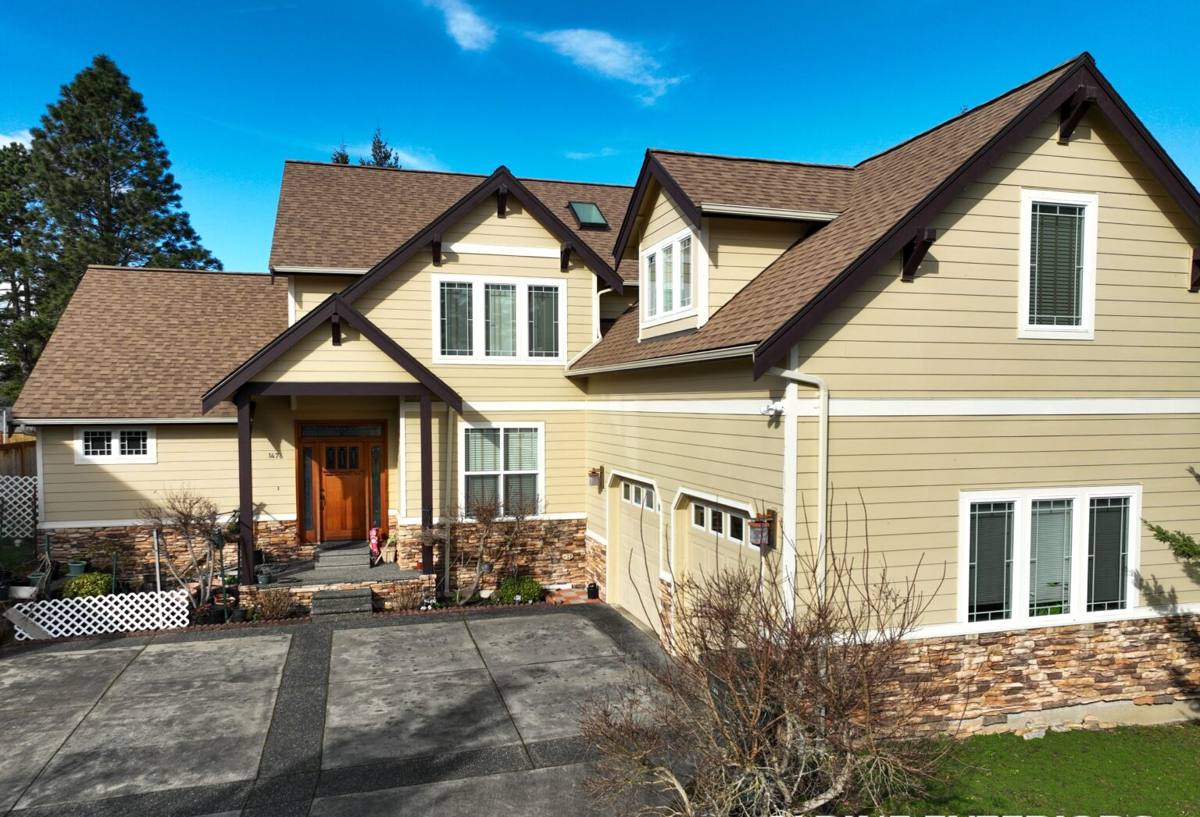
What Salt Air and Driving Rain Actually Do to a Window
Salt Air
Airborne salt is corrosive to exposed metal hardware, fasteners, and some frame components. It also accelerates the breakdown of certain sealants and finishes over time. This doesn't mean windows near the water are doomed — it means the frame material, hardware finish, and sealant choices need to account for it, and generic inland specs sometimes don't.
Wind-Driven Rain
On an exposed lot, rain doesn't just fall on a window — it's pushed into every gap under pressure. A window can be perfectly weathertight in a calm rain and still leak in a Cherry Point wind event if the flashing, sill pan, and sealant details weren't built for pressure-driven water. Most window leaks we find in this area trace back to installation details, not the window unit itself.
Moss and Prolonged Dampness
Long wet seasons keep exterior surfaces damp for extended stretches, which is exactly the environment moss, algae, and mildew like. Window sills, tracks, and the trim around a window are common places for organic growth to take hold if water isn't shedding away cleanly — which is another reason correct sill pitch and drainage details matter as much as the glass itself.
Signs Your Current Windows Are Underperforming
- Cold drafts near the frame even when the window is fully latched
- Visible condensation or fogging between panes (a sign the seal has failed)
- Wood trim or sill that stays damp, stains, or shows soft spots after storms
- Difficulty opening, closing, or locking — often a sign the frame has shifted or corroded hardware is binding
- Noticeably higher heating bills compared to similar homes nearby
- Paint or finish peeling on interior trim near the window, which usually points to trapped moisture
If you're seeing more than one of these, it's usually worth an inspection before deciding whether you need full replacement or just better sealing and flashing repair.
What "Energy-Efficient" Actually Means
The term gets used loosely, so here's what actually drives performance on a window installed in a marine climate like this one.
U-Factor and SHGC
U-factor measures how well the window resists heat loss — lower is better for our cooler, wetter climate. Solar Heat Gain Coefficient (SHGC) matters more on sides of the house that get direct sun exposure. For most Cherry Point homes, we're prioritizing low U-factor first, since heat retention through a long damp winter matters more here than blocking solar gain.
Glazing and Gas Fill
Double-pane windows with a low-E coating and argon gas fill are the practical standard for this climate. Triple-pane can make sense on a wall that takes direct wind and weather, but it adds weight and cost that isn't always justified on a sheltered elevation.
Frame Material
The frame is where coastal exposure matters most, because it's the part exposed to salt air and moisture cycling year-round. We'll walk through the trade-offs below.
The Installation Itself
A high-performance window installed with weak flashing or an inconsistent sealant bead will underperform a mid-grade window installed correctly. This is the single biggest factor in how a window actually performs on an exposed Cherry Point lot, and it's the part that's easiest for a crew unfamiliar with this kind of exposure to get wrong.
Frame Material Comparison for a Coastal Whatcom County Home
| Material | How It Handles Salt Air & Moisture | Maintenance | Where It Fits Well |
|---|---|---|---|
| Vinyl | Won't corrode or rot; performs consistently in salt exposure | Low — occasional cleaning | Most Cherry Point homes; strong value and durability match for this climate |
| Fiberglass | Very stable, resists moisture-driven expansion/contraction | Low | Homes with heavy direct wind/rain exposure or wide temperature swings |
| Wood or Wood-Clad | Attractive but the wood core is vulnerable if the clad seal is ever breached; needs vigilant upkeep near salt air | Higher — regular inspection and finish maintenance | Homes prioritizing a traditional look, sheltered from direct water exposure |
| Aluminum | Conducts heat and cold readily; can be prone to condensation and corrosion of untreated components over time | Moderate | Rarely our first recommendation for this specific climate; better suited to milder, drier exposures |
We're not against wood-clad or aluminum windows as products — they have their place. But given what we see on service calls out here, we steer most Cherry Point homeowners toward vinyl or fiberglass because they hold up with the least maintenance burden in salt air and sustained dampness. If you have a strong preference for a wood-look interior, there are composite and clad options that get you the appearance without the same long-term upkeep risk.
Our Installation Process
1. Inspection and Measurement
We check the existing rough opening, sill condition, and any signs of past water intrusion before we ever order a window. If there's hidden rot or damage behind the old trim, we want to know before install day, not during it.
2. Removal Without Collateral Damage
Old windows come out carefully to avoid unnecessary damage to siding, trim, or interior wall finishes — especially important on Cherry Point homes where siding may already be weathered from salt exposure.
3. Sill Pan and Flashing
This is the step that determines whether a window leaks in a driving rain event. We install a proper sloped sill pan and integrate flashing with the existing water-resistive barrier so any water that does reach the opening drains back out — not into the wall.
4. Setting, Shimming, and Sealing
The window gets shimmed level and plumb, fastened per the manufacturer's specification, and sealed with a sealant chosen for this climate's UV and salt exposure — not just whatever's fastest to gun.
5. Interior and Exterior Finish
Trim goes back cleanly, and we test operation and seal before we consider the job done.
Matching the Window to the Exposure
Not every window on a Cherry Point home needs the same spec. A window on a wall facing open water and prevailing wind is a different job than one on a sheltered, protected elevation. We typically look at:
- Which walls take direct wind-driven rain versus which are sheltered by the house itself or nearby structures
- Whether a room has a history of condensation or drafts
- Sun exposure on each elevation, which affects whether SHGC should be prioritized
- Whether existing trim and siding condition suggests past moisture problems that need addressing before new windows go in
This is also where local experience pays off — a crew that's worked other homes in this area already has a feel for which elevations tend to need the extra attention.
Cost Factors to Expect
| Factor | Why It Moves the Price |
|---|---|
| Frame material | Vinyl is typically the most cost-effective; fiberglass and wood-clad run higher |
| Number of windows and sizes | Larger or custom-sized openings cost more per unit |
| Glazing package | Triple-pane and specialty coatings add cost over standard double-pane low-E |
| Condition of the existing opening | Hidden rot or water damage found during removal adds repair scope |
| Full-frame vs. insert replacement | Full-frame replacement (removing down to the rough opening) costs more but is often the right call when there's water damage or the opening needs correcting |
We'll always give you an honest read on whether a lower-cost insert replacement is appropriate for your situation, or whether the existing opening's condition means it's worth doing a full-frame job instead. We'd rather tell you that upfront than have you deal with a problem in a few years.
Maintenance That Keeps Windows Performing
- Rinse frames and glass periodically to clear salt residue, especially after storms
- Keep weep holes and drainage tracks clear of debris, moss, and dirt so water can escape
- Check and refresh exterior sealant if you notice cracking or gaps developing
- Wipe down tracks and hardware to prevent corrosion buildup on moving parts
- Address any soft or discolored trim promptly rather than waiting for it to spread
Why Local Installation Experience Matters Here
Window installation looks similar everywhere on paper, but the details that actually matter — sill pan design, sealant selection, frame material trade-offs — change based on what a home is exposed to. A crew that regularly works Cherry Point and the surrounding Semiahmoo area already knows which elevations tend to take the worst of the weather, what kind of moisture issues show up behind older siding in this area, and how to build in the extra margin that salt air and driving rain demand. That's the difference between a window install that looks good on day one and one that's still performing tight and dry ten winters from now.
If your windows are drafty, fogging, or just older than they should be for how your home feels, we're happy to take a look and give you a straight assessment — no pressure, no upsell script. Request a free estimate using the form below and we'll walk your home with you.