 Semiahmoo Siding
 Siding Repair Built for California Creek's Coastal Exposure
California Creek sits close enough to the water that homes here take a different kind of beating than siding just a few miles inland. Salt-laden air off the Strait, driving rain that comes in sideways during winter storms, and a moss season that can stretch from October through April all work against exterior siding year-round. When a repair call comes in from this area, we're not just patching a hole — we're evaluating how the whole wall assembly has held up against conditions that are genuinely harsher than what a typical Whatcom County home inland deals with.
Siding repair done right in this neighborhood means understanding why the damage happened in the first place, not just covering it up. A patch that ignores the underlying moisture path or salt exposure will fail again, usually within a season or two.
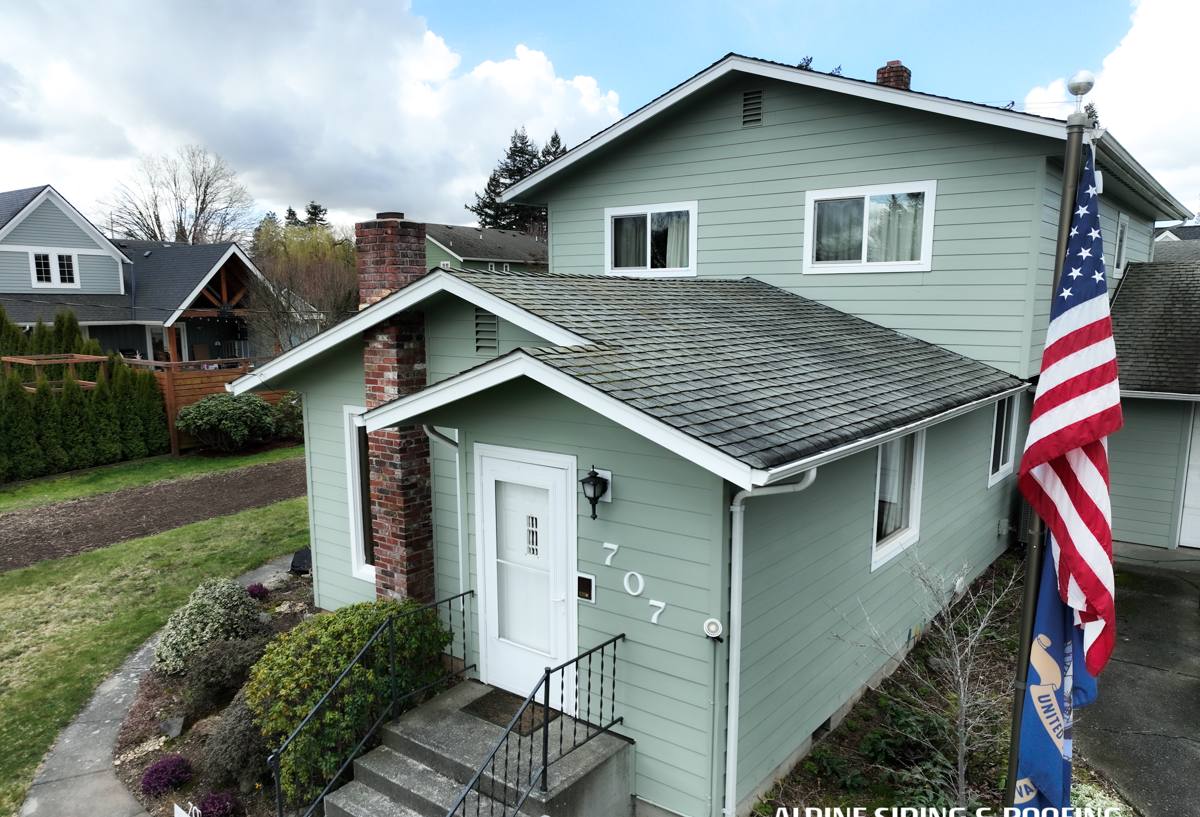
Why California Creek Siding Wears Differently
Salt Air and Metal Fastener Corrosion
Homes near the water deal with airborne salt that settles on every exterior surface, including fasteners, flashing, and trim. Over years, this accelerates corrosion in lower-grade nails and staples, which loosens siding panels and creates gaps where water can get behind the material. It's a slow process, so by the time a homeowner notices bowing or separated boards, the fastener problem has usually been building for a while.
Driving Rain and Wind-Driven Moisture
Wind off the water doesn't just bring rain — it drives it horizontally into wall surfaces that wouldn't get soaked under calmer conditions. This matters most at seams, corners, and anywhere siding meets a window, door, or roofline. Those transition points are where repair calls concentrate in this area, because caulking and flashing details take the brunt of the exposure.
Moss, Algae, and Prolonged Dampness
A long, mild, wet season is ideal for moss and algae growth on north-facing and shaded wall sections. Beyond the cosmetic issue, moss holds moisture against the siding surface for extended periods, which is a problem for any material that isn't dimensionally stable or that absorbs water at a cut edge or seam.
What a Correct Siding Repair Actually Involves
A proper repair is a diagnostic process before it's a fix. We don't just replace the board that's visibly damaged — we check what's around and behind it.
- Identify the actual entry point for water, which is often several inches from where the damage is visible
- Inspect the house wrap or weather-resistant barrier behind the removed section for tears or gaps
- Check flashing at windows, doors, and any penetrations near the repair area
- Assess fastener condition on surrounding panels, not just the damaged one
- Confirm the replacement material and profile match the existing siding so the repair doesn't stand out
- Reseal and re-flash any disturbed transitions before the new siding goes on
- Verify proper clearance and drainage at the base of the wall once the repair is complete
Skipping any of these steps is how a "repair" turns into a repeat service call a year later. On homes this close to the water, that shortcut costs more in the long run than doing it right the first time.
Common Damage Patterns We See in This Area
| Damage Type | Typical Cause Near California Creek | What We Check |
|---|---|---|
| Panel separation or bowing | Corroded fasteners, moisture cycling behind siding | Fastener condition, backing material, wall moisture |
| Soft or crumbling sections | Long-term moisture absorption in non-fiber-cement materials | Extent of material breakdown, sheathing condition underneath |
| Cracking at seams and corners | Wind-driven rain intrusion, caulk failure | Flashing integrity, seam sealant, trim fit |
| Persistent moss or dark staining | Shaded exposure, poor airflow, prolonged dampness | Surface condition, whether staining indicates trapped moisture |
| Impact damage or holes | Storm debris, yard equipment, general wear | Structural soundness of surrounding panels |
Why We Repair With James Hardie Fiber Cement
When we're called out for a repair, we're often replacing a damaged section of a different siding material entirely, or patching an aging installation that's reaching the end of what repair can reasonably fix. In either case, what we install to close the gap is James Hardie fiber cement — it's the only siding product we install, full stop.
The reason comes down to how the material behaves in exactly the conditions California Creek deals with. Fiber cement doesn't absorb and swell the way wood-based products can, and it isn't vulnerable to the kind of UV and moisture breakdown that shortens the working life of some vinyl and composite products near saltwater. Hardie's HZ5 product line in particular is engineered for wetter, harsher climates, which lines up with what this stretch of Whatcom County actually experiences. It's also non-combustible, which matters to a growing number of homeowners even in a coastal, wet climate — wildfire smoke and ember exposure have become a regional concern in recent summers.
Practically, this also means a repair patch blends in and performs the same way the surrounding material does when the surrounding material is also Hardie. If we're patching into an older non-Hardie install, we'll walk you through the honest trade-off: a spot repair now versus a longer-term plan to convert the wall to fiber cement, so future repairs aren't fighting the same underlying material weaknesses.
Our Repair Process, Start to Finish
- On-site assessment. We look at the damaged area and the surrounding wall, not just the spot you called about, since salt and moisture damage rarely stays contained to one board.
- Diagnosis and honest scope. We tell you plainly whether this is a contained repair or a sign of a bigger moisture or fastener issue that's going to keep generating repair calls.
- Material matching. For existing Hardie installs, we match plank profile, exposure, and ColorPlus finish as closely as possible. For non-Hardie repairs, we discuss options honestly.
- Removal and inspection behind the siding. This is the step that gets skipped by crews trying to move fast — we don't skip it.
- Repair of the weather barrier and flashing as needed before any new siding goes back on.
- Installation to manufacturer spec, including proper fastener type and placement, since fastener choice is exactly what fails first in salt air.
- Final check for proper sealing, clearance, and a finished appearance that matches the rest of the wall.
Repair Versus Replacement: An Honest Conversation
Not every siding problem in California Creek needs a full re-side, and we're not going to tell you it does. But there's a point where patch repairs stop making financial sense — usually when damage is spread across multiple wall sections, when the underlying material is failing broadly rather than in one spot, or when the home is old enough that matching materials is no longer realistic.
- If damage is isolated to one or two areas and the rest of the siding is sound, a targeted repair is usually the right call
- If you're seeing recurring soft spots, staining, or separation across multiple walls, that's usually a sign of a systemic moisture or material issue
- If your current siding is a product prone to long-term moisture problems and it's reaching 15-20+ years old, a repair may only buy you a short window before the next issue surfaces
- If the home has never had fiber cement installed, a repair is a good moment to talk through what full replacement with Hardie would look like down the road
We'll always tell you honestly which category your situation falls into rather than pushing a bigger job than you need.
Why Hire a Crew That Already Works This Neighborhood
Siding repair in a coastal Whatcom County community isn't the same trade as siding repair in a dry inland climate. A crew that mostly works drier regions may not think to check flashing at every transition point, may not recognize early salt-corrosion signs on fasteners, or may not account for how long moisture sits in shaded, moss-prone wall sections here. Working regularly in and around Semiahmoo means we've seen how this specific stretch of coastline treats exterior materials over time, and we bring that pattern recognition to every repair call, not just a generic fix.
We also stand behind the work with the manufacturer backing that comes from proper Hardie installation — a repair done to spec keeps your existing product warranty intact where applicable, and any new material we install carries Hardie's standard coverage.
Get a Free, No-Pressure Estimate
If you're dealing with damaged, separating, or aging siding on your California Creek home, we're happy to take a look and give you a straight answer about what it needs — whether that's a simple repair or a bigger conversation about your siding's long-term condition. Use the form below to request a free estimate; there's no obligation and no pressure, just an honest assessment from a crew that knows this area's climate.