 Semiahmoo Siding
 New Roofs Built for Blaine's Coastline Conditions
Blaine sits right where Puget Sound weather and Boundary Bay salt air meet, and that combination is hard on a roof. Homes near Semiahmoo and throughout this stretch of Whatcom County deal with a longer wet season than most of the state, plus the added wear of salt-laden air blowing in off the water. A roof that would hold up fine forty miles inland can wear out early here if it wasn't built with this specific exposure in mind. When we install a new roof in Blaine, we're not just following a generic spec sheet — we're accounting for what this coastline actually does to roofing materials over a twenty- or thirty-year lifespan.
That means paying close attention to fastener corrosion resistance, underlayment quality, ventilation, and moss prevention from day one, not as an afterthought. A new roof installation is one of the few times you get to fix everything at once — the deck, the ventilation, the flashing details — instead of patching around old mistakes. Getting it right the first time matters more here than in drier climates, because a poorly built roof in this environment fails faster and quieter, often with moisture damage happening inside the attic long before a leak shows up on the ceiling.
What Blaine's Climate Actually Does to a Roof
Salt Air and Corrosion
Being close to Semiahmoo Bay and the broader Salish Sea means airborne salt is a real factor here, more so than for homes further inland in Whatcom County. Salt exposure accelerates corrosion on exposed metal — nails, flashing, drip edge, and roof vents. Standard electro-galvanized fasteners can start showing rust streaks and weakening well before a coastal-rated roof would. This is one of the biggest differences between a "generic" roof install and one built specifically for a property near the water.
Driving Rain and Wind-Driven Moisture
Blaine gets weather that comes in sideways as often as it comes straight down. Wind-driven rain finds every weak seam, every under-lapped shingle course, and every place where flashing was installed to minimum code rather than to a higher standard. Roofs here need extra attention at valleys, eaves, and any roof-to-wall transition, because that's where sideways rain gets pushed up and under standard laps.
A Long Moss Season
Damp, shaded, and mild — that's a moss farm's dream, and it describes a lot of rooflines around here for a good chunk of the year. Moss holds moisture against the roofing material, works its way under shingle edges, and can lift tabs enough to let water in. Roofs with poor ventilation or heavy tree cover are especially at risk. A new roof is the right time to address the conditions that let moss take hold in the first place, not just the moss itself.
What a Correctly Built Roof Involves Here
A new roof installation isn't just laying down shingles or panels. Done right, especially in this climate, it includes several layers working together:
- Deck inspection and repair — replacing any soft, delaminated, or water-stained sheathing before anything new goes down
- A full synthetic or self-adhered underlayment system, not just spot coverage, to handle wind-driven rain if the outer layer is ever compromised
- Ice-and-water shield style membrane at eaves, valleys, and penetrations — the areas most exposed to standing water and moss buildup
- Corrosion-resistant fasteners and flashing appropriate for coastal exposure, not the cheapest code-minimum hardware
- Balanced intake and exhaust ventilation, so the attic can actually dry out between wet spells instead of trapping moisture
- Properly lapped and sealed roof-to-wall and chimney flashing, since these transitions are where most real-world leaks start
Skipping any one of these doesn't usually cause an immediate problem. It shows up two, five, or ten years later as a slow leak, premature moss colonization, or rusted fasteners weeping stains through the roofing material. That delay is exactly why so many roof problems in this region trace back to installation shortcuts rather than material failure.
Roofing Materials: What Holds Up on the Coast
| Material | Coastal / Moss Performance | Maintenance Considerations |
|---|---|---|
| Architectural asphalt shingle | Good when paired with proper ventilation and algae-resistant granules | Periodic moss and debris removal recommended, especially on shaded slopes |
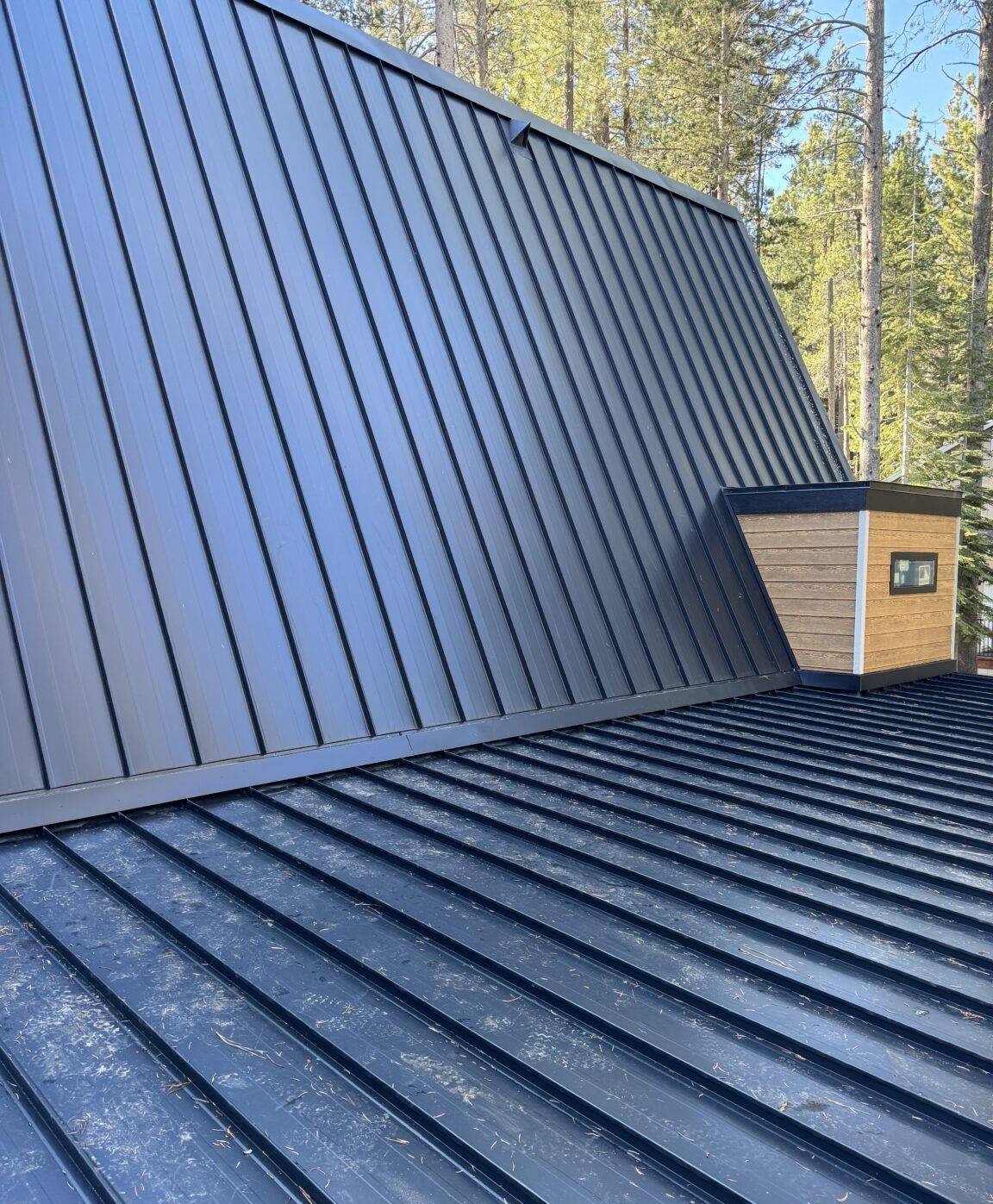
| Standing seam metal | Very good; sheds moisture and moss has less to grip onto | Requires marine-grade fasteners and coatings near the water to control corrosion |
| Cedar shake | Attractive but higher moisture-retention risk in a long wet season | Needs more frequent inspection and treatment to manage moss and rot |
| Synthetic/composite shingle | Good; resists moisture absorption better than wood | Lower ongoing maintenance, but confirm manufacturer warranty covers coastal exposure |
There isn't a single "best" material for every home — it depends on your roof's pitch, shade cover, budget, and how the rest of the exterior is styled. What matters more than the brand name on the shingle wrapper is whether the ventilation, underlayment, and flashing details behind it are built for this climate. We'll walk you through the honest trade-offs for your specific roof rather than pushing whatever has the highest markup.
How We Approach a New Roof in Blaine
1. On-Site Assessment
We start by getting on the roof and in the attic, not just looking from the driveway. We check deck condition, existing ventilation, signs of past moss or moisture issues, and how the roof handles water at valleys and transitions. This tells us what the install actually needs, rather than assuming a one-size-fits-all approach.
2. A Straightforward Plan and Estimate
You'll get a clear breakdown of material options, what deck repair (if any) is likely needed, and why we're recommending the underlayment and flashing approach we are. No pressure tactics, no inflated urgency — just what your roof needs and what it costs.
3. Tear-Off and Deck Inspection
Old roofing comes off down to the deck so we can actually see what's underneath. This is often where hidden moisture damage from a prior moss problem or an old flashing shortcut turns up, and it's much cheaper to fix now than after a new roof is already on top of it.
4. Underlayment, Flashing, and Ventilation First
Before a single shingle or panel goes down, the water-management layers go in: membrane at the vulnerable areas, properly lapped underlayment across the field, corrosion-resistant flashing at every wall and penetration, and a ventilation plan that actually balances intake and exhaust.
5. Final Install and Cleanup
Roofing material goes on per manufacturer spec, with attention to nailing patterns and exposure lines that matter more in wind-exposed, rain-driven conditions than they do in calmer climates. We clean the site thoroughly, including a magnetic sweep for stray fasteners.
Timing Your Roof Replacement
There's no perfect month to replace a roof on the Whatcom County coast — every season has trade-offs. Summer offers the driest working windows, but it's also the busiest time for every contractor in the region, so booking ahead matters. Shoulder seasons can still work with the right underlayment sequencing and weather monitoring. What matters most isn't the calendar date, it's not waiting until a small problem — a few lifted shingles, early moss growth, soft spots near the eaves — turns into deck rot or interior damage that costs far more to repair than the roof itself would have.
Signs Your Blaine Home May Need a New Roof Soon
- Shingles that are cupping, cracking, or losing granules faster on shaded or north-facing slopes
- Moss establishing itself along ridge lines or under tree cover even after cleaning
- Rust staining running down from nail heads, vents, or flashing
- Soft or spongy spots when walking the roof, or sagging visible from the ground
- Daylight or water stains in the attic near valleys, chimneys, or wall intersections
- A roof approaching or past its expected material lifespan, especially if it was never properly ventilated
Any one of these on its own isn't necessarily an emergency, but a few together usually mean the roof is past the point where patching makes financial sense.
Why a Crew That Already Works This Area Matters
Roofing crews that mostly work drier, inland conditions sometimes install to a standard that's fine there but undersized for a coastal Whatcom County property. A crew that regularly works Blaine and the greater Semiahmoo area already knows which details need upgrading — corrosion-resistant hardware, ventilation sized for a long wet season, flashing built for driving rain — because we've seen what happens when those details get skipped. That local experience shows up in fewer callbacks and a roof that's still performing well well past the point a shortcut-built one would be showing problems.
It also means we're not guessing at permitting requirements, typical wind exposure for your street's orientation, or how nearby tree cover will affect moss risk on your specific roof. Those are small things individually, but they add up to a roof that's actually built for where it sits rather than a roof built to a generic spec and dropped into a coastal environment.
Get a Straight Answer About Your Roof
If your roof is showing wear, has a moss problem that keeps coming back, or you're just planning ahead, we're happy to take a look and give you an honest assessment — no pressure, no inflated urgency. Use the form below to request a free estimate, and we'll walk you through what your roof actually needs and what your options look like.