 Semiahmoo Siding
 Why Birch Bay Roofs Wear Differently Than Roofs Inland
Birch Bay sits right on the water along the Strait of Georgia, and that location shapes everything about how a roof ages here. Homes just a few miles inland in Whatcom County deal with rain and cold, but Birch Bay roofs also take on salt-laden air, near-constant wind off the water, and long stretches of shade from mature evergreens that keep everything damp long after a storm passes. A roof designed for a drier climate, or installed without the coastal details done right, will show its age here faster than it should.
The three biggest factors we plan around for every Birch Bay roof are salt air corrosion, wind-driven rain finding its way under shingles and flashing, and moss that takes hold during the long wet season and never fully lets go. None of these are exotic problems. They're just persistent, and a roof that ignores them will need attention years before it should.
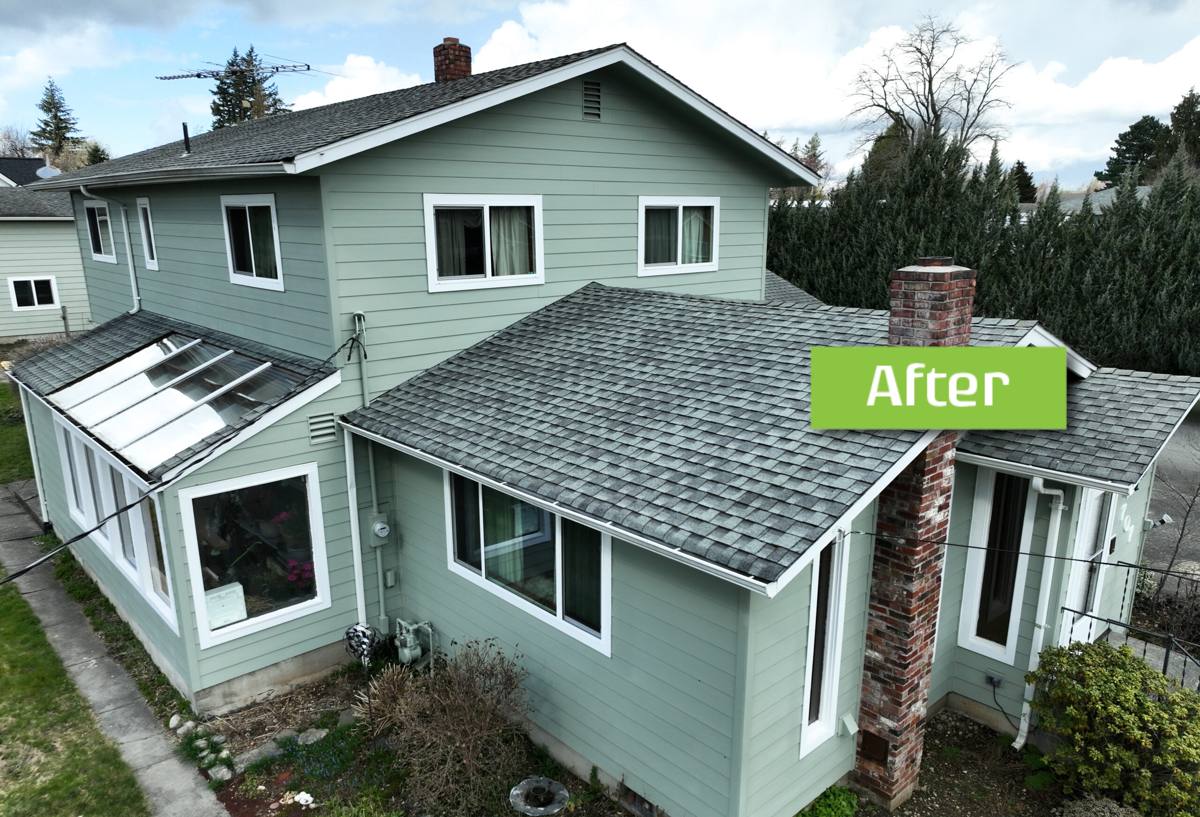
Signs a Birch Bay Home Needs a New Roof, Not Another Repair
Coastal wear shows up differently than inland wear. Before we ever recommend a full replacement, we look for patterns that tell us patching won't hold up.
- Granule loss that's left shingles looking bald or blotchy, especially on wind-exposed slopes facing the water
- Moss colonies established at the ridge, in valleys, or under tree cover that keep the deck damp for days after rain
- Rusting or corroded flashing, fasteners, or vent caps — a common tell in salt-air areas where the wrong metal was used originally
- Curling, cracking, or lifted shingle edges, particularly on the sides that catch the prevailing wind off the bay
- Soft spots, sagging, or staining on interior ceilings that point to sheathing damage from long-term moisture intrusion
- A roof approaching or past the manufacturer's expected service life, especially if it was installed without upgraded underlayment
Any one of these on its own might be repairable. Several together, or a roof already past 18-20 years old, usually means replacement is the more honest recommendation.
Choosing Roofing Materials for a Salt Air, High-Moisture Site
There isn't one "best" roofing material for Birch Bay — there's a best material for your specific lot, tree cover, and budget. What matters is understanding the trade-offs honestly before you commit.
| Material | Moss & Algae Resistance | Salt Air Durability | Typical Lifespan | Cost Factor |
|---|---|---|---|---|
| Standard architectural asphalt shingle | Fair — needs regular maintenance | Good with corrosion-resistant flashing | 20-25 years | Lower upfront |
| Algae/moss-resistant shingle (copper-granule or treated) | Strong — built in to the granule | Good with corrosion-resistant flashing | 25-30 years | Moderate |
| Standing seam metal | Very strong — moss struggles to grip smooth panels | Excellent when the correct coated or marine-grade metal is specified | 40-50+ years | Higher upfront |
| Synthetic/composite shingle | Good, varies by product | Good with proper flashing | 30-40 years | Moderate to higher |
For homes under heavy tree cover in Birch Bay, we lean toward moss-resistant shingles or metal, since standard shingles in constant shade will grow moss again within a few seasons no matter how well the rest of the roof is built. For open, wind-exposed lots closer to the water, wind rating and flashing quality matter more than moss resistance. We'll walk your specific site with you and explain what we'd choose in your shoes — not just what's available.
A Note on Fasteners and Flashing
This is where a lot of coastal roofs quietly fail early. Standard electro-galvanized nails and flashing can start showing rust within a few years of steady salt air exposure. We spec hot-dip galvanized, stainless, or coated fasteners and flashing on Birch Bay jobs specifically because of proximity to the water — it costs a little more up front and prevents the streaking, weak spots, and premature leaks that undersized hardware causes.
What a Correct Installation Looks Like Here
A new roof is only as good as what's underneath the shingles. In a climate like this, the underlayment and flashing details matter as much as the material on top.
- Full tear-off to the deck so we can inspect and repair any sheathing damaged by past leaks or trapped moisture
- Ice and water shield at eaves, valleys, and around every penetration — these are the spots where wind-driven rain gets pushed uphill under standard felt
- Synthetic underlayment across the full deck for a stronger moisture barrier than old-style felt, especially given how many wet days Whatcom County sees in a typical year
- Corrosion-resistant flashing and fasteners at every roof-to-wall transition, chimney, and vent, sized for salt air rather than a generic inland spec
- Balanced intake and exhaust ventilation so the attic can actually dry out between storms instead of staying damp
- Proper starter strip and ridge cap installation, since these are the first places a poorly installed roof lets go in sustained wind
Skipping any one of these doesn't usually show up as a problem on install day. It shows up as a leak, a soft spot, or a moss colony three to six years later — which is exactly when it's most expensive to fix.
Ventilation and Moss: The Long Game
Moss doesn't cause a roof to fail overnight, but it's patient, and Birch Bay's tree cover and marine humidity give it plenty of time to work. Moss holds moisture against the shingle surface, lifts edges as it grows, and can work its way under flashing and shingle laps over a few seasons. A roof with poor attic ventilation makes this worse from underneath too, since a warm, damp attic keeps the deck from drying and shortens the life of the shingles regardless of what's growing on top.
We address this two ways on every install: choosing a shingle or metal profile that resists moss establishment where tree cover is heavy, and making sure attic ventilation is actually balanced — not just a ridge vent added without enough intake at the soffits to match it. Ventilation that looks right but isn't balanced does very little.
Our Installation Process
- On-site assessment — we walk the roof, check the attic, and look at tree cover, wind exposure, and existing damage before recommending anything
- Material selection — we go over the honest trade-offs for your lot and budget, not a one-size-fits-all pitch
- Written estimate — clear scope, materials, and pricing so there are no surprises mid-job
- Tear-off and deck inspection — old roofing removed, sheathing checked and repaired as needed before anything new goes down
- Underlayment and flashing installation — ice and water shield, synthetic underlayment, and corrosion-resistant flashing installed to the details above
- Roofing installation — shingles or metal installed to manufacturer spec and matched to wind exposure for your site
- Ventilation check — intake and exhaust balanced before we call the job done
- Final walkthrough — we review the finished roof with you and answer any questions before wrapping up
Why Hiring a Crew That Already Works Birch Bay Matters
Roofing crews that mostly work inland can do competent work, but they don't always plan for salt air corrosion, wind patterns off the water, or how much moss pressure a shaded coastal lot gets compared to a sunny inland one. A crew that regularly works Birch Bay and the surrounding Whatcom County shoreline has already seen which fastener grades hold up, which flashing details actually stop wind-driven rain, and which materials keep moss at bay under heavy tree cover — because they've gone back and seen what did and didn't work five and ten years later.
Local familiarity also matters for practical reasons: knowing what Whatcom County permitting requires for a reroof, understanding typical lot access and staging on Birch Bay's narrower coastal roads, and being available if a wind event causes an issue that needs a fast response rather than a multi-day wait.
Maintenance After Your New Roof Goes On
A correctly installed roof in this climate still benefits from a little upkeep. Keep gutters and valleys clear of needles and debris so water isn't held against the shingles. Have moss growth addressed early with a gentle, roof-safe treatment rather than letting it establish for a full season. And keep an eye on flashing around chimneys and vents after major windstorms, since that's the first place a fastener or seal can work loose over time. A quick annual check catches small issues while they're still small.
If your Birch Bay roof is showing its age, or you're just ready to stop patching and do it right, we're happy to take a look and walk you through your options honestly. Reach out for a free, no-pressure estimate — we'll assess your roof, explain what we see, and give you a straightforward recommendation with no obligation to move forward.