 Semiahmoo Siding
 Bellingham's Climate Is Tougher on Roofs Than People Think
Homeowners who move to Bellingham from drier parts of the country are often surprised at how hard the local climate works a roof. It isn't one dramatic event that wears a roof out here — it's the steady combination of factors that Whatcom County throws at a house year after year. Salt-laden air off the water accelerates corrosion on fasteners, flashing, and metal components. Driving rain, often pushed sideways by wind off the water, finds every weak seam and gap in a roofing system that a calmer climate would never expose. And a long, damp moss season keeps roof surfaces wet for weeks at a stretch, which speeds up the breakdown of shingle granules and wood alike.
A roof replacement in Bellingham has to be built with all three of these conditions in mind, not just the one that's most visible. A roof that would perform fine in a dry inland climate can fail early here if the underlayment, flashing details, and ventilation aren't upgraded to match what this specific part of Washington actually demands.
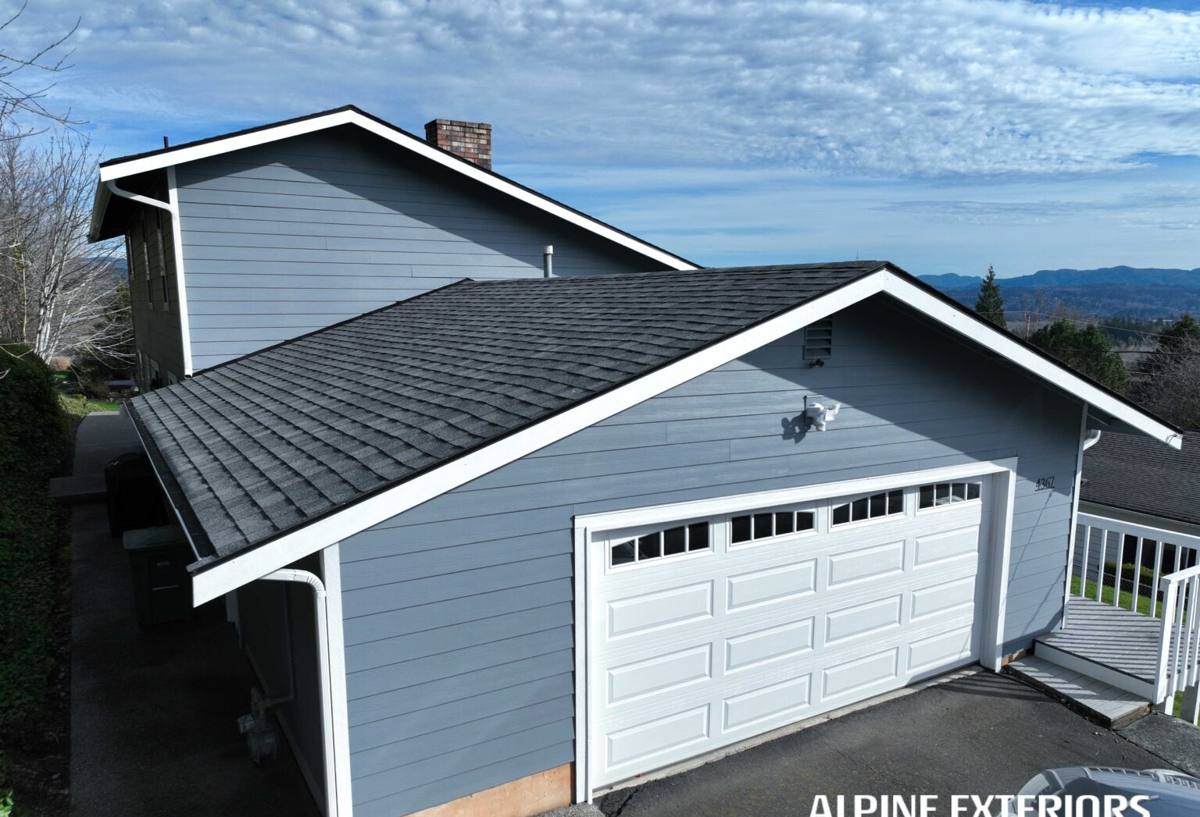
Signs Your Roof Has Reached the End of the Road
Not every roof problem in Bellingham means a full replacement — sometimes a repair is the honest answer. But there are signs that tell us a roof has moved past the point where patching makes sense:
- Granule loss heavy enough that you're finding grit in gutters and downspouts every season
- Shingles that are cupping, curling, or cracking across large sections rather than one isolated spot
- Moss or algae growth that keeps returning within a season or two of cleaning, even after treatment
- Soft spots in the decking that you can feel underfoot in the attic or that show up as sagging from the ground
- Recurring leaks in more than one location, especially around valleys, chimneys, or plumbing vents
- A roof that's simply reached the end of its expected service life, regardless of how it looks from the street
If a roof is only a few years old and showing one isolated issue, repair is usually the right call. When several of these signs show up together, replacement is almost always the more honest recommendation, because patching an aging roof in this climate tends to buy a homeowner a year or two at best.
What a Proper Roof Replacement Actually Involves
A roof replacement is more than swapping old shingles for new ones. Done correctly, it's a rebuild of an entire system, and skipping steps is exactly how homeowners end up with a roof that looks new but fails early.
Tear-Off and Deck Inspection
We remove the old roofing material down to the deck rather than layering over it. This matters everywhere, but especially in a wet climate like Bellingham's, because it's the only way to actually see the condition of the sheathing underneath. Trapped moisture under old shingles causes rot that's invisible from above and from inside the attic until it's advanced. Any soft or delaminated decking gets replaced before anything new goes down — installing new roofing over compromised decking is a shortcut that guarantees future problems.
Underlayment and Flashing
This is where a lot of the real weather protection actually lives, and it's the layer most homeowners never think about. In an area that gets driving, wind-blown rain, underlayment needs to be installed with attention to laps and fastening, not just rolled out quickly. Flashing around chimneys, valleys, skylights, and wall intersections is where the majority of roof leaks actually originate, and it's also where salt air does the most damage to lower-grade metal over time. We treat flashing as a full component of the job, not an afterthought bent into place at the end.
Ventilation
A roof that isn't ventilated correctly traps moisture in the attic, which shortens the life of the decking, the insulation, and the roofing material from underneath. In a climate with as much ambient moisture as Bellingham's, balanced intake and exhaust ventilation isn't optional — it's one of the biggest factors in whether a roof reaches its full expected lifespan or falls short of it.
Choosing Roofing Materials for Salt Air and Moss
There's no single "best" roofing material for every home — the right choice depends on the home's style, the roof's pitch and exposure, and the homeowner's priorities around maintenance and lifespan. What we won't do is recommend a product just because it's the cheapest option on the truck. Here's an honest look at how common materials perform under Whatcom County conditions:
| Material | Performance in Salt Air & Rain | Moss Resistance | Maintenance Burden |
|---|---|---|---|
| Architectural asphalt shingle | Good, with proper flashing and fasteners | Moderate — benefits from algae-resistant granules | Low to moderate |
| Standing seam metal | Very good, if fastener and coating quality are high | Strong — sheds moss more effectively due to smooth surface | Low |
| Synthetic composite shingle | Good, resists moisture absorption well | Moderate to good | Low to moderate |
| Wood shake | Requires diligent maintenance in a wet climate | Poor without regular treatment | High |
We steer most homeowners away from untreated wood shake roofs in this specific climate — not because the material is inherently bad, but because the maintenance schedule needed to keep it performing well in a long, damp moss season is more than most homeowners want to commit to. Metal and quality architectural shingle systems tend to give Bellingham homeowners the best balance of appearance, longevity, and manageable upkeep.
Moss and Moisture Management Is a Design Decision, Not an Afterthought
A lot of moss control advice focuses on treatment after the fact — zinc strips, periodic cleaning, chemical washes. Those things have their place, but the bigger opportunity is designing the moss problem out at the time of replacement. Roof pitch, shading from overhanging trees, and airflow all affect how long a roof surface stays wet after rain, which is the real driver of moss growth. During a replacement, we look at whether zinc or copper control strips make sense for the specific roof, whether ventilation changes will help the deck and surface dry faster, and whether any nearby vegetation is keeping sections of the roof shaded and damp longer than the rest. Addressing these things during the replacement is far more effective than fighting moss after the fact every year.
Our Process, Start to Finish
Estimate and Inspection
We start with an on-site inspection of the current roof, the decking (where accessible), attic ventilation, and any trouble spots the homeowner has already noticed. This is also when we talk through material options honestly, based on the home and the budget, not a one-size-fits-all pitch.
Material Selection and Scheduling
Once a material and scope are settled, we schedule the work around the weather. In Bellingham, that means paying close attention to forecasted rain windows rather than just booking the next open slot, since a roof mid-tear-off is vulnerable to weather in a way that finished work isn't.
Installation
Tear-off, deck inspection and repair, underlayment, flashing, ventilation components, and the finish material go down in that order, with each step checked before moving to the next. We don't cover up a problem to keep the schedule moving.
Cleanup and Walkthrough
Job sites get cleaned thoroughly, including a magnetic sweep for stray nails and screws in the yard and driveway. We walk the finished roof and the site with the homeowner before considering the job complete.
What Affects the Cost of a Roof Replacement
Every roof is different, and we'd rather explain the real factors that drive cost than throw out a number that doesn't mean anything until we've actually seen the roof. In general, cost is driven by:
| Factor | Why It Matters |
|---|---|
| Roof size and number of facets | More square footage and more complex geometry both mean more labor and material |
| Pitch and access | Steep or hard-to-access roofs take longer and require more safety setup |
| Number of existing layers | Multiple old layers mean more tear-off labor and disposal cost |
| Decking condition | Rot or soft spots found during tear-off mean additional repair before new roofing goes down |
| Material choice | Asphalt, metal, and composite systems carry different material and labor costs |
| Flashing and ventilation upgrades | Bringing an older roof's details up to current standards adds scope but reduces future problems |
Most homeowners find that a like-for-like asphalt shingle replacement sits at the lower end of the range, with metal roofing and roofs needing significant deck repair running higher. We give a written estimate that breaks down scope clearly, so there are no surprises once the crew is on the roof.
Why Local Experience in Bellingham and Semiahmoo Matters
A roofing crew that works this specific corner of Whatcom County regularly develops a feel for things that don't show up in a general roofing manual — which flashing details tend to fail first in salt air, which roof orientations hold moss longest through the wet months, and how the local rain patterns affect scheduling a tear-off safely. That kind of experience is hard to fake, and it shows up in the small decisions made throughout a job, not just the finished appearance.
We also know that a roof replacement is a disruption to a household, and we treat the property with the same respect we'd want on our own homes — protecting landscaping, managing debris, and communicating clearly about timeline and any surprises found once tear-off begins.
Get a Straight Answer About Your Roof
If your roof is showing its age or you're just not sure whether it's a repair year or a replacement year, we're happy to take a look and give you an honest read — no pressure, no inflated urgency. Request a free estimate using the form below and we'll walk the roof, answer your questions, and give you a clear picture of your options.